Unraveling the Warranty Web: Navigating the Maze of Smarter Claims Management
Understanding the Challenge
Warranty administration is fraught with complexity, from intricate documentation requirements to varying OEM standards. For many service departments, this translates into a high rate of claim denials and a significant administrative load. The challenge often lies in understanding the specific requirements that each OEM mandates and the consequences of not meeting these standards. For instance, escalating documentation standards can result in increased denials and rework, costing dealerships time and money.
Take, for example, the case of a dealership in Texas that faced over 30% claim denials due to inadequate documentation. The issue? Missing photo sets, VIN images, and incomplete cause-and-correction narratives. This is a common scenario where the absence of structured processes can lead to financial leakage.
Moreover, the pressure doesn't just come from OEMs. State laws on retail-rate warranty reimbursement for parts and labor add another layer of complexity. Dealerships must stay abreast of these laws to ensure compliance and optimize reimbursement.
In this section, we'll delve into these challenges and explore why understanding the intricacies of warranty administration is crucial for service managers. By identifying the root causes of claim denials and administrative burdens, you can begin to see where improvements can be made to enhance efficiency and profitability.
Current Industry Landscape

The automotive industry is evolving rapidly, and warranty administration is no exception. In recent years, we've seen a sharp increase in OEM warranty claims, with global payouts reaching $57.9 billion in 2024. This surge underscores the importance of efficient warranty management as a key driver of dealership profitability.
One significant trend is the rise of AI claims automation, which promises to streamline processes and reduce human error. Tools like WarrCloud are pioneering this space, offering dealerships a way to automate and quality-assure claims. However, adapting to such technology requires a shift in traditional workflows and the right training for staff.
State-by-state differences in retail-rate reimbursement laws also present challenges. Keeping up with these laws is essential for maximizing reimbursement and ensuring compliance. The updated NADA reference on U.S. retail-rate reimbursement provisions reflects continued legislative momentum, making it vital for dealerships to stay informed.
In this section, we'll explore these trends in detail, highlighting the tools and technologies reshaping warranty administration. By understanding the current landscape, you can position your dealership to harness these developments effectively.
The Solution Framework
To effectively manage warranty administration, a structured solution framework is essential. Such a framework should focus on improving first-pass acceptance rates and reducing denials through strategic documentation and streamlined claim processes.
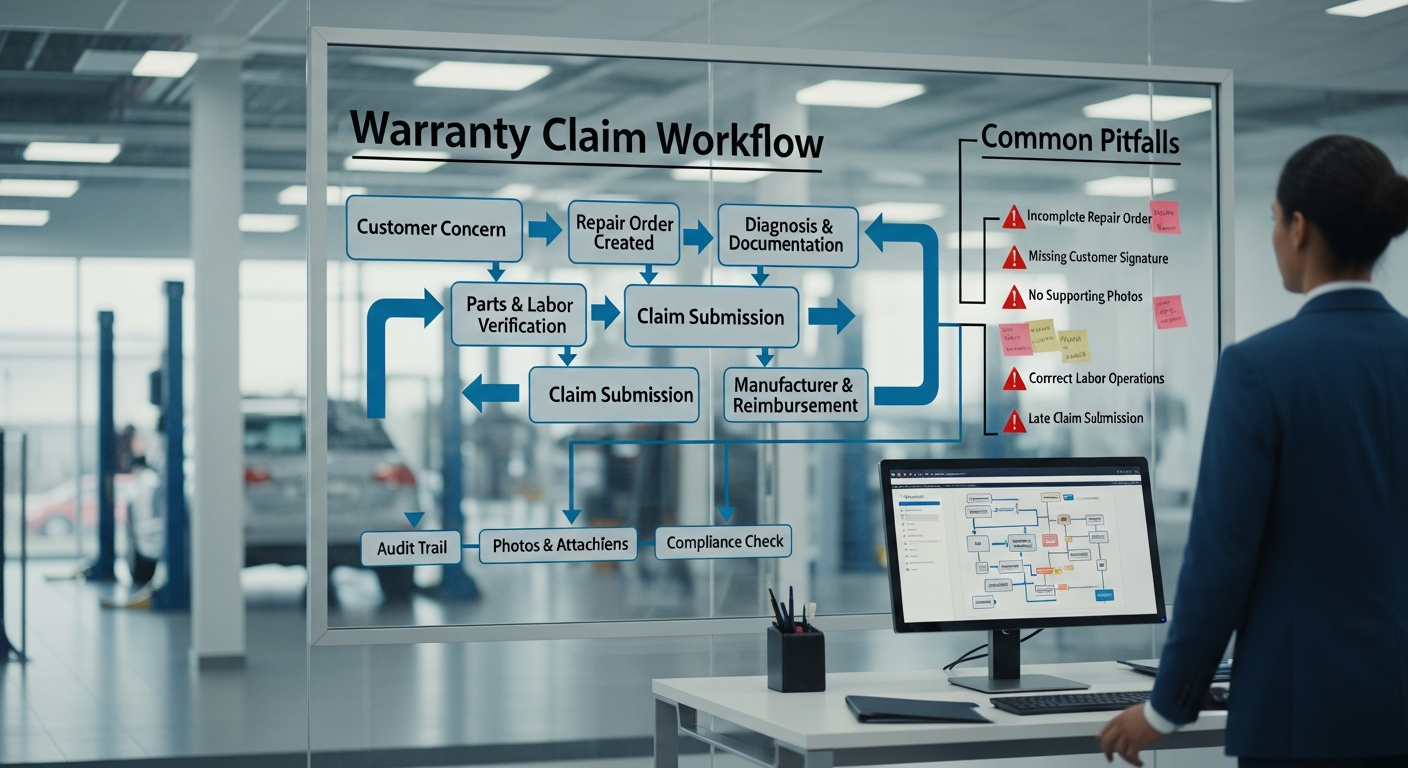
Central to this framework is the adoption of advanced documentation tools. For instance, utilizing high-quality photo sets, comprehensive scan logs, and precise cause-and-correction narratives can significantly enhance claim accuracy. These elements are crucial for meeting OEM standards and avoiding common pitfalls.
Another critical component is leveraging AI claims automation, which not only reduces manual errors but also expedites processing times. Implementing AI-driven solutions like WarrCloud can substantially uplift your clean claim rate by ensuring data quality across the warranty lifecycle.
Furthermore, understanding and navigating retail-rate reimbursement laws is vital. Partnering with experts in this field can help you file compliant submissions and unlock incremental gross profit.
By integrating these approaches, dealerships can transform warranty administration from a challenge into a strategic advantage. In this section, we'll delve into these core methods, offering insights into how they can be applied effectively within your service department.
Implementation Guide
Transforming your warranty administration processes begins with a clear implementation guide. This guide should outline practical steps tailored to your dealership's unique needs, ensuring you achieve maximum efficiency and reimbursement.
Start by conducting a thorough audit of your current warranty processes. Identify areas of inefficiency, such as high denial rates or lengthy processing times. Use this audit to create a baseline against which you can measure improvements.
Next, invest in staff training to ensure your team is equipped with the knowledge and skills needed to handle advanced documentation and AI tools. Proper training can drastically reduce errors and improve claim accuracy.
Implement an effective documentation strategy. Ensure that all necessary elements, such as photo sets, scan logs, and narratives, are consistently included in each claim submission. Set up checklists and templates to standardize these processes across your team.
Incorporate AI-driven tools to automate repetitive tasks and focus your team's efforts on high-value activities. Choose solutions that integrate seamlessly with your existing systems to avoid disruptions.
Measuring Success
As with any process improvement initiative, measuring success is crucial to understanding the impact of your efforts. Key Performance Indicators (KPIs) provide quantifiable metrics that can guide your warranty administration strategies.
One of the most important KPIs is the first-pass acceptance rate (FPAR), which measures the percentage of claims approved without resubmission. A higher FPAR indicates a well-oiled claims process with fewer errors and denials.
Another critical KPI is the warranty receivables Days Sales Outstanding (DSO), which tracks the time it takes for warranty claims to be paid. Reducing DSO can significantly improve cash flow and reduce the financial strains associated with extended claim processing.
Related Topics
Ready to take your service department to the next level?
Schedule your demo today and experience the power of Auto Pro Solutions.
Schedule Demo