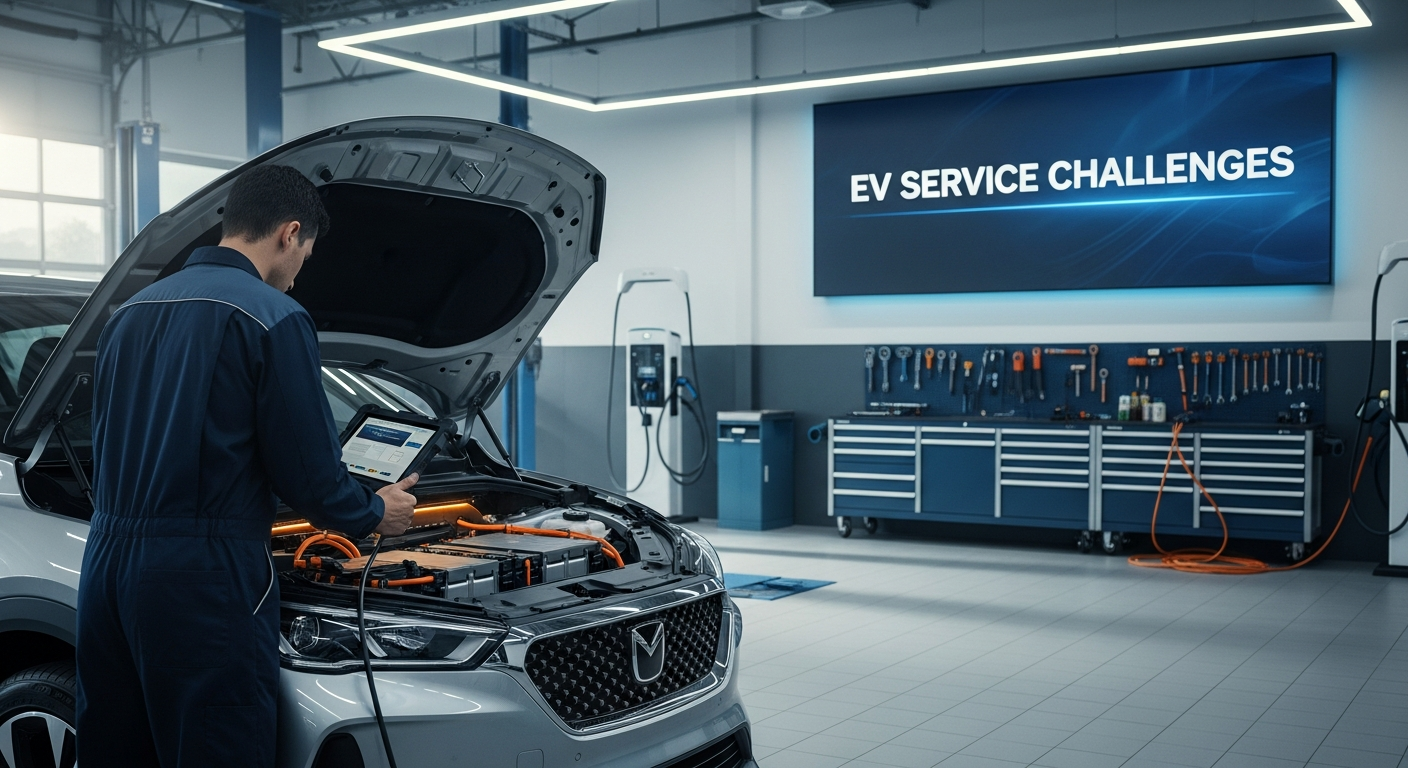
The automotive world is shifting gears at a pace that leaves many dealerships in its wake, especially as electric vehicles (EVs) become more mainstream. You might be feeling the pressure as EVs, with their unique maintenance and service needs, are reshaping the traditional service model. The stakes are high—get lost in this transition, and you risk falling behind competitors better prepared for the EV evolution. But what's truly at stake here? Consider this: EV repair claims are now averaging nearly 29% higher costs than their internal combustion engine (ICE) counterparts. This isn't just a temporary trend; it's a sign of the times. As EVs continue to capture market share, the demand for specialized EV service solutions will only intensify. But don't let these challenges overwhelm you. There's a silver lining. By strategically adapting your service department to handle EV-specific needs, you can transform these challenges into opportunities for growth and profitability. You'll learn how to redesign your service lane intake to effectively manage EV concerns, understand the ROI of investing in EV battery state of health testing, and navigate the complexities of high-voltage safety and technician training. By the end of this journey, you'll be equipped with actionable insights and practical strategies to ensure your dealership not only survives but thrives in the new automotive landscape. Let's dive into the specifics and see how you can harness the power of EV service to drive your dealership forward.
Understanding the Challenge
Why Traditional Service Models Struggle with EVs
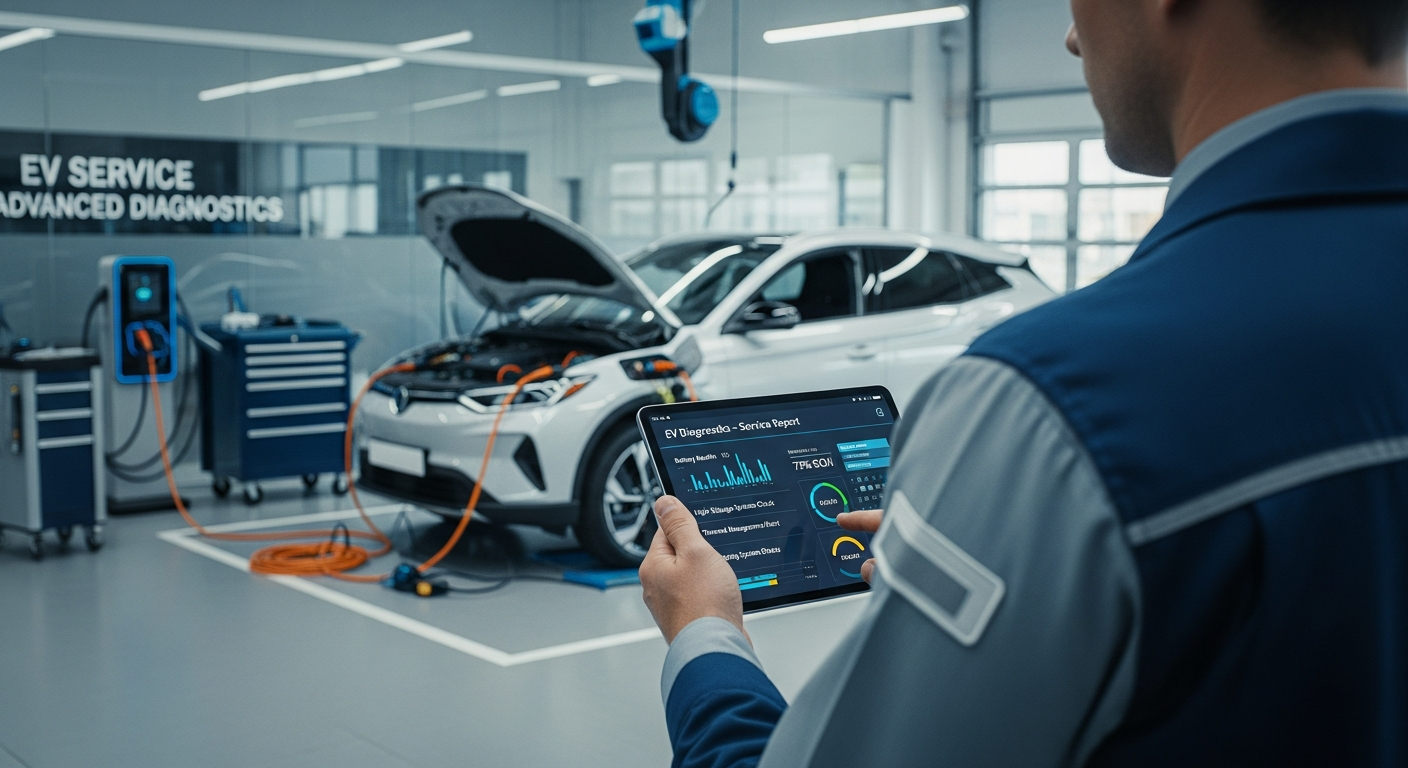
The rapid adoption of electric vehicles brings both excitement and apprehension to service departments. Traditional service models, which have long relied on routine oil changes and engine tune-ups, must now pivot to accommodate the distinct needs of EVs. This shift presents a host of challenges. EVs, for instance, require fewer mechanical interventions but demand more advanced diagnostics and software updates. Consider the case of a dealership in Texas that found itself overwhelmed when its EV service appointments began to exceed those for ICE vehicles. The technicians, skilled with traditional engines, faced a learning curve with EV diagnostics, particularly in dealing with unique concerns like battery state of health (SoH) and advanced driver-assistance systems (ADAS) calibration.
The key challenge is not just about altering workflows but also about reshaping mindsets. Technicians need to transition from mechanical problem-solvers to technology-savvy diagnosticians. As EV repair claim severity continues to rise—averaging $6,066 in Q1 2024 versus $4,703 for ICE vehicles—it's clear that service departments must adapt swiftly to maintain profitability. Moreover, the shortage of EV-qualified technicians exacerbates these challenges. Service managers are often left scrambling to recruit and retain talent capable of handling these high-tech vehicles, all while ensuring compliance with safety standards like NFPA 70E. Ultimately, the failure to adapt could lead to longer service times, decreased customer satisfaction, and a potential loss of market share to more agile competitors.
Questions managers ask
What are the primary challenges of servicing EVs?
The primary challenges include adapting to reduced routine maintenance needs, managing higher repair costs, ensuring technician safety with high-voltage systems, and addressing the shortage of qualified EV technicians.
What to do with this
The transition to EV service is inevitable and, while challenging, presents an opportunity for dealerships to innovate and grow. By understanding the unique demands of EV maintenance and implementing strategic solutions, you can enhance profitability and customer satisfaction. Invest in EV-specific training and tools, redesign service workflows to include EV diagnostics, and utilize data to improve efficiency. Auto Pro Solutions has helped hundreds of dealerships successfully navigate the EV transition with tailored service solutions.
Related topics
More for service managers
Navigating EV Service: Overcoming Challenges for Sustainable Growth
Imagine your service department, bustling with the typical cadence of internal combustion engine (ICE) vehicles, suddenly confronted with the rapid influx of electric vehicles…
Conquering EV Service Challenges: The Ultimate Dealership Guide
Imagine walking into your service department and seeing a line of sleek electric vehicles (EVs) waiting for their turn in the bay. This scene isn't a distant future; it's…
Electric Avenue: Conquering the Roadblocks of EV Servicing
The electric vehicle (EV) revolution is no longer a distant future but a pressing reality. As the share of EVs in the new-vehicle market continues to grow, service departments…