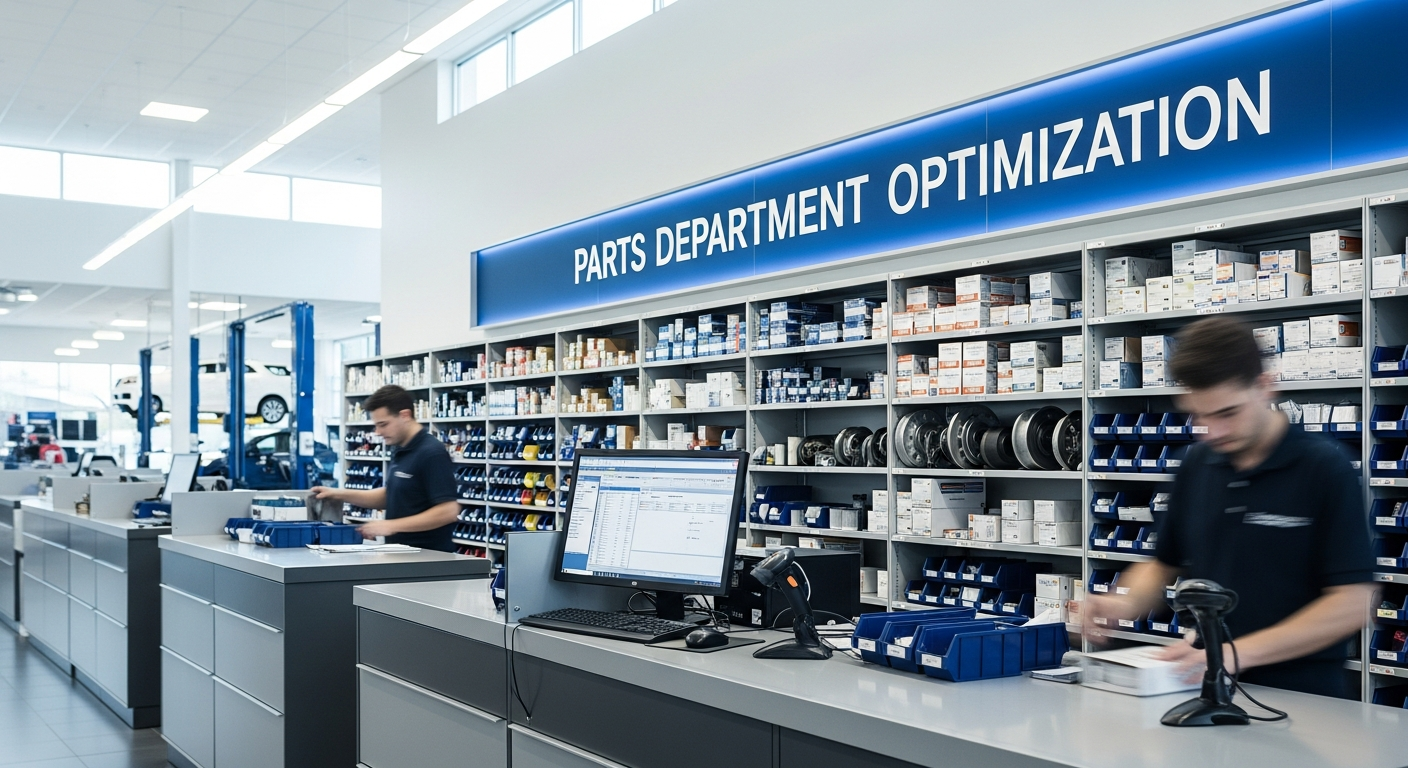
Imagine walking into your parts department and seeing everything running like a well-oiled machine. Every part is in its place, orders are fulfilled promptly, and your team is more productive than ever. Sounds like a dream, doesn't it? Yet, for many dealerships, this is far from reality. Parts departments often face inventory management challenges, missed sales opportunities, and inefficiencies that eat into profits. In 2024, dealership service and parts departments generated over $156 billion, according to NADA Data, highlighting the immense potential for revenue. However, dealerships continue to lose service-visit share to independent shops, which means your parts department needs to step up its game. The good news is, there are proven strategies and tools that can help you optimize your operations, boost your first-time fill rate, and reduce parts obsolescence. In this post, we'll explore the current challenges facing parts departments, delve into industry trends, and offer a comprehensive framework for improvement. From automating special-order parts processes to integrating advanced eCommerce platforms, we'll guide you through practical steps to transform your parts department into a high-performing powerhouse. Ready to unlock the true potential of your parts department? Let's dive in.
Understanding the Challenge
Why Parts Departments Struggle
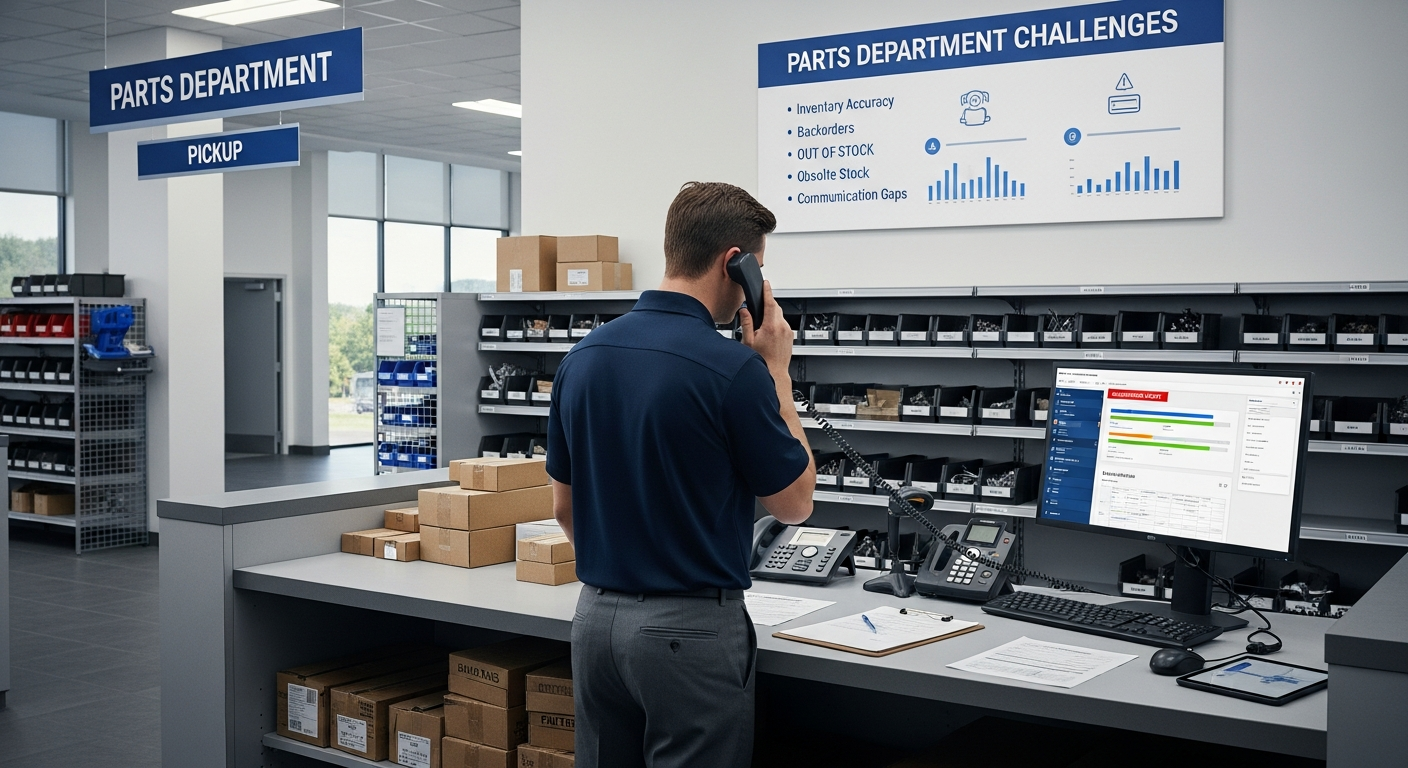
The parts department is the backbone of any dealership's service operation, yet it often grapples with several challenges. Inventory management is a perennial issue, with many departments struggling to maintain an optimal first-time fill rate (FTFR). A low FTFR can lead to delays in service, customer dissatisfaction, and lost sales. Additionally, parts departments are frequently hindered by high rates of obsolescence, with unused parts sitting on shelves and tying up capital. Consider a scenario where a dealership's special-order process is inefficient. Without proper SOR automation, parts may languish in inventory or fail to be ordered in the first place, leading to customer frustration and increased no-show rates. Moreover, as state warranty laws evolve, departments must navigate complex pricing strategies to maximize reimbursement while remaining compliant.
These challenges are compounded by a competitive landscape where independent shops and quick-lubes continue to erode dealership service retention. To counteract this, parts departments must enhance their efficiency and ensure they can meet customer expectations for timely and accurate service.
Challenge | Impact Inventory Mismanagement | Delays, Lost Sales High Obsolescence | Tied-up Capital Inefficient SOR | Customer Frustration Service Retention Loss | Reduced Revenue
Current Industry Landscape
Trends Shaping the Future of Parts Departments

The automotive industry is undergoing a transformation, and parts departments are no exception. According to S&P Global Mobility, the average age of vehicles in the U.S. rose to 12.8 years in 2025, expanding the demand for aftermarket parts. This trend presents an opportunity for dealerships to capitalize on the growing need for replacement parts. However, to seize this opportunity, parts departments must adapt to new technologies and industry standards. The rise of autonomous parts-delivery robots and advanced eCommerce platforms are reshaping how parts are managed and delivered. For instance, Reynolds & Reynolds' autonomous parts-delivery robot is designed to keep technicians in bays, reducing walking time and improving overall efficiency. Furthermore, the integration of platforms like OEC's CollisionLink suite and RevolutionParts' eCommerce solutions is streamlining inventory management and procurement processes. These tools enable real-time inventory sync, which is crucial for reducing rekeying efforts and improving the accuracy of first-time fills.
The Solution Framework
Building a High-Performing Parts Department
To transform your parts department, a structured approach is necessary. This begins with optimizing inventory management through intelligent recommendations and insights. By leveraging data analytics, dealerships can better predict demand and adjust their inventory accordingly, ensuring a higher first-time fill rate and reducing obsolescence. Automation plays a critical role in streamlining parts operations. Implementing SOR automation and multi-channel notification systems can significantly reduce no-shows and improve customer satisfaction. For instance, setting up automatic appointment scheduling when parts arrive can enhance service efficiency and customer convenience. Additionally, integrating parts eCommerce platforms with your dealership management system (DMS) eliminates the need for manual data entry, enhancing accuracy and reducing errors. This integration also supports dynamic pricing strategies, enabling departments to remain competitive while maximizing margins.
Implementation Guide
Practical Steps to Optimize Your Parts Department
Implementing changes in your parts department requires careful planning and execution. Begin by assessing your current inventory management practices and identifying areas for improvement. This might involve conducting regular cycle counts and adjusting stocking policies based on service schedules. Next, explore automation solutions that can enhance operational efficiency. Consider the types of notifications and appointment systems that best fit your dealership's needs, and ensure compliance with communication regulations such as TCPA. Don't overlook the importance of training your staff on new technologies and processes. A well-trained team is crucial for the successful adoption of new systems and can drive significant improvements in productivity and customer satisfaction.
Measuring Success
Key Performance Indicators to Track
Once new strategies are in place, it's vital to measure their success through key performance indicators (KPIs). A primary KPI for parts departments is the first-time fill rate, which directly impacts service efficiency and customer satisfaction. Tracking this metric can help identify areas for further improvement. Another crucial metric is the fixed absorption rate, which measures the department's ability to cover its expenses with parts and service revenue. Achieving a higher rate indicates successful financial performance and operational efficiency. Inventory true turns, or the number of times inventory is sold and replaced over a period, is also essential. This KPI reflects the effectiveness of inventory management and the ability to meet customer demand without excessive stockpiling.
KPI | Target First-Time Fill Rate | 85%+ Fixed Absorption Rate | 100%+ Inventory True Turns | 5-7
Advanced Strategies
Taking Your Parts Department to the Next Level
For dealerships looking to further refine their parts department operations, advanced strategies can provide significant benefits. One such strategy involves the use of autonomous parts-delivery robots, which can enhance efficiency and reduce labor costs. Comparing the ROI of these robots to traditional runner roles can inform decision-making on resource allocation. Exploring dynamic pricing strategies across different channels—retail, wholesale, online—can also optimize gross margins. Implementing effective pricing matrices and freight recovery policies ensures competitive pricing while protecting profitability. Finally, consider expanding your parts department's reach through wholesale growth initiatives. Leveraging platforms like PartsTech or OEC for wholesale distribution can open new revenue streams and strengthen dealership competitiveness.
Questions managers ask
What is the expected ROI for autonomous parts-delivery robots?
The ROI for autonomous parts-delivery robots can vary based on factors like shop size, delivery volume, and technician wage rates. Generally, these robots can reduce labor costs and improve efficiency, but a detailed cost-benefit analysis considering lease vs. buy options is recommended.
How do deposits reduce special-order parts no-shows?
Requiring deposits for special-order parts can significantly reduce no-show rates by ensuring customer commitment. The optimal deposit amount varies, and dealerships should consider refundable vs. non-refundable policies based on state regulations.
Which notification channels are most effective for special-order parts?
A mix of SMS, email, and voice notifications can effectively reduce no-show rates for special-order parts. However, it's important to comply with TCPA constraints and ensure customers opt-in to receive these communications.
How can eCommerce integration improve first-time fill rates?
Integrating eCommerce platforms with your DMS allows for real-time inventory updates and reduces errors from manual rekeying. This integration supports accurate first-time fills by ensuring the right parts are available when needed.
What strategies can improve parts department pricing?
Effective pricing strategies include dynamic pricing matrices, freight recovery policies, and elasticity testing. These strategies help maintain competitive pricing while maximizing margins across different channels.
What to do with this
Optimizing your parts department is a multifaceted process that requires strategic planning and the adoption of new technologies. By addressing inventory management challenges, leveraging automation, and integrating advanced systems, you can significantly enhance your department's efficiency and profitability. Start by assessing your current parts department operations and identifying areas for improvement. Implement automation solutions and consider integrating eCommerce platforms to streamline processes. Auto Pro Solutions has helped hundreds of dealerships optimize their parts departments with intelligent recommendations and insights. Discover how we can support your dealership's growth.
Related topics
More for service managers
Beyond the Brake Pad: Unveiling Hidden Streams of Revenue in Parts Management
Picture this: a busy morning at your dealership, customers lining up for service, and technicians ready to tackle the day's repairs. But there's a problem. The part needed for…
The Gear Behind the Grind: Streamlining Your Parts Inventory for Peak Performance
In the fast-paced world of automotive service departments, parts management is the lifeline that keeps everything running smoothly. Yet, many dealerships find themselves…
Turbocharge Your Parts Department: Innovative Pathways to Increased Efficiency
Imagine walking into your dealership's parts department and seeing every shelf perfectly stocked, every order fulfilled on time, and every customer leaving satisfied. Sounds…