Unlocking Hidden Profits: The Ultimate Service Department Playbook
Understanding the Challenge
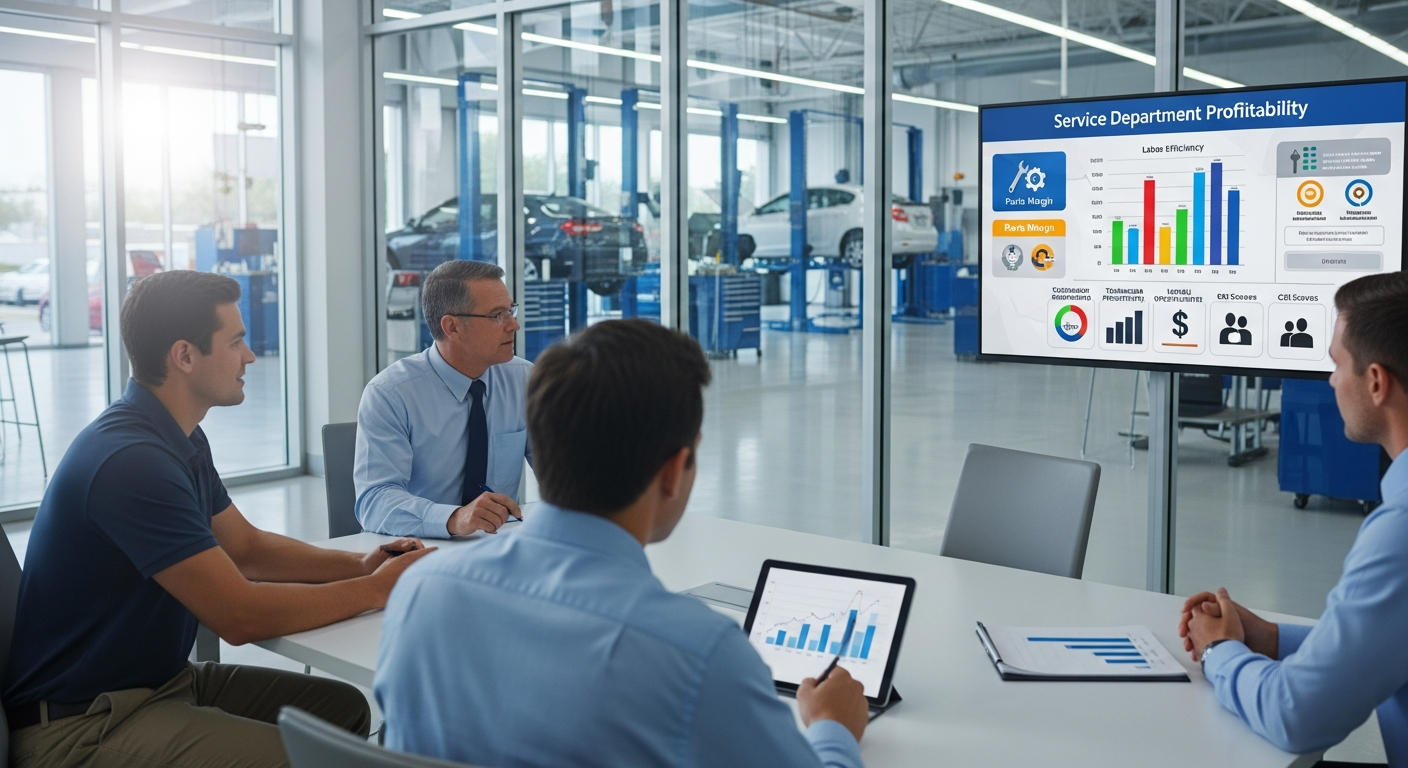
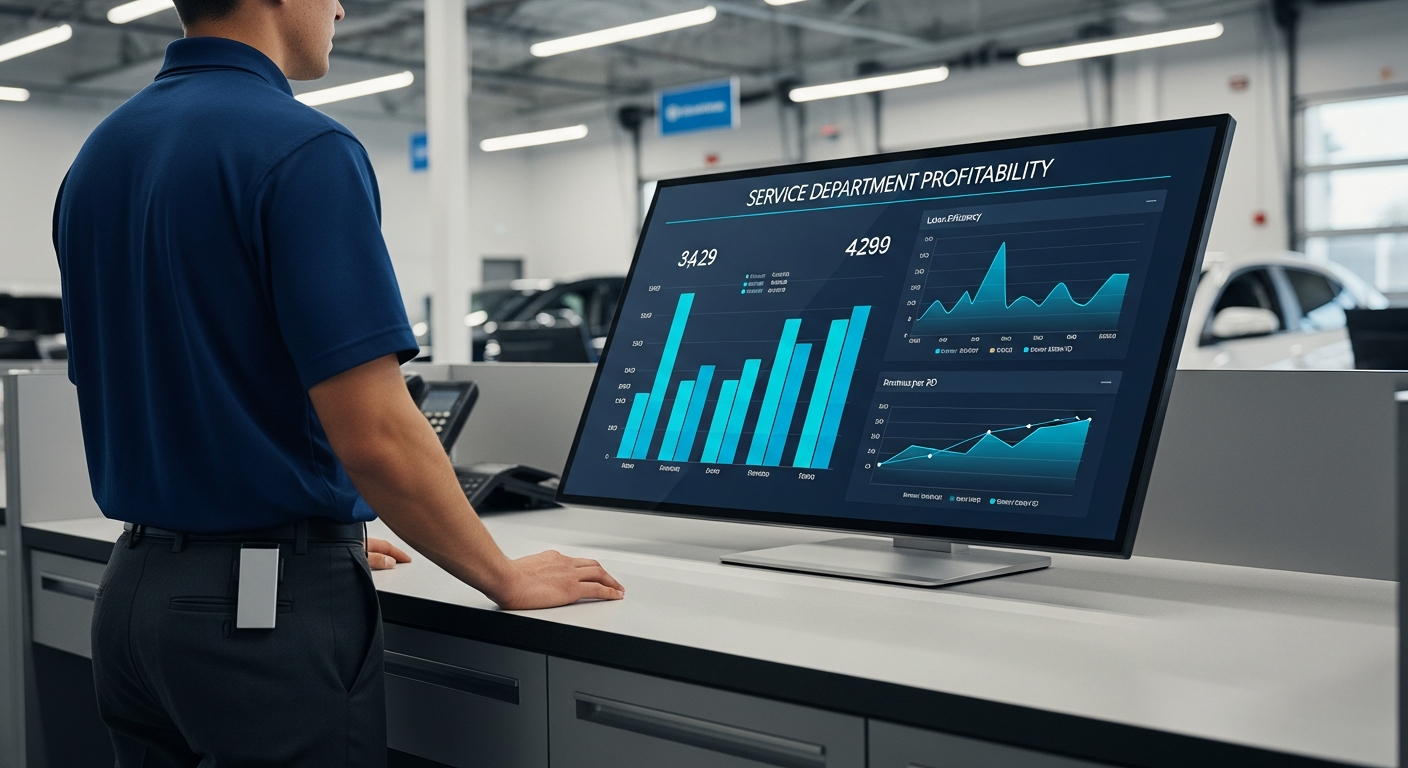
Service departments often face the challenge of declining profitability despite increasing service demand. The issue isn't just about the volume of work but about how that work is managed and priced. Identifying where you're leaking margin in customer-pay labor is crucial. Is it due to ineffective labor rates (ELR), excessive discounting, or outdated menu pricing? Each of these factors can eat into your profits if not managed properly.
Consider the story of a mid-sized dealership in the Midwest. They were losing thousands each month because their advisors had too much leeway in offering discounts, and their menu pricing hadn't been updated in over a year. By analyzing their ELR and discount patterns, they were able to pinpoint specific areas for improvement.
The key to overcoming these challenges lies in understanding your department's unique bottlenecks. Are technicians spending too much time waiting for parts? Is there a lack of transparency in service pricing that turns customers away? Pinpointing these issues early can save you both time and money in the long run.
Moreover, the external environment adds to the complexity. New state warranty labor-time rules, Right-to-Repair legislation, and data access requirements are reshaping how service departments operate. These changes can impact your processes and profitability if not anticipated and planned for accordingly.
Current Industry Landscape
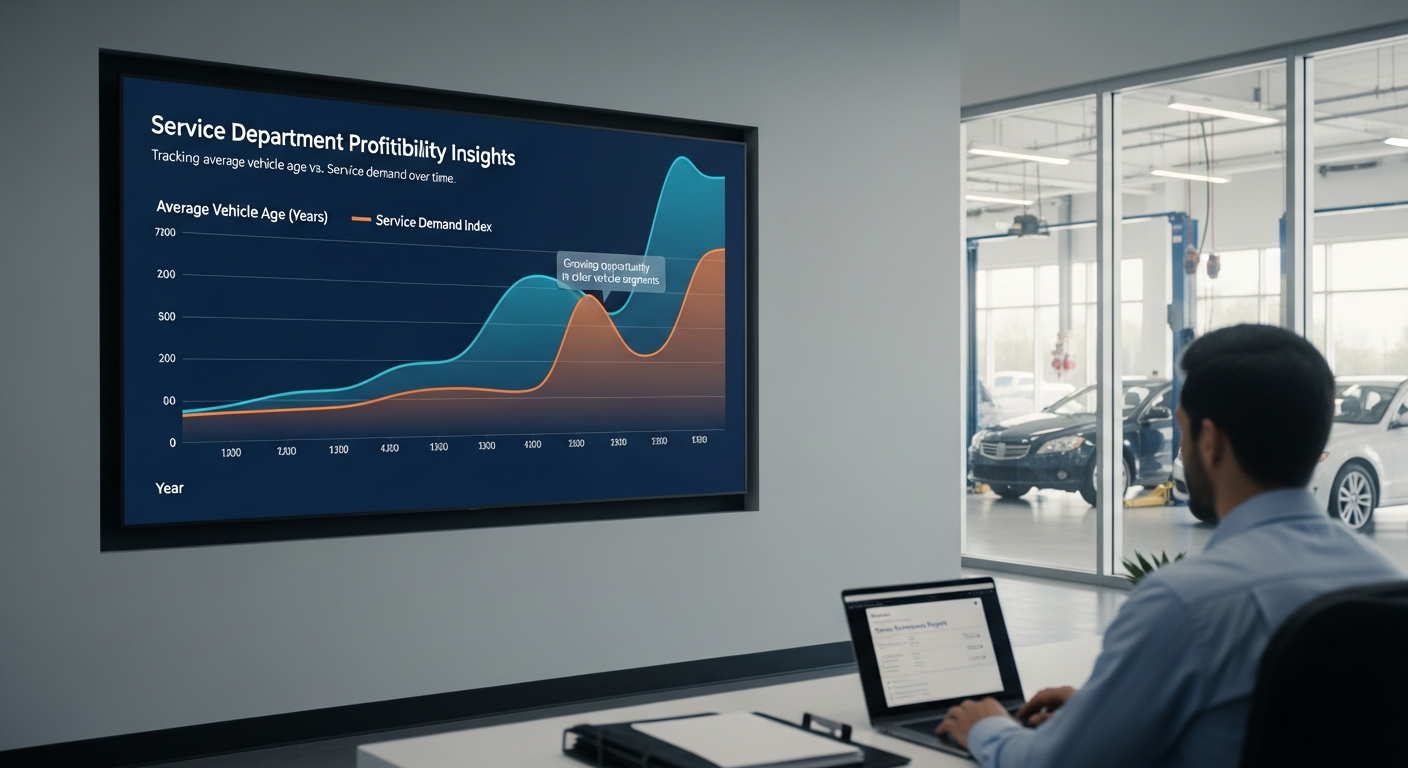
In today’s market, the average U.S. light-vehicle age has reached a record 12.8 years, opening up a prime window for aftermarket service. However, this also means that customers are increasingly defecting to independent shops due to longer wait times at dealerships. In 2024, dealer service appointment wait times averaged over five days, which is enough to lose a customer to a quicker competitor.
A notable trend is the increasing adoption of video multipoint inspections (MPIs). Video MPIs offer transparency that customers crave, allowing them to see exactly what work is needed. This not only increases approval rates for recommended work but also builds trust and long-term loyalty.
Meanwhile, service-to-sales integration is becoming more prevalent. Forward-thinking dealerships are using service visits as an opportunity to upsell and transition customers into new vehicles. This strategy requires seamless coordination between departments, which can be facilitated through advanced technologies like Cox Automotive's AI-driven workflows.
Regulatory changes are also on the horizon, with new state warranty labor-time rules set to impact profitability. States like New Jersey are adopting data-driven formulas for warranty labor time, which could affect how you structure your pricing and processes.
The Solution Framework
To enhance profitability, you need a comprehensive strategy that addresses both operational and customer-facing aspects. One effective approach is to optimize your ELR by controlling discounting and regularly updating your menu pricing. But it’s not just about raising prices—you need to ensure that your pricing remains competitive with local independents.
Capacity planning is another crucial element. Reducing appointment lead times by even one or two days can significantly impact customer retention. Techniques such as diagnostic caps, adjusting the mix of waiters vs. drop-offs, and pulling parts before appointments can go a long way in cutting lead times.
Another game-changer is the adoption of service-lane financing options like Sunbit and DigniFi. These services provide customers with flexible payment options, making it easier for them to approve recommended repairs. However, it's essential to weigh the take-rate, provider fees, and recourse risks to ensure a positive impact on your customer satisfaction index (CSI).
Finally, consider integrating video MPIs as they provide a clear return on investment. They enhance transparency, leading to higher approval rates for additional work while establishing trust with customers. Make sure to address consent requirements and compensate technicians for their time to ensure smooth adoption.
Implementation Guide
Implementing these strategies requires a clear action plan. Start by conducting a detailed analysis of your current operations and identify key areas for improvement. Use data from your DMS to track ELR, hours per RO, and gross per RO to pinpoint where changes are needed.
Next, roll out changes in a phased manner. Begin with updating your menu pricing and setting discount controls. Ensure that your advisors are trained to understand the rationale behind these changes and can communicate them effectively to customers.
For capacity improvements, schedule regular reviews of your appointment backlog and adjust scheduling rules as needed. Protect same-day or next-day slots to achieve quicker turnaround times without adding new bays.
Adopt service-lane financing and video MPIs by first piloting them in a controlled setting. Gather feedback from both staff and customers, and adjust your approach based on real-world insights. Proper training and clear communication are essential for ensuring these tools are leveraged effectively.
Measuring Success
The success of your initiatives should be measured through carefully selected KPIs. Effective labor rate (ELR), hours per repair order (HPRO), and gross per repair order (RO) are critical metrics that can give you insights into the financial health of your department.
Regularly analyze these metrics to identify trends and areas for further improvement. For instance, a consistent increase in HPRO could indicate successful upselling by your advisors. Meanwhile, improvements in ELR might show effective pricing and discounting strategies.
Customer satisfaction scores are equally important. Use feedback from video MPIs and service-lane financing to gauge overall customer sentiment. If customers are more satisfied, they're more likely to return and recommend your services to others.
Finally, consider the impact of regulatory changes on your processes. Stay informed about new warranty rules and Right-to-Repair requirements to ensure compliance and maintain smooth operations.
Advanced Strategies
Once you've implemented the core strategies, it's time to look towards scaling and optimizing your operations for future growth. Advanced techniques like technician cross-training and skill routing can ensure that your team is highly versatile and can handle a mix of job types efficiently.
Consider leveraging AI-driven dispatching and shop-loading tools to automate and optimize workflow. These technologies can help balance the load across your service bays and ensure that technicians are working at peak efficiency.
For dealerships with multiple locations, establishing a governance framework is crucial. Standardize pricing compliance and discount thresholds across all stores to maintain consistency and streamline operations.
Lastly, explore the operational economics of offering pickup and delivery services. While these options can enhance customer experience, they come with their own set of costs and logistical challenges. Analyze route density and driver time to determine the breakeven point and ensure profitability.
Related Topics
Ready to take your service department to the next level?
Schedule your demo today and experience the power of Auto Pro Solutions.
Schedule Demo