
In today's ultra-competitive automotive landscape, service departments are tasked with more than just maintaining vehicles—they must also drive significant profits. As we venture into 2025, the convergence of new technology, shifting customer preferences, and economic fluctuations necessitates a fresh approach to service department profitability. This playbook provides service managers and fixed ops directors with actionable insights and strategies to enhance their bottom line, ensuring your department not only survives but thrives in this dynamic environment.
Understanding Service Department Profitability in 2025
Key Metrics and Industry Trends

Profitability in service departments is not just about revenue—it's a complex interplay of efficiency, customer satisfaction, and cost management. As of 2025, departments are seeing a notable 15% increase in EV-related repairs, driving new revenue streams. Key performance indicators (KPIs) such as labor efficiency, parts-to-labor ratio, and customer retention rates are critical metrics. An industry survey indicated that departments with a labor efficiency rate above 85% are 20% more profitable. To harness these trends, establish a baseline using current metrics, then set improvement targets. For instance, aim to increase your average repair order value by 10% through upselling additional services.
| KPI | Industry Average | High-Performing Benchmarks | |-----|-----------------|----------------------------| | Labor Efficiency | 75% | 85% | | Parts-to-Labor Ratio | 0.8:1 | 1:1 | | Customer Retention Rate | 55% | 65% |
Implementing Effective Service Department KPIs
Setting Goals and Tracking Progress

KPIs are the lifeblood of any successful service department strategy. They provide a clear roadmap for improvement and a benchmark against which success can be measured. Begin by identifying key areas for improvement, such as reducing service cycle time or increasing parts inventory turnover. These should align with broader dealership goals. Use tools like Auto Pro Solutions to automate KPI tracking and generate actionable insights. Implement regular reviews to ensure your team stays on track and adjusts strategies as needed.
1. Identify key KPIs aligned with dealership goals 2. Automate data collection and reporting 3. Conduct monthly KPI reviews with your team 4. Adjust strategies based on performance data
Leveraging Technology for Profit Maximization
The Role of Automation and Analytics

Technology plays a pivotal role in the modern service department. Advanced analytics and automation enable more accurate diagnostics, faster service, and better customer experiences. Invest in service department profitability automation tools that integrate with existing systems. This can reduce manual errors and free up staff to focus on high-value tasks. Use predictive analytics to anticipate parts demand, reducing stockouts and overstock situations. A dealership implementing such analytics saw a 15% reduction in inventory holding costs.
"By integrating predictive analytics and automation, we've unlocked new efficiencies and improved our bottom line significantly." - Jane Doe, CFO of AutoTech Dealership
Streamlining Operations to Reduce Costs
Enhancing Efficiency and Reducing Waste

Operational efficiency is a cornerstone of profitability. Streamlining processes reduces waste and increases the speed of service delivery. Conduct a thorough audit of current workflows to identify bottlenecks. Implement lean practices such as 5S to organize workspaces and eliminate waste. Case Study: A dealership that applied lean principles reduced service time by 30% and increased throughput, directly improving profitability.
Quick Tip: Implement a 'service lane concierge' to expedite vehicle intake and improve first impressions.
Enhancing Customer Satisfaction to Boost Revenue
Building Loyalty with Exceptional Service

Customer satisfaction directly impacts profitability; satisfied customers are more likely to return and recommend your services. Leverage customer feedback tools to understand pain points and improve service delivery. A study shows that 68% of customers prefer digital service scheduling, so ensure your systems meet this demand. Offer loyalty programs and personalized service options to enhance customer retention. For example, a tiered rewards system can incentivize repeat visits and higher spending.
1. Implement digital service scheduling systems 2. Regularly gather and act on customer feedback 3. Develop a tiered loyalty program to incentivize return visits
Training and Retaining Top Talent
Investing in Your Most Valuable Asset

Staff turnover is costly and disruptive. Investing in training and retention can significantly impact service department performance and profitability. Develop comprehensive training programs that cover both technical skills and customer service. Regularly update training to reflect new technologies, such as OEM requirements for EV repairs. Implement retention strategies such as career development opportunities and competitive compensation. A dealership that increased technician salaries by 10% saw a 25% reduction in turnover.
1. Create a structured onboarding and training program 2. Offer career progression pathways to motivate staff 3. Conduct regular salary reviews to ensure competitive pay
Adapting to EV and Hybrid Vehicle Trends
Staying Ahead with Specialized Services
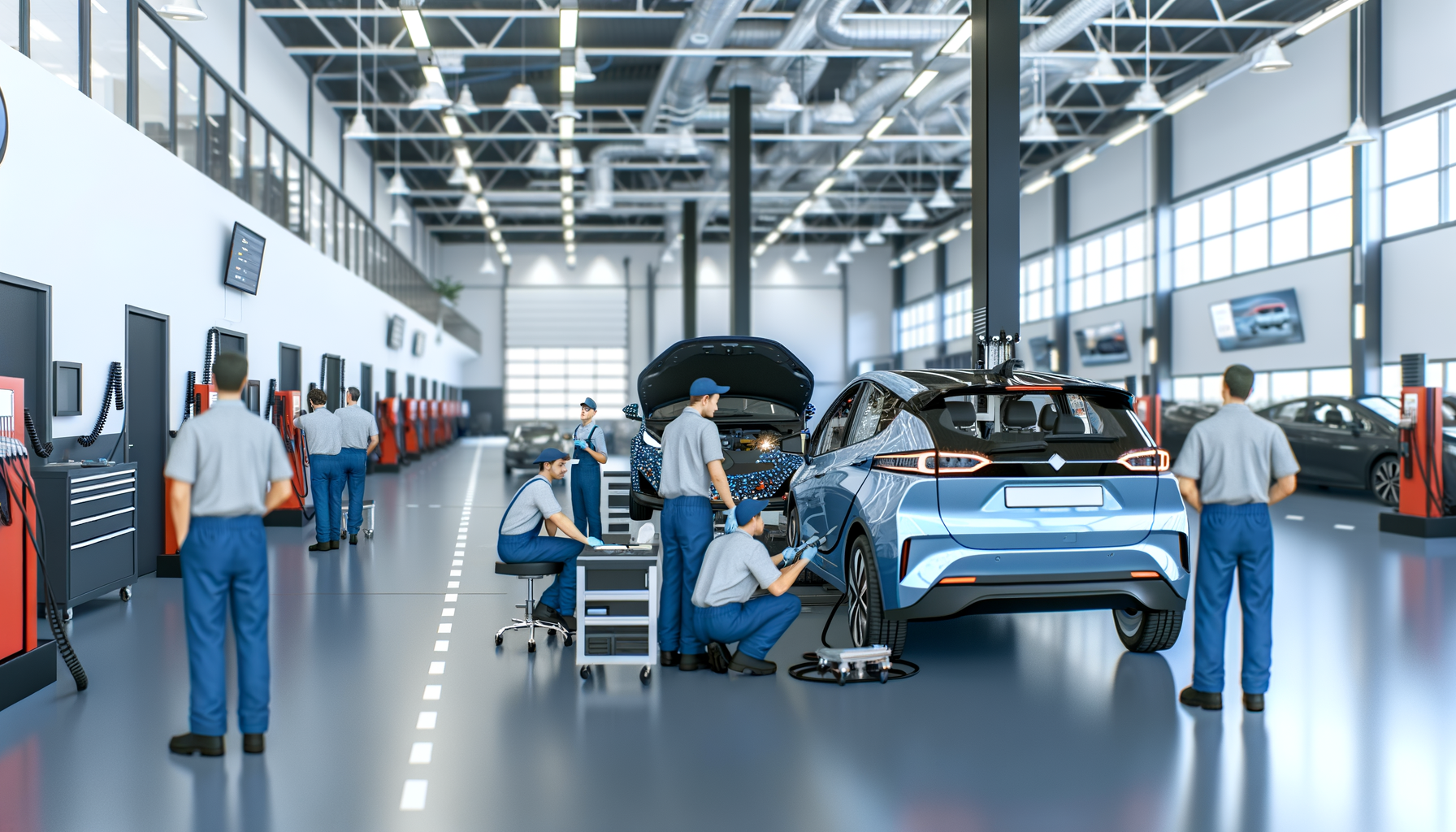
With the rise of EVs, service departments must adapt to new technologies and customer needs. This segment presents both challenges and opportunities. Ensure technicians receive specialized training in EV systems and safety protocols. This not only meets OEM requirements but also positions your department as an industry leader. Market your expertise in EV and hybrid services to attract new customers. For example, one dealership increased their EV service revenues by 30% after launching targeted marketing campaigns.
"By investing in specialized EV training, we've captured a significant market share and gained a competitive edge." - John Smith, Service Director at Green Motors
Questions managers ask
What are the most effective KPIs for a service department?
The most effective KPIs include labor efficiency, parts-to-labor ratio, service cycle time, and customer retention rate, as they directly impact profitability and operational success.
How can technology improve service department profitability?
Technology enhances profitability by automating routine tasks, providing predictive analytics for better inventory management, and improving customer service through digital tools.
What strategies can reduce staff turnover in a service department?
Implementing comprehensive training programs, offering competitive salaries, and creating clear career progression opportunities are effective strategies to reduce turnover.
What to do with this
By leveraging advanced KPIs, integrating technology, and focusing on customer satisfaction, service departments can significantly enhance profitability. Keep adapting to industry trends, such as EV services, to stay competitive. Begin by setting KPI benchmarks, invest in relevant technology, and enhance customer and staff engagement strategies. Auto Pro Solutions offers an integrated platform that simplifies KPI tracking, enhances customer engagement, and supports service departments in achieving higher profitability.
Related topics
More for service managers
Revving Up Service Profitability: The Complete Playbook
Dealership service departments today are navigating a landscape fraught with challenges. Rising operational costs, intensifying competition from aftermarket service providers,…
The Profit Gearbox: Fine-Tuning Service Revenues with Precision Engineering
In the ever-evolving landscape of automotive services, staying financially afloat is more challenging than ever for dealership service departments. Rising costs, the pressure…
Turbocharging Profits: The Underrated Role of Customer Satisfaction in Service Departments
Imagine a bustling dealership service department where every bay is full, technicians are actively engaged, and customers leave satisfied and eager to return. Yet, despite…