The Ultimate Playbook for Boosting Service Department Efficiency
Understanding the Challenge

In many service departments, inefficiencies are the silent culprits stealing profitability and customer satisfaction. Long customer wait times, technician frustration, and lost opportunities are more than just operational hiccups—they are barriers to success. But what drives these inefficiencies? The technician shortage is a significant factor, with nearly 1 million new-entry technicians needed over the next five years. This shortage not only constrains capacity but elongates cycle times, leaving customers dissatisfied and technicians overworked.
Beyond staffing challenges, there's the issue of outdated processes and fragmented technology stacks that hinder scheduling, approvals, and reporting. Many service departments operate in silos, using disparate systems that don't communicate effectively. This fragmentation leads to scheduling mishaps, miscommunication, and ultimately, lost revenue.
The customer experience is also suffering. With only 54% of vehicles aged two years or less returning to the selling dealer for service, it's clear that customer loyalty is dwindling. High costs and poor communication are common complaints, driving customers to seek alternatives outside the dealership network.
Understanding these challenges is the first step to crafting solutions that increase efficiency. It's about recognizing where the bottlenecks are and how they impact both the bottom line and customer satisfaction. By addressing these issues head-on, dealerships can begin to transform their service departments into well-oiled machines capable of handling increased demand without sacrificing quality.
Current Industry Landscape
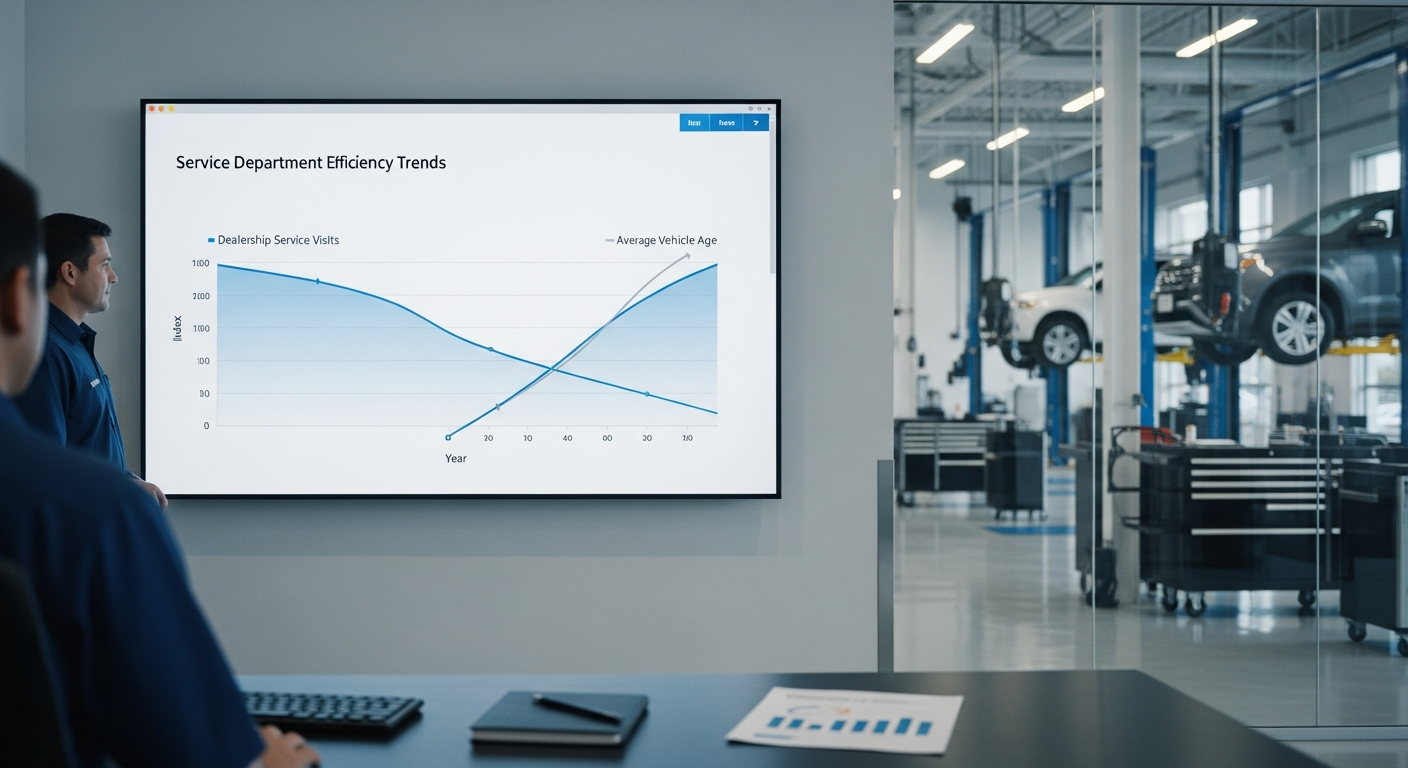
The automotive service industry is on the brink of transformation, driven by both market demands and technological advancements. With the average age of U.S. light vehicles reaching 12.8 years, maintenance demand is rising. However, dealerships are losing ground to independent service providers, as evidenced by the 12% decrease in service visits since 2018.
Technological advancements are reshaping the landscape. AI-enabled scheduling and communication platforms are becoming increasingly popular as dealerships seek to optimize their operations. Tools like Cox Automotive Xtime and Tekion ARC Service are leading the charge, offering real-time dashboards and AI-driven communications that promise increased retention and return on investment.
Moreover, the integration of digital multipoint inspections (MPI) with video capabilities is revolutionizing how service approvals are handled. This technology not only improves transparency but also empowers customers to make informed decisions, thus enhancing their overall experience.
Despite these advancements, challenges remain. Many dealerships struggle with integrating these technologies into their existing systems, resulting in fragmented operations and missed opportunities. The push toward unified, integrated ecosystems is more critical than ever, as dealerships aim to streamline their processes and reduce cycle times.
The Solution Framework
To combat these challenges, service departments need a cohesive framework that leverages both technology and process improvements. Auto Pro Solutions offers a comprehensive suite of tools designed to optimize every facet of service operations. From intelligent scheduling to workflow automation, these solutions are tailored to enhance efficiency and drive profitability.
Intelligent scheduling powered by AI can significantly reduce customer wait times and improve technician utilization. By understanding the unique constraints of each dealership, these systems can dynamically allocate resources and manage appointments with precision.
Workflow automation is another critical component. By automating routine tasks and processes, service departments can free up valuable technician time, allowing them to focus on more complex repairs. This not only boosts productivity but also increases job satisfaction, which is crucial in the face of the ongoing technician shortage.
Moreover, the adoption of digital MPIs with video capabilities allows for more transparent and efficient communication with customers. This technology not only speeds up approval processes but also builds trust, which is essential for retaining customers in a competitive market.
Implementation Guide
Implementing these solutions requires a strategic approach that considers both the current state of operations and the desired outcomes. Here’s how to get started:
First, conduct a comprehensive audit of your current processes and technology. Identify areas where inefficiencies are most prevalent and prioritize them for improvement.
Next, select the right tools that align with your dealership's needs. Look for solutions that integrate seamlessly with your existing DMS to avoid disruptions during implementation.
Training your staff is crucial. Ensure that both technicians and service advisors are well-versed in the new systems to maximize their benefits. Consider phased implementation to allow for smoother transitions.
Finally, establish clear metrics for success. By tracking KPIs such as Effective Labor Rate (ELR) and Hours Per Repair Order (HPRO), you can gauge the effectiveness of your improvements and make data-driven decisions moving forward.
Measuring Success
To truly understand the impact of your efficiency initiatives, it’s essential to measure success through specific KPIs. The Effective Labor Rate (ELR) is a critical metric that indicates how much revenue is being generated per labor hour. By focusing on improving ELR, service departments can boost profitability.
Hours Per Repair Order (HPRO) is another vital KPI. By optimizing this metric, you can increase throughput without the need for additional service bays, maximizing existing capacity.
RO cycle time should be broken down into measurable stages to pinpoint where delays occur. By managing each stage as a constraint, you can significantly reduce overall cycle times.
Moreover, tracking show rates and customer satisfaction scores will provide insight into how well your department is meeting customer expectations and retaining business.
Advanced Strategies
Once the basics are in place, advanced strategies can take your service department to the next level. Consider implementing self-service kiosks to streamline check-ins and reduce advisor workload. This technology not only improves efficiency but also enhances the customer experience by offering convenience and upsell prompts.
AI-enabled communication platforms can further optimize scheduling and reduce no-show rates. By sending layered reminders via SMS, calendar invites, and day-of calls, you can significantly increase appointment show rates.
Additionally, consider adopting inspection lanes to expedite the diagnostic process. By integrating these lanes into your service model, you can capture more upsell opportunities and improve technician efficiency.
Scaling these strategies requires ongoing evaluation and adaptation. Regularly review your KPIs and customer feedback to ensure your operations continue to align with both business objectives and customer expectations.
Related Topics
Ready to take your service department to the next level?
Schedule your demo today and experience the power of Auto Pro Solutions.
Schedule Demo