Transforming Service Departments: Embrace Digital Innovation
Understanding the Challenge
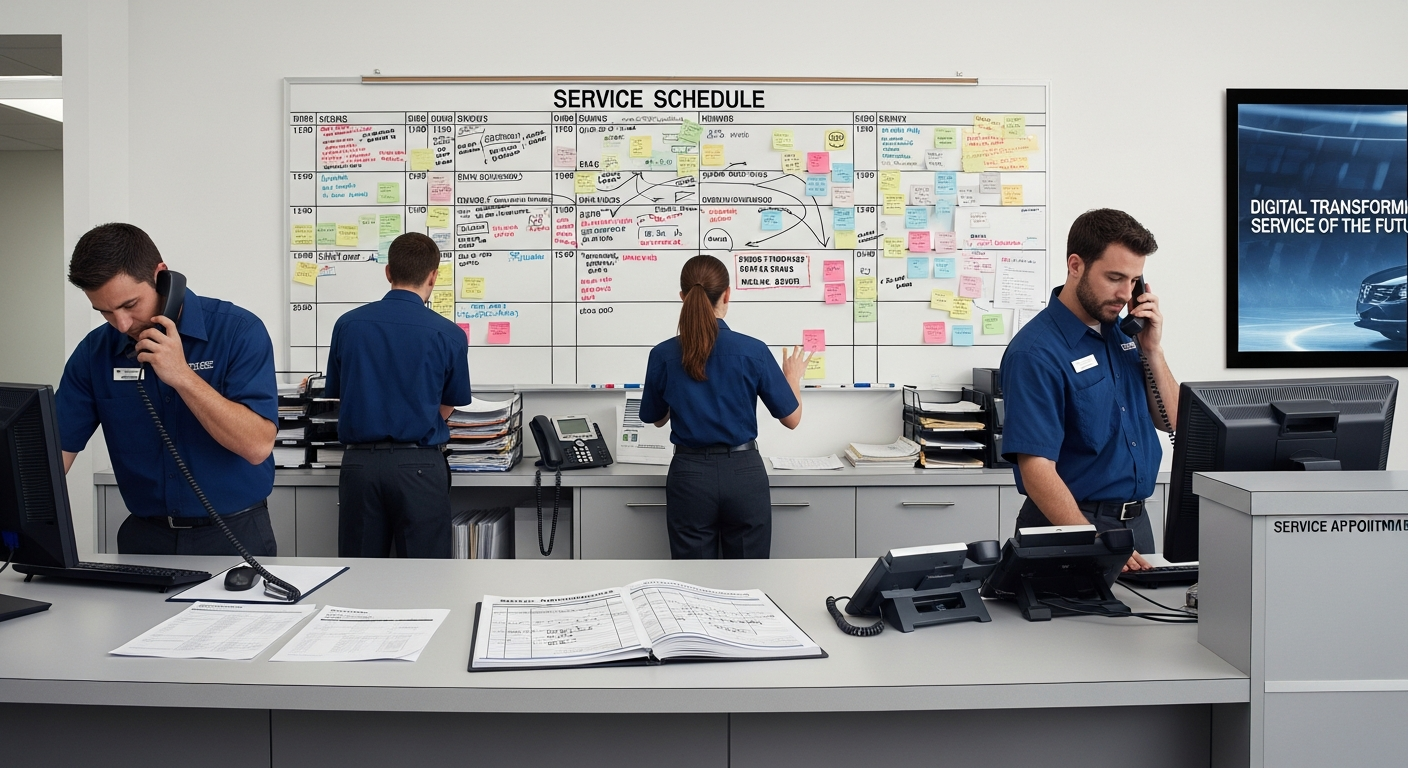
Service departments today are facing unprecedented challenges. From long appointment wait times to technician shortages, the issues are multifaceted and widespread. For example, two-thirds of service customers still rely on the phone to book appointments, leading to missed and abandoned calls. Meanwhile, the technician shortage is a persistent issue, limiting throughput and causing scheduling headaches.
Additionally, the integration of technology into service operations is often inadequate or fragmented, resulting in inefficiencies. Many dealerships experience data silos and complex integrations that make platform migrations costly and time-consuming. These challenges not only strain resources but also impact customer satisfaction, as evidenced by the 45% of vehicle owners reporting dissatisfaction due to communication and cost issues.
The impact of these challenges is significant. Dealerships have lost a share of service visits to independent shops, with only 54% of owners with vehicles two years old or less returning to the selling dealer for service in 2025, a drop from 72% in 2023. This decline is a direct result of not meeting customer expectations in terms of service efficiency and communication.
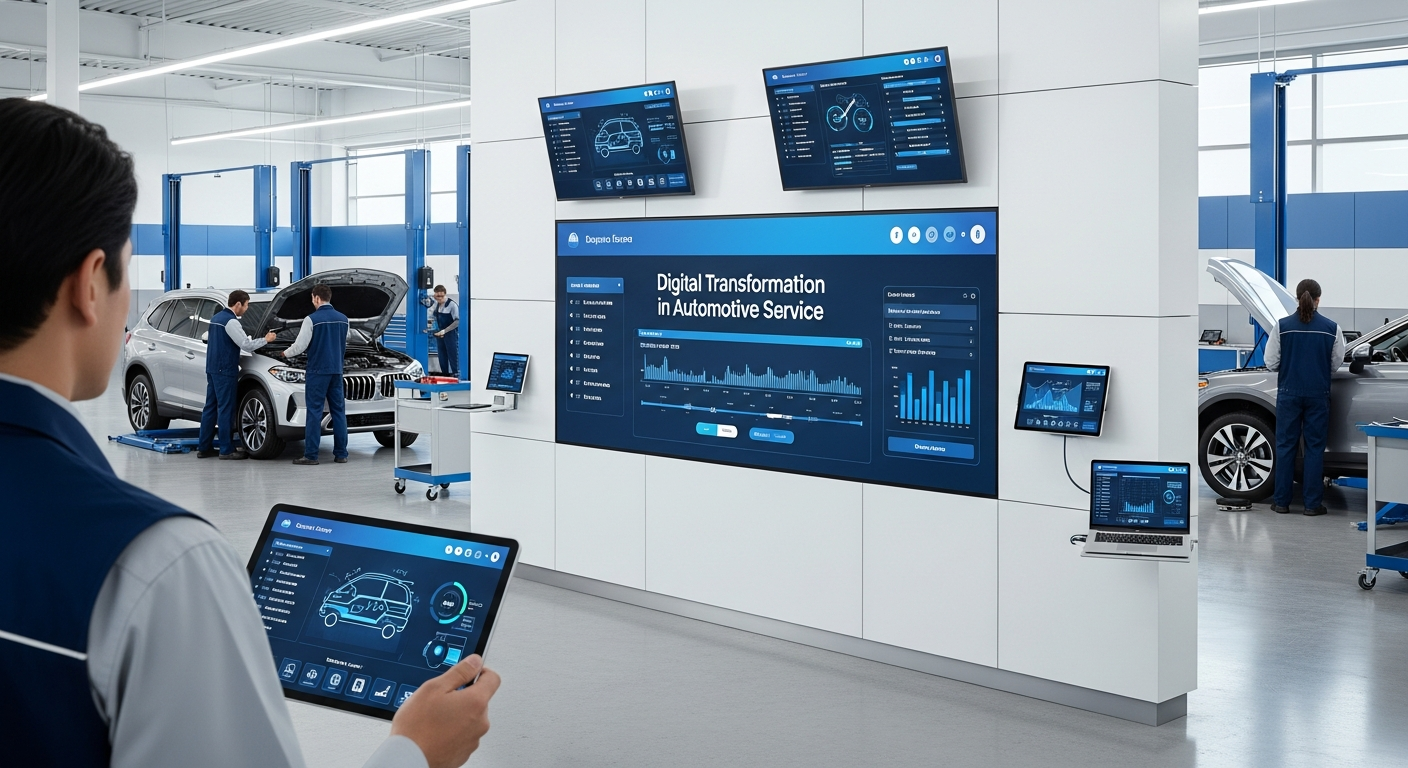
To regain competitive advantage, service departments must address these pain points by embracing digital transformation. This means leveraging AI-driven scheduling, video MPIs, and automated inspections to enhance operational efficiency and customer experience.
Current Industry Landscape

The automotive service industry is amidst a digital revolution. Emerging technologies such as AI-driven scheduling and video MPIs are changing the way service departments operate. For instance, tools like Xtime and STELLA Automotive AI are pioneering voice and text AI for service scheduling, ensuring that appointments are set efficiently without overbooking bays.
The market is seeing a shift towards integrating AI and automated tools to streamline operations and improve customer communication. At NADA 2026, various innovations were unveiled, including Cox Automotive’s vAuto and UVeye's joint solutions that integrate AI inspection data into service workflows, enhancing efficiency.
Despite these advancements, many dealerships are still playing catch-up. For example, a significant percentage of service calls go unanswered, and many online scheduling systems encounter errors, preventing customers from booking at their preferred times.
Dealerships must stay abreast of these trends and incorporate innovative solutions into their operations to remain competitive. This involves not only adopting new technologies but also training staff to utilize these tools effectively.
The Solution Framework
To transform your service department, a comprehensive digital solution framework is necessary. This involves integrating digital tools that align with your existing DMS and address specific operational challenges.
AI-driven scheduling solutions can reduce average days-to-appointment by optimizing booking processes and ensuring that technician skills and bay availability are matched with customer needs. Video MPIs can drive incremental revenue by enhancing transparency and increasing approval rates.
It's also crucial to implement customer communication tools that provide timely updates and confirmations, reducing no-shows and improving the overall customer experience. Automated inspections, such as those provided by UVeye, can streamline the check-in process, ensuring that vehicles are serviced promptly and accurately.
By adopting a holistic digital transformation strategy, dealerships can enhance efficiency, increase customer satisfaction, and ultimately improve profitability. This requires careful planning and execution, but the rewards make it a worthy investment.
Implementation Guide
Implementing digital transformation in your service department requires a structured approach. Start by assessing your current operations and identifying areas where digital tools can provide the most significant impact.
Next, choose the right technology partners. Look for solutions that offer seamless integration with your existing DMS and have a proven track record in the industry. Consider vendors like Tekion, Xtime, and Solera, which offer comprehensive platforms for fixed ops workflows.
Develop a detailed implementation plan that includes timelines, roles, and responsibilities. Ensure that your team is adequately trained on new tools and processes, and establish clear communication channels to address any issues that arise during the transition.
Finally, monitor progress and adjust your strategy as needed. Use KPIs such as days-to-appointment, bay utilization, and approval rates to measure success and identify areas for improvement.
Measuring Success
Once digital tools are implemented, it's essential to measure their impact on your service department's performance. Key performance indicators (KPIs) will help you evaluate the effectiveness of your digital transformation strategy.
Track metrics such as average days-to-appointment, show rates, bay utilization, and customer satisfaction scores. These indicators will provide insights into how well your service department is performing and where improvements can be made.
Additionally, analyze financial metrics like revenue per repair order (RO) and approval rates for video MPIs. These figures will highlight the financial benefits of your digital initiatives and help justify further investment.
Regularly review these KPIs and use them to guide decision-making and strategy adjustments. This will ensure that your service department continues to evolve and meet the changing needs of customers.
Advanced Strategies
As your service department becomes more digitally integrated, there are advanced strategies you can employ to further optimize and scale your operations.
Consider implementing A/B testing to refine your digital tools and strategies. This involves comparing different approaches to determine which yields the best results in terms of efficiency and customer satisfaction.
Focus on cross-tool KPI dashboards that provide a comprehensive view of your service department's performance. This will enable you to make data-driven decisions and identify opportunities for improvement.
Additionally, explore advanced AI capabilities for predictive scheduling and automated diagnostics. These technologies can further enhance efficiency and reduce downtime, allowing you to serve more customers with fewer resources.
Related Topics
Ready to take your service department to the next level?
Schedule your demo today and experience the power of Auto Pro Solutions.
Schedule Demo