
In today's rapidly evolving automotive landscape, service departments are under increasing pressure to maintain profitability while adapting to new technological demands. This guide provides a comprehensive roadmap for service department managers and fixed ops directors to not only meet but exceed profitability goals in 2025. With a focus on actionable strategies and industry-specific insights, you'll discover how to optimize your operations, reduce costs, and enhance customer satisfaction.
Understanding the Profitability Equation in Service Departments
Breaking Down Key Financial Metrics

Achieving profitability in an automotive service department requires a nuanced understanding of key financial metrics such as service gross profit margins, labor efficiency, and parts sales. Each element contributes uniquely to the bottom line and demands careful management. For instance, service gross profit margins can be optimized by closely managing labor costs and maximizing parts markup. Industry benchmarks suggest that successful departments maintain margins of at least 50% on labor and 45% on parts. To implement these metrics effectively, consider conducting monthly financial reviews using detailed P&L statements. This will help identify areas needing improvement and track progress over time.
| Metric | Industry Benchmark | Action to Improve | |-------------------|--------------------|----------------------------------------------| | Labor Efficiency | 85% | Implement advanced scheduling tools | | Parts Gross Margin| 45% | Optimize parts inventory to reduce stockouts |
Leveraging Technology for Efficiency and Profit
Integrating Advanced Tools

As technology continues to advance, service departments must leverage the latest tools to enhance efficiency. The integration of automated scheduling systems and digital inspections can significantly reduce downtime and improve service throughput. A study from 2024 indicated that dealerships using digital inspection tools saw a 20% increase in average repair order value. This is attributed to better transparency and communication with customers, leading to more informed decisions. To capitalize on these tools, start by assessing your current technology stack. Implement solutions like Auto Pro Solutions that offer integrated features for scheduling, inspection, and customer communication.
1. Implement automated scheduling systems. 2. Use digital inspection tools to boost transparency. 3. Integrate customer communication platforms.
Enhancing Customer Loyalty and Retention
Building Long-Term Relationships

Customer loyalty is a vital component of service department profitability. Retaining customers reduces acquisition costs and increases lifetime value. Studies show a 5% increase in customer retention can boost profits by 25-95%. One effective strategy is implementing a loyalty program that rewards repeat visits and referrals. Additionally, personalized communication, such as service reminders and follow-ups, can reinforce the relationship. Begin by analyzing your current customer touchpoints and identify areas for personalization. Incorporate CRM systems that enable targeted communication based on customer preferences.
Customer retention isn't just about keeping customers—it’s about building relationships that are beneficial to both parties.
Staff Training and Retention Strategies
Cultivating a Skilled Workforce
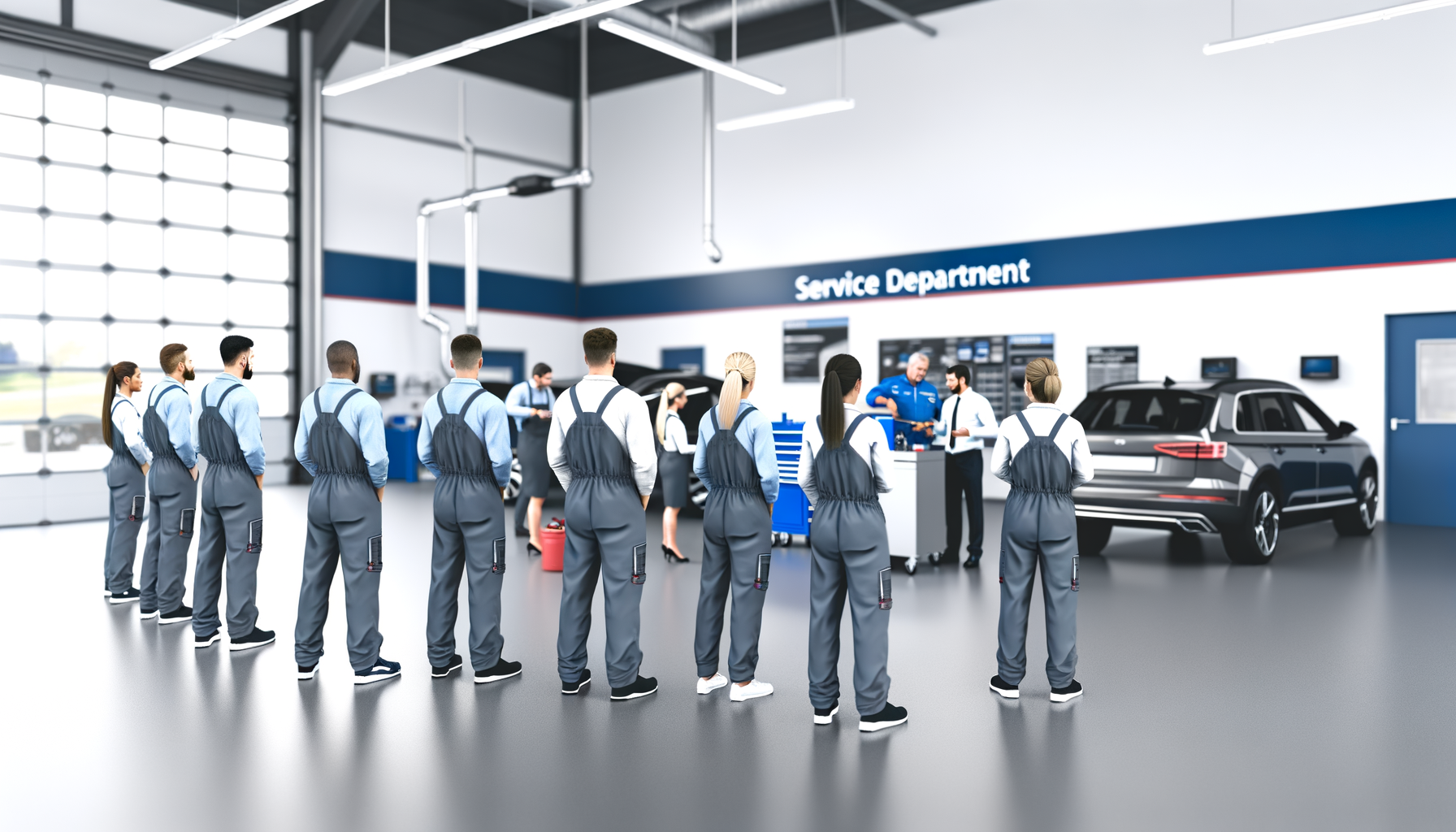
A well-trained and motivated staff is crucial for service department success. High turnover rates can disrupt operations and increase costs, making staff retention a top priority. Investing in continuous training and development programs not only improves staff skills but also boosts morale. For example, offering ASE certification courses can enhance technician expertise and job satisfaction. Establish a structured training program that includes both technical skills and customer service excellence. Regularly evaluate staff performance and provide feedback to foster development.
Tip: Develop career advancement pathways to motivate and retain top talent.
Data-Driven Decision Making and Analytics
Harnessing the Power of Data

The ability to make informed decisions based on data analytics is a game-changer for service departments. By leveraging data, managers can identify trends, forecast demand, and optimize inventory levels. A 2024 survey of dealerships found those with robust analytics systems improved efficiency by 30%. Implementing dashboards that track key KPIs such as technician productivity and average repair order value can provide actionable insights. Begin by integrating data analytics tools into your operations. Tools like Auto Pro Solutions offer comprehensive analytics capabilities that help transform raw data into strategic actions.
1. Implement data analytics tools. 2. Develop dashboards for real-time KPI monitoring. 3. Use insights to forecast demand and optimize operations.
Overcoming Common Profitability Challenges
Strategic Solutions for 2025

Service departments face numerous challenges, from parts shortages to evolving customer expectations. Tackling these head-on with strategic solutions is essential for sustained profitability. For instance, parts shortages can be mitigated by establishing reliable supply chain partnerships and maintaining buffer stock for critical components. Meanwhile, enhancing digital service offerings can meet the 68% of customers preferring digital interactions. Start by conducting a SWOT analysis of your operations to identify specific challenges. Develop targeted strategies like diversifying suppliers and expanding digital touchpoints to address these issues.
| Challenge | Strategic Solution | |-------------------|-----------------------------------------| | Parts Shortages | Establish reliable supply chain partners| | Customer Expectations| Expand digital service offerings |
Questions managers ask
How can service departments increase profitability in 2025?
Service departments can increase profitability by optimizing labor efficiency, leveraging technology for better customer communication, and using data analytics to make informed decisions.
What are the key metrics for evaluating service department success?
Key metrics include service gross profit margins, labor efficiency percentage, parts gross margin, and customer retention rates.
What to do with this
In 2025, service departments must adopt a multifaceted approach to boost profitability, focusing on technology integration, customer retention, and data-driven decision-making. Conduct a comprehensive review of your current operations, implement advanced tech solutions, and invest in staff training to stay ahead. Auto Pro Solutions offers integrated tools that streamline operations and provide analytics to drive your service department's profitability forward.
Related topics
More for service managers
Revving Up Service Profitability: The Complete Playbook
Dealership service departments today are navigating a landscape fraught with challenges. Rising operational costs, intensifying competition from aftermarket service providers,…
The Profit Gearbox: Fine-Tuning Service Revenues with Precision Engineering
In the ever-evolving landscape of automotive services, staying financially afloat is more challenging than ever for dealership service departments. Rising costs, the pressure…
Turbocharging Profits: The Underrated Role of Customer Satisfaction in Service Departments
Imagine a bustling dealership service department where every bay is full, technicians are actively engaged, and customers leave satisfied and eager to return. Yet, despite…