The Gear Grid: Unleashing Your Parts Department's Hidden Potential
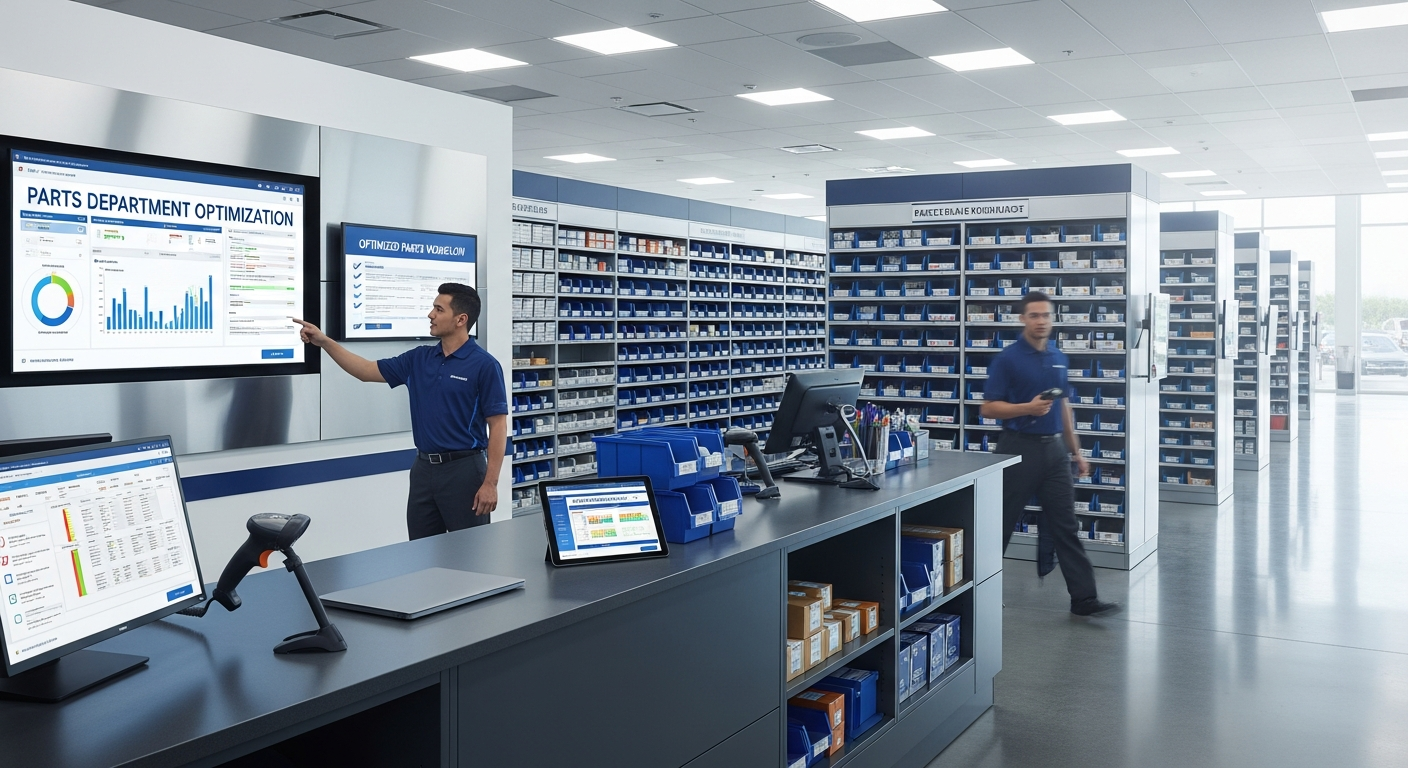
Understanding the Challenge
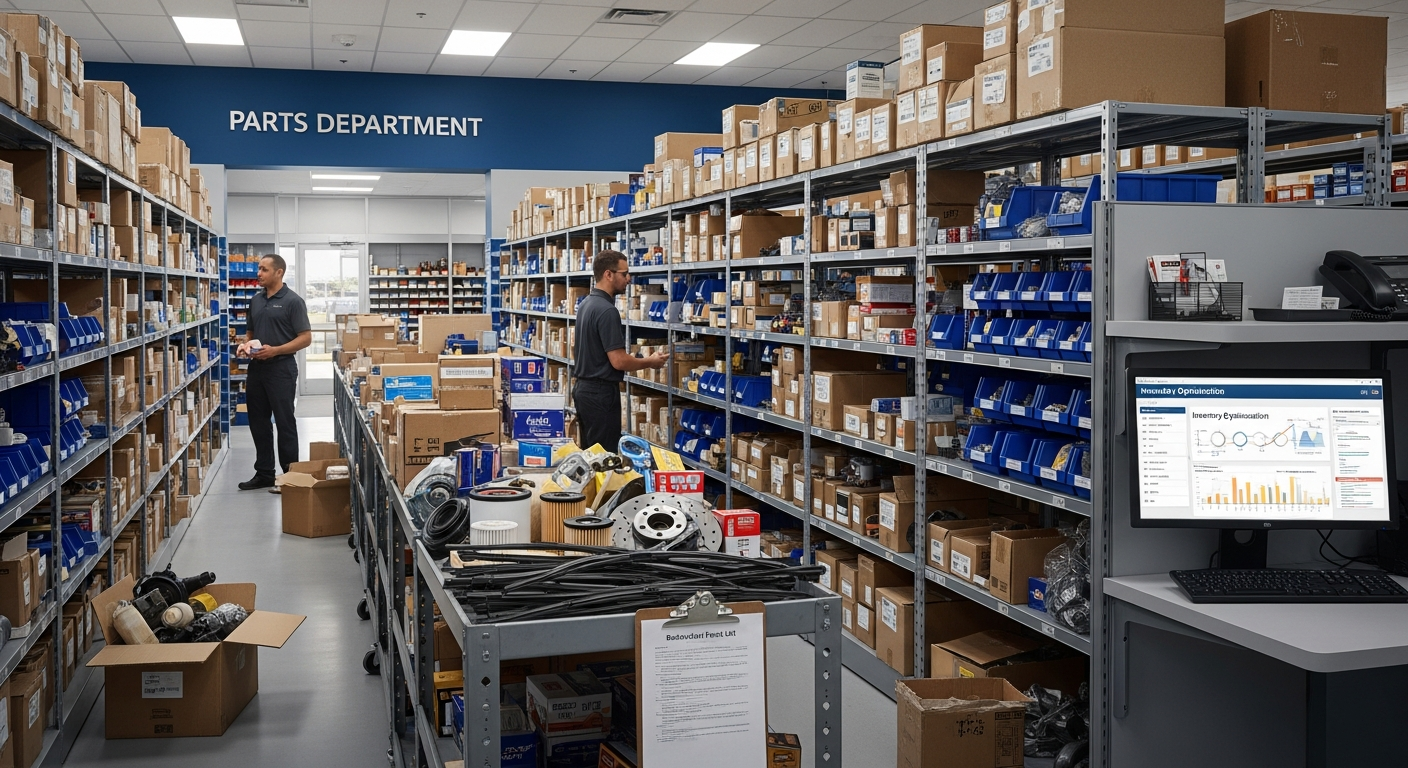
The heart of any successful service department lies in its ability to efficiently manage its parts inventory. Yet, many dealerships face challenges such as poor inventory management, high obsolescence rates, and missed upsell opportunities. These issues lead to increased technician idle time and missed revenue, impacting the dealership's bottom line.
A common pain point is the lack of a consistent first-time fill rate (FTFR) and same-day fill rate, which directly affects service department efficiency. Dealerships often struggle with setting realistic targets due to varied OEM lead times and regional differences. This inconsistency leads to stockouts or overstock, both of which are detrimental.
Moreover, data integrity issues and poor lost-sales capture further complicate inventory management. Without accurate data, stocking decisions are based on assumptions rather than insights, leading to inefficiencies and increased holding costs.
Technician idle time, caused by parts backorders, is another significant challenge. This not only affects the productivity of the service department but also impacts customer satisfaction and loyalty.
Finally, the threat of cyber incidents, as highlighted by the 2024 CDK Global cyberattack, underscores the need for robust cyber resilience and offline processes. Without these, parts departments risk operational disruptions that can severely affect service delivery.
Current Industry Landscape
The automotive industry is undergoing significant changes, with dealerships adapting to evolving customer expectations and technological advancements. The rise in vehicle age to 12.8 years has increased demand for repairs, yet dealerships are losing service share to independents, highlighting the need for optimized parts operations.
Dealerships are setting ambitious FTFR and same-day fill goals for 2025-2026, aiming for 90%+ and ~95%, respectively. These targets are essential for maintaining customer satisfaction and service efficiency, but achieving them requires a strategic approach.
E-commerce and digital tools are becoming integral to parts operations. Platforms like RevolutionParts are enabling dealerships to expand their reach and improve parts distribution, but integration with existing systems remains a challenge.
Inventory obsolescence is a persistent issue, with dealerships seeking to balance reduction efforts with maintaining off-the-shelf availability. This requires a nuanced approach to phase-in/phase-out rules and lost-sales capture.
Finally, the industry is recognizing the importance of cyber resilience. With the threat of cyberattacks ever-present, having robust offline processes and data backup systems is essential for continuity and security.
The Solution Framework
To optimize parts departments, a strategic framework is essential. This involves leveraging intelligent inventory insights and recommendations to streamline operations and improve efficiency.
Implementing tools like OEC RepairLink and PartsEye can enhance parts procurement and inventory management. These platforms provide valuable data that helps in making informed stocking decisions and improving fill rates.
DMS integration is crucial for seamless operations. By integrating with systems like Tekion ARC DMS and PartsEdge, dealerships can enhance workflow efficiency and reduce technician idle time.
Pricing matrix optimization is another key component. By analyzing pricing data and adjusting matrices, dealerships can maximize profitability while maintaining competitiveness.
Finally, focusing on e-commerce channels is vital. By utilizing platforms like RevolutionParts, dealerships can liquidate aged inventory and expand their customer base, ultimately boosting parts sales and revenue.
Implementation Guide
Optimizing your parts department requires a systematic approach. Begin by assessing your current inventory management processes and identifying areas for improvement. Consider factors like fill rates, obsolescence, and data integrity.
Integrate advanced tools and technologies to enhance efficiency. Platforms like CDK Parts Delivery Management and Reynolds ERA-IGNITE can streamline inventory tracking and reporting, reducing errors and improving fill rates.
Train staff on new systems and processes. Ensuring that your team is well-versed in using new tools and technologies is critical for successful implementation.
Develop a robust pricing strategy. Regularly review and update your pricing matrices to ensure competitiveness and profitability. Consider the impact of pricing changes on customer satisfaction and sales volume.
Finally, establish offline processes and backup systems to ensure continuity during system outages. This is crucial for maintaining operations and mitigating the impact of cyber threats.
Measuring Success
Measuring the success of your optimization efforts is crucial for ongoing improvement. Key performance indicators (KPIs) such as FTFR, same-day fill rate, and parts-to-labor ratio provide valuable insights into operational efficiency.
Monitor these KPIs regularly to identify trends and areas for further improvement. Use data-driven insights to refine processes and enhance parts department performance.
Financial metrics, such as gross profit percentage and service absorption rates, are also important indicators of success. Aim for a service absorption rate that moves toward 100%, reflecting a high degree of self-sufficiency.
Customer satisfaction scores provide an indication of service quality and parts availability. Strive to exceed customer expectations by ensuring timely service and high availability of parts.
Finally, track the impact of e-commerce and pricing strategies on sales volume and profitability. Regular analysis will help in fine-tuning strategies for optimal results.
Advanced Strategies
Once your parts department is optimized, it's time to explore advanced strategies for scaling and continued improvement. Consider expanding your e-commerce presence to reach a broader audience and capture additional market share.
Leverage data analytics to gain deeper insights into customer behavior and inventory trends. This will enable you to anticipate demand and adjust your stocking strategies accordingly.
Explore partnerships and collaborations with suppliers to enhance your inventory offerings and reduce lead times. Strong relationships with suppliers can lead to better pricing and availability.
Invest in automation and technology to further streamline operations. Automated systems can reduce manual errors and improve efficiency across the board.
Finally, continuously review and refine your strategies. The automotive industry is dynamic, and staying ahead requires adaptability and a willingness to embrace change.
Related Topics
Ready to take your service department to the next level?
Schedule your demo today and experience the power of Auto Pro Solutions.
Schedule Demo