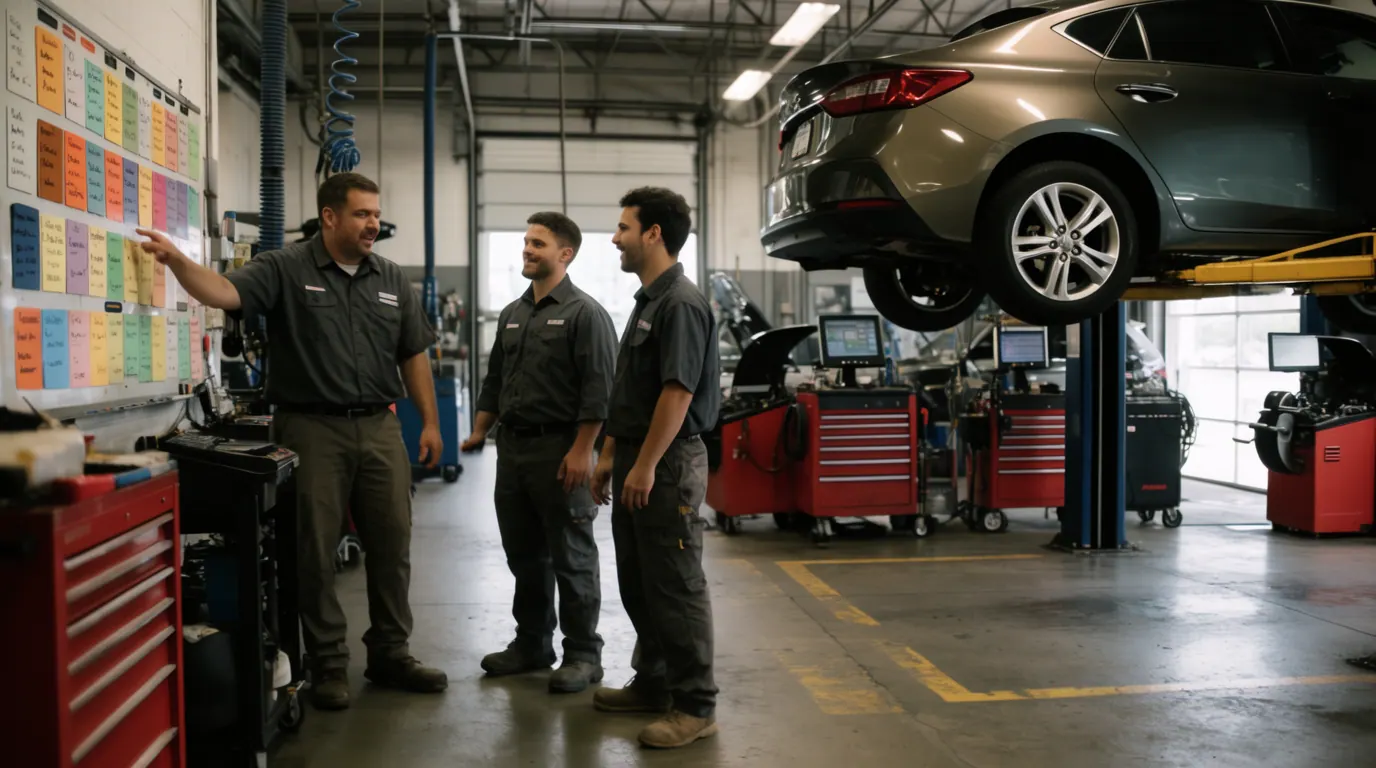
A full board can make a technician opening feel urgent enough to solve with a higher advertised rate. Sometimes your compensation does need attention. But an applicant is also deciding whether the work will be ready, the equipment will be available, and the promised schedule will survive a busy drive. Your current technicians are making that judgment from experience. Recruiting gets harder when the job described in the interview depends on a smoother day than your department can usually deliver.
That gives you a practical place to start: examine the working day before rewriting the job posting. Follow how a technician earns, waits, gets help, finds tools, and finishes a shift. NADA’s November 2026 coverage of the technician pipeline emphasizes onboarding, patient mentors, and compensation for teaching. Those subjects belong in the same management conversation as dispatch and capacity. You’re building an employment offer your shop can support when the board is full, not just when there’s room to accommodate a new hire.
Make the Pay Offer Explain the Paycheck
Start your compensation review with what a technician can realistically earn under your operating conditions. A posted flat-rate figure leaves important questions unanswered: which work reaches the technician, how diagnosis is handled, what happens during authorization delays, and whether training reduces earnings. Put those conditions beside the rate when you evaluate the offer. Review actual earnings with the work mix and attendance context attached, rather than treating a strong producer’s best period as the normal opportunity. An applicant needs a clear explanation of how the plan works on an ordinary board.
Use outside wage information with its limits visible. The Bureau of Labor Statistics reports median annual wages of $59,920 for automotive service technicians and mechanics at automobile dealers in May 2025. That’s a historical national reference, not a local recruiting offer, a master-technician target, or an advertised flat-rate hourly rate. It can help frame a compensation discussion, but it can’t settle yours. Compare the complete local employment package, including benefits, required hours, training treatment, and tool obligations. Then ask whether your actual work distribution makes that package attainable.
Before changing the plan, identify who currently absorbs time that doesn’t produce a completed repair. Walk through a delayed authorization, a difficult diagnosis, a training assignment, and a request to help an apprentice. Explain the existing treatment to the technicians affected and listen for uncertainty or inconsistent application. Where you choose to provide income protection, document the conditions and approval responsibility. Have payroll and the appropriate employment adviser review changes. Clear rules let you discuss a difficult week without renegotiating the meaning of the pay plan after the work is done.
- Actual earnings beside the advertised rate
- Written treatment of delays and training
- Local comparisons with national context
Read the Board From the Technician’s Side
A board can look healthy from the appointment desk while feeling unworkable at the bays. A technician may have plenty assigned but little that can move: parts are missing, approval is pending, or the next job needs equipment already in use. To understand that experience, trace work through the shop with the technician rather than reviewing assigned hours alone. Ask what was ready when the previous repair ended and what interrupted the next start. You’re looking for recurring operating conditions, not an explanation of why someone should have worked faster.
Make readiness part of the dispatch conversation. Before work moves to a technician, establish whether the concern is clear, the required information is available, and the job fits that person’s demonstrated capability. When readiness is uncertain, identify who will resolve it and what the technician should work on meanwhile. The same discipline applies to carryovers. Loading yesterday’s unresolved work onto today’s full schedule without discussing its remaining needs leaves the technician to reconcile competing promises. A visible hold reason and a responsible person make that conflict easier for management to address.
Fairness also needs an operating definition. Equal repair-order counts won’t explain differences in diagnostic difficulty, interruptions, or teaching responsibilities. Review those burdens with dispatch and the technicians, particularly when your strongest diagnosticians repeatedly inherit stalled work. Agree on how you’ll recognize a heavy assignment and who can rebalance the day. Include departure commitments and planned absences in that discussion before accepting more work. You may still have difficult days, but the department should have an explicit way to resolve them without relying on the same people to absorb every exception.
- Ready work rather than assigned work alone
- Visible hold reasons and ownership
- Fair treatment of difficult assignments
Protect Teaching When Production Gets Tight
Hiring an apprentice creates a teaching obligation that remains when express is short-handed or the main shop falls behind. The NADA/ASE apprenticeship implementation guide addresses misaligned pay plans, inappropriate dispatch, and learners who remain trapped in entry-level work. Treat those as design questions before the apprentice arrives. Decide which tasks are appropriate, who approves progression, and who can protect a learning assignment when production pressure rises. Without that authority, a development plan can become something everyone supports until the department needs coverage, leaving the apprentice unsure how advancement actually happens.
Choose the mentor for the ability to explain, observe, and correct respectfully, as well as technical competence. Then give that person a workable assignment. NADA’s technician-pipeline coverage specifically emphasizes compensating mentors for teaching; your policy must explain what that means in your shop. Define how teaching affects workload and earnings, who provides backup, and how the apprentice gets help when the mentor is occupied. An open-door promise from a busy manager doesn’t answer what the learner should do with a partially completed repair and no available guidance.
Build advancement around demonstrated capability and record what the apprentice can perform, what still requires supervision, and what comes next. Review that record with the learner and mentor so progress doesn’t depend on being noticed during a busy shift. When coverage demands postpone a training assignment, management should name the replacement opportunity rather than letting it disappear. Also examine your own incentives: if supervisors are rewarded for immediate production while carrying responsibility for development, explain how you expect them to handle that conflict. Otherwise, the training plan asks them to solve a management contradiction.
- Mentor income and workload protection
- Advancement tied to demonstrated capability
- Management authority to preserve training
Treat Tooling as Part of the Employment Offer
Tool ownership deserves a plain-language conversation before an offer is accepted. BLS distinguishes technicians’ own hand tools from equipment generally supplied by employers, but that broad distinction won’t tell a new hire what your store expects. Create a written inventory of employee-supplied tools, dealership equipment, and items available through a shared tool room. Match the requirements to the work you intend to assign. For an entry-level candidate, the immediate cost of becoming ready for work belongs in the recruiting conversation alongside wages, benefits, and the path into more demanding repairs.
If you offer a starter set or tool assistance, write the ownership terms before presenting it as a benefit. Explain access, replacement, loss, damage, advancement requirements, and what happens at departure. If ownership transfers under defined conditions, make those conditions understandable without a manager’s verbal interpretation. Think through how the arrangement will be explained to existing technicians who financed their own tools, too. You don’t need identical arrangements for every career stage, but you do need a defensible explanation of what the dealership provides and why the policy supports the work assigned.
Availability matters after hiring as much as ownership matters before it. Walk the shared equipment and specialty-tool process with someone who uses it: where the item is stored, how its condition is checked, and what happens when it’s unavailable. Assign responsibility for repair decisions so a broken item doesn’t remain everyone’s known problem and nobody’s task. Apply the same attention to the physical workplace, including housekeeping, lighting, and temperature concerns. Ask technicians which conditions repeatedly make a routine assignment harder, then distinguish items you can correct promptly from investments requiring a longer approval process.
- Tool expectations disclosed before acceptance
- Clear ownership and departure terms
- Named responsibility for shared equipment
Recruit With a Job the Shop Can Demonstrate
Once the operating terms are clear, make the interview concrete. Show the candidate how work reaches a technician, how assistance is requested, and where tools and technical information are accessed. Explain the actual schedule, including evening or weekend obligations where applicable, rather than relying on a general statement about flexibility. A supervised shop visit can help a candidate understand the setting, provided you respect safety and customer privacy. Invite questions about delays, difficult assignments, and training. Those are useful questions from someone trying to understand whether your employment offer fits their working life.
Give onboarding the same operational clarity. Before arrival, establish who will welcome the technician, verify access, explain dispatch, and check that required equipment is available. Tailor technical support to demonstrated experience rather than assuming a credential answers every shop-specific question. An experienced hire still needs to learn your authorization paths and escalation rules. An apprentice needs closer supervision and explicit boundaries. Ask the new employee to explain how they would get help with a stalled job; their answer can reveal gaps that a completed orientation checklist won’t show you.
Keep checking whether the delivered job matches the promised one. Ask current and newly hired technicians what makes earnings unpredictable, which commitments are hardest to rely on, and where they hesitate to request help. Give people a way to raise concerns privately, then report back on what you’ll change and what remains unresolved. NADA’s pipeline coverage includes surveying employees about their workplace; the useful management work comes after collecting the answers. Turn repeated concerns into assigned decisions, and bring the results back into recruiting so the next candidate hears a description the shop can substantiate.
- A realistic view of the working day
- Onboarding matched to experience
- Employee feedback followed by decisions
Questions managers ask
Should we raise technician pay before changing shop processes?
If the package is uncompetitive, process improvements won’t remove the need to address pay. Review compensation and operating conditions together. Compare realistic earnings, benefits, required hours, and tool costs with relevant local opportunities, then examine whether delays or work distribution undermine the offer. Avoid asking technicians to accept a weak package in exchange for future improvements. Equally, don’t assume a higher posted rate resolves unclear diagnostic pay or unpredictable work. Explain what you’re changing in compensation and what you’re changing in the day that produces the paycheck.
Can apprenticeship incentives cover our training costs?
Treat them as a funding lead, not a completed training budget. DOL’s November 2, 2026 announcement says eligible sponsors may receive $3,500 per apprentice: $2,500 at the 90-day retention benchmark and $1,000 after nine months. The automotive provision names ASE Education Foundation as administrator. These are program payments, not wage benchmarks or guaranteed dealership payments. Verify eligibility, sponsorship, documentation, and current availability before including them in a budget. Separately calculate mentor compensation, instruction, equipment, and administrative responsibilities; the announcement doesn’t establish that the incentive covers those obligations.
How do we protect training when the board is already full?
Decide who has authority to preserve the training assignment and what work must move when capacity is unavailable. Give the mentor a workload that acknowledges teaching, establish backup supervision, and limit apprentice dispatch to demonstrated capability. When a learning assignment must change, identify its replacement rather than leaving progress open-ended. Review the conflict with whoever controls booking and dispatch. If every protected assignment can be overridden without that discussion, the department hasn’t yet made room for training, even if the written development plan is thorough.
What to do with this
Technician recruitment becomes more credible when you can explain the ordinary working day without qualifications that emerge only after hiring. The pay plan, tool policy, dispatch habits, and learning path should support the same employment promise. None of that requires pretending your shop never gets behind. It requires clear decisions about who carries the consequences when work stalls, demand exceeds capacity, or someone needs time to learn. Those decisions give current employees and applicants something concrete to evaluate.
On Monday, walk the board with dispatch and a technician, then review the experience with whoever owns compensation and training. Pick a recurring point where the promised job and the actual job separate: unavailable equipment, unclear waiting-time treatment, interrupted mentoring, or an advancement step that keeps moving. Assign responsibility for resolving it and tell the affected people what happens next. Use what you learn to correct the working day and the recruiting message together. That’s a practical place to begin keeping the technicians you’re working hard to hire.
Sources
- Dealer Driven: Fueling the Technician Pipeline: Inside ASE’s $25 Million Grant — NADA
- Automotive Service Technician Registered Apprenticeship Implementation Guide — NADA/ASE
- Automotive Service Technicians and Mechanics — U.S. Bureau of Labor Statistics
- US Department of Labor launches Registered Apprenticeship incentive payments for high-growth industries — U.S. Department of Labor
Related topics
More for service managers
Technician Recruiting Starts With the Job Your Shop Can Deliver
A full service board can make a technician opening look like an easy sell. There’s work waiting, customers need appointments, and the shop needs another productive person. But…
Keeping Technicians When the Service Board Is Full
A full appointment board can make recruiting feel urgent and onboarding feel impossible. You need another technician, but the people who could help that person settle in are…
Technician Recruitment Starts With the Day You’re Offering
A candidate walking through your shop can learn more from the dispatch board than from the recruiting conversation. They can see whether technicians have work they can…