Steering into the Digital Horizon: Transformative Strategies for Dealership Services
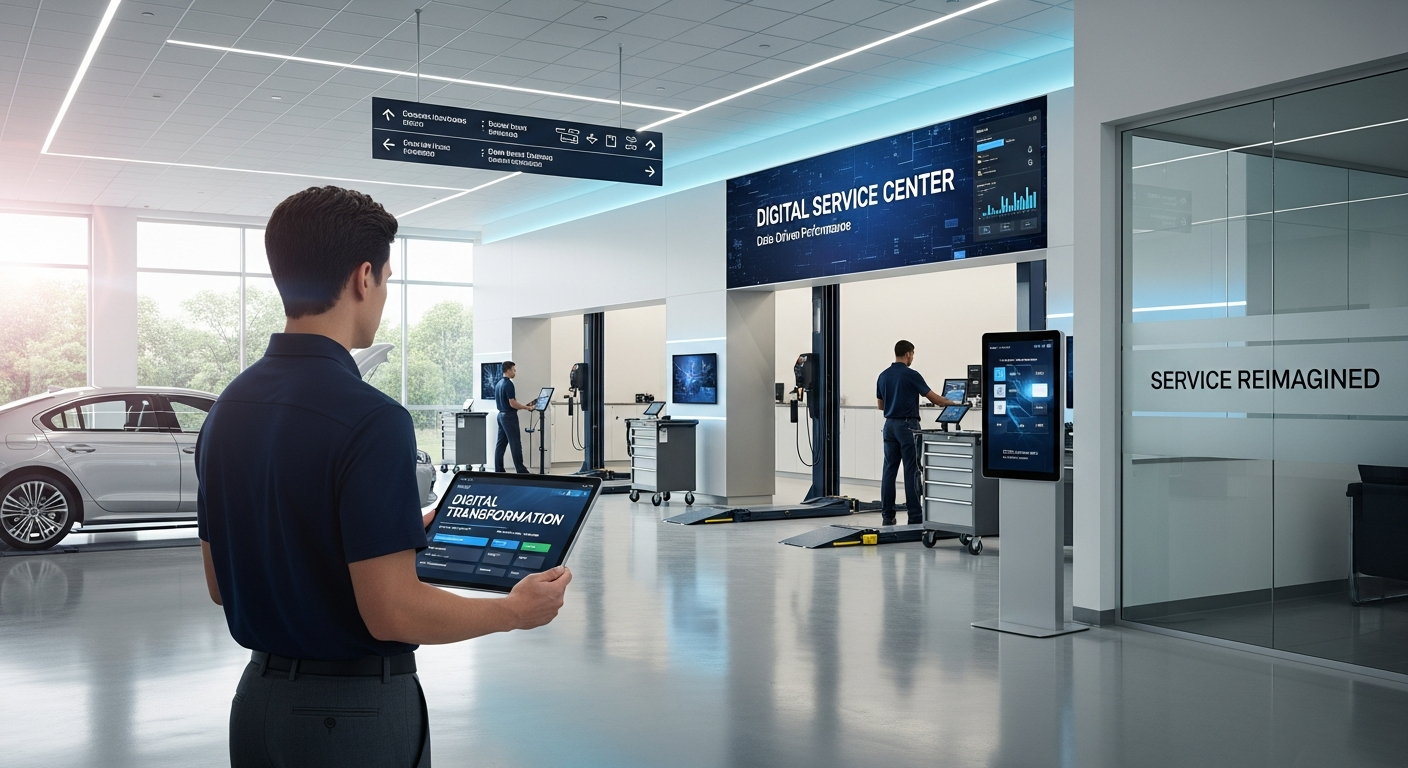
Understanding the Challenge
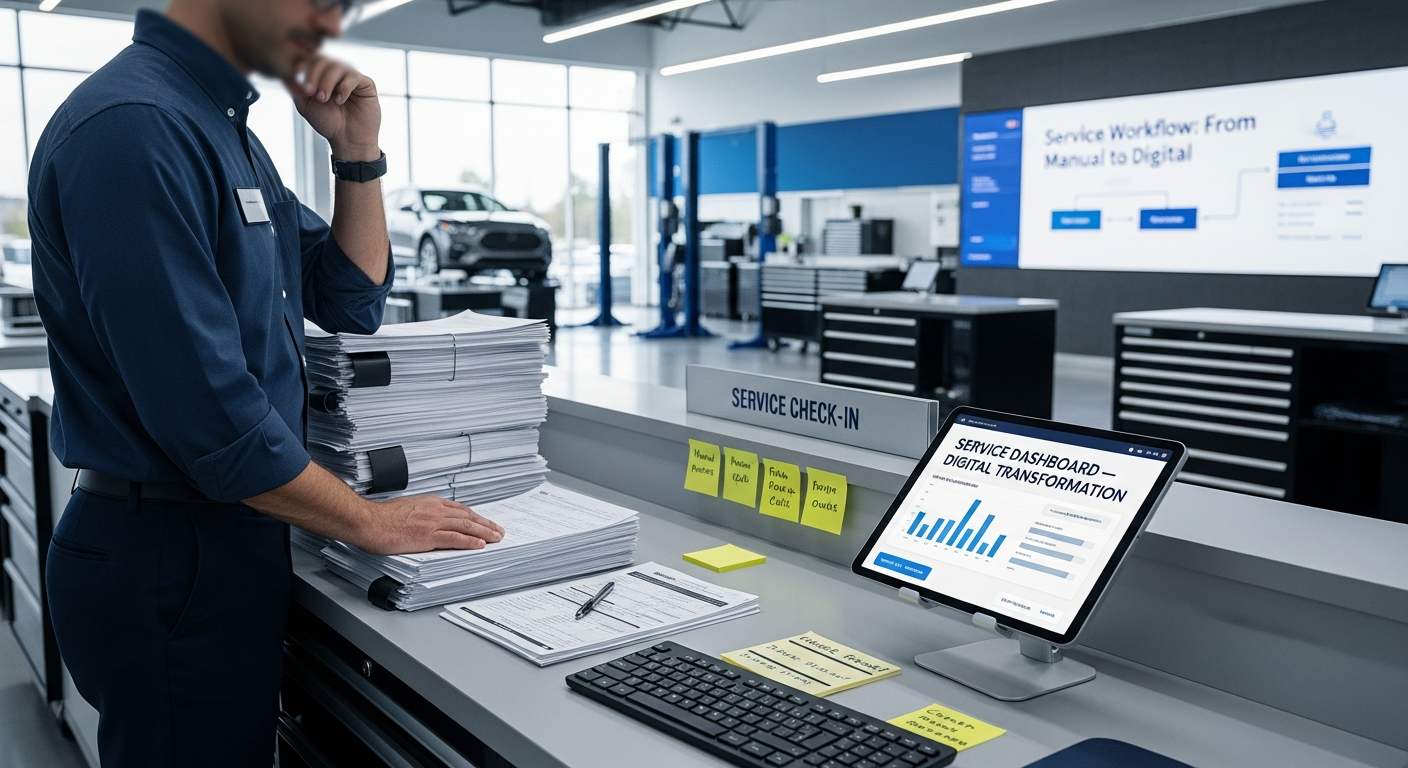
In today’s fast-paced automotive industry, service departments often find themselves stretched thin. While the traditional methods of handling appointments, customer interactions, and service processes have served dealerships well in the past, they are increasingly becoming inadequate in the face of rising customer expectations and technological advancements. The pressure to boost service department profitability while grappling with technician shortages and maintaining high customer satisfaction is immense. This is compounded by the fact that many dealerships are still operating on outdated systems, unable to fully leverage the potential of digital tools.
A key challenge is the inefficiency and fragmentation of service processes. Without integrated digital systems, service departments often rely on manual entries and disconnected software, leading to errors, delays, and dissatisfied customers. This disjointed approach also hampers the ability to provide seamless customer experiences, which are crucial in today’s competitive market.
Moreover, the lack of real-time data and insights from service operations can hinder decision-making processes, making it difficult to optimize operations and foresee potential issues. Dealerships find themselves unable to adequately forecast parts demand, manage inventory effectively, or streamline appointment bookings, all of which are critical to maintaining smooth operations and high customer satisfaction.
The technician shortage is another pressing concern. With nearly 1 million new-entry technicians needed in the next five years, service departments must find ways to maximize the productivity of their existing workforce while attracting new talent. However, without modern tools that can aid in training and efficiency, retaining skilled technicians becomes a daunting task.
Finally, the threat of cybersecurity breaches, particularly with the increasing reliance on digital systems, cannot be overlooked. Compliance with the FTC Safeguards Rule and ensuring robust cybersecurity measures are in place is essential to protect both dealership operations and customer data.
Current Industry Landscape
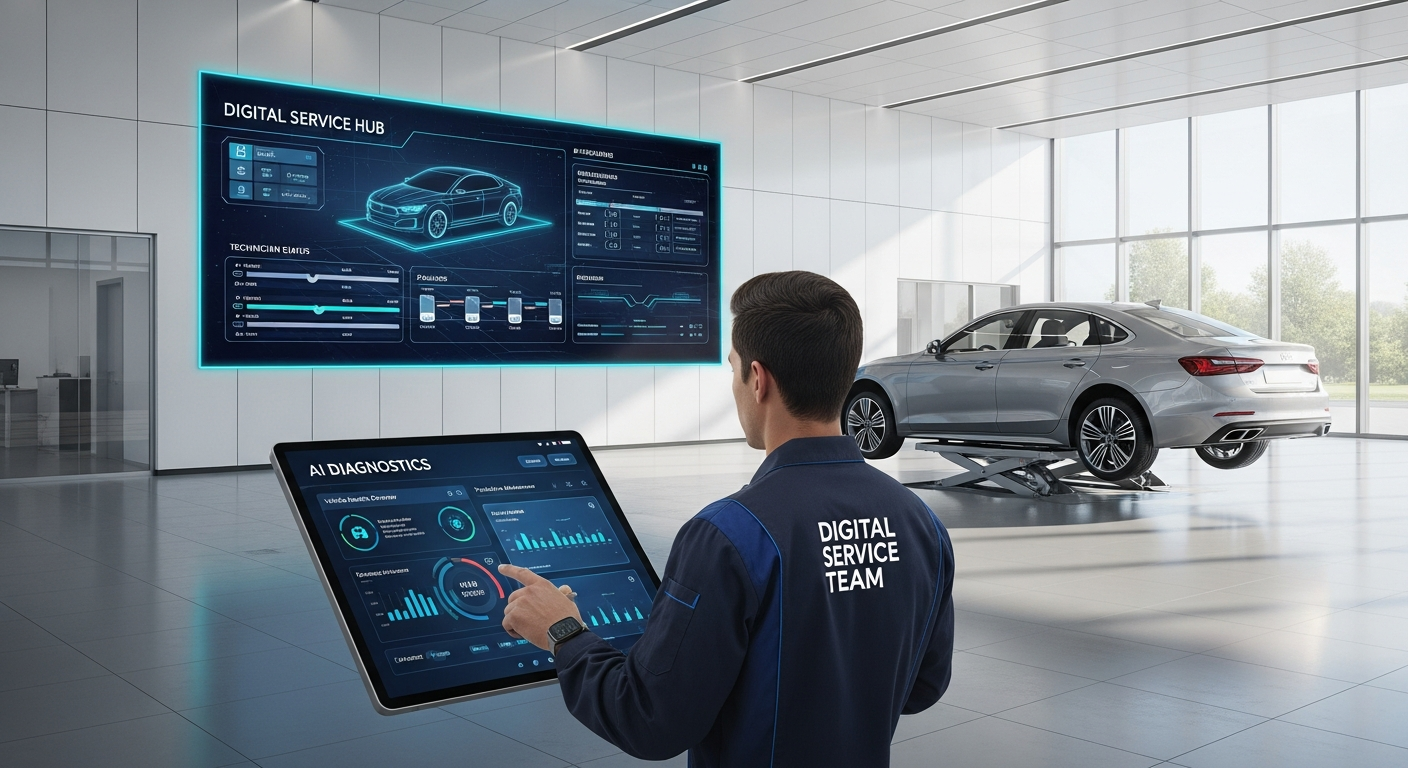
The automotive service landscape is undergoing a significant transformation as technology becomes an integral part of operations. This shift is driven by the need to enhance efficiency, improve customer satisfaction, and stay competitive in a rapidly evolving market. Dealerships that embrace digital transformation are seeing tangible benefits, including increased profitability and customer loyalty.
Recent statistics highlight the importance of digital tools in service operations. According to a study by Cox Automotive, 71% of vehicle owners consider the ability to schedule service via a dealer website or app important, yet only 35% have actually used it. This gap presents a significant opportunity for dealerships to improve their online service scheduling UX and increase conversion rates.
Moreover, the integration of AI and machine learning is revolutionizing how service departments operate. Tools like AI voice agents are streamlining customer interactions by handling service calls and auto-booking appointments, thus freeing up staff to focus on more complex tasks. These AI-driven solutions not only enhance efficiency but also improve the overall customer experience, as evidenced by dealerships that have successfully reduced their average days-to-appointment to under three days.
The adoption of digital multipoint inspections (MPI) and video tools is another emerging trend. These technologies enable technicians to provide detailed visual reports to customers, improving transparency and boosting customer-pay approval rates. By integrating these digital solutions with existing systems, dealerships can ensure seamless operations and maximize ROI.
Finally, the role of financing options like buy-now-pay-later (BNPL) cannot be underestimated. These services offer customers flexible payment options, making it easier for them to approve recommended repairs and services. As more dealerships adopt BNPL solutions, they are seeing a positive impact on revenue and customer satisfaction.
The Solution Framework
At the heart of digital transformation lies the seamless integration of advanced digital tools with dealership management systems (DMS). Auto Pro Solutions offers cutting-edge solutions designed to streamline service department operations and maximize profitability. By implementing these tools, dealerships can enhance productivity, improve customer experiences, and stay ahead of the competition.
Auto Pro Solutions provides a comprehensive suite of digital tools that integrate seamlessly with popular DMS platforms like Xtime, CDK, Reynolds, and Tekion. This integration ensures that service departments can operate more efficiently, reducing manual errors and improving communication across teams. AI voice agents, for instance, can handle service calls, auto-book appointments, and sync with DMS schedulers to optimize capacity and reduce appointment lead times.
Digital MPI and video solutions offered by Auto Pro Solutions are designed to improve transparency and boost customer-pay approval rates. By providing customers with detailed visual reports, dealerships can enhance trust and encourage service approvals. These tools also offer the flexibility to capture and share photos and videos, making it easier for customers to understand the services being recommended.
Online scheduling tools are another critical component of the digital transformation framework. By optimizing the user experience and integrating scheduling tools with existing systems, dealerships can improve conversion rates and reduce no-show appointments. Auto Pro Solutions ensures that these tools are easy to use and offer robust features, such as automated confirmations and waitlist backfill, to enhance customer satisfaction.
Moreover, Auto Pro Solutions addresses the growing need for flexible financing options through BNPL solutions. By offering customers the ability to finance services over time, dealerships can increase approval rates and revenue. This flexibility not only appeals to customers but also encourages them to return for future services, thus enhancing customer loyalty.
Implementation Guide
Embarking on a digital transformation journey requires careful planning and execution. Auto Pro Solutions provides a structured implementation guide to help dealerships transition seamlessly to digital operations. By following these steps, service departments can maximize the benefits of digital tools and ensure a smooth integration process.
The first step in the implementation process is to conduct a thorough assessment of the current service operations. This involves identifying pain points, inefficiencies, and areas where digital tools can provide the most value. By understanding the specific needs of the dealership, Auto Pro Solutions can tailor its solutions to meet the unique requirements of each service department.
Next, dealerships need to select the right digital tools and vendors that align with their operational goals. Auto Pro Solutions offers a range of solutions, including AI voice agents, digital MPI/video tools, and online scheduling platforms. By selecting the tools that best fit their needs, dealerships can streamline operations and improve customer satisfaction.
Once the digital tools have been selected, the next step is to integrate them with existing systems. This involves working closely with Auto Pro Solutions to ensure seamless integration with the DMS and other platforms. By leveraging Auto Pro Solutions’ expertise, dealerships can minimize disruptions and ensure a smooth transition.
Training and change management are also critical components of the implementation process. Service department staff need to be trained on the new tools and processes to maximize their effectiveness. Auto Pro Solutions provides comprehensive training programs and support to ensure that staff are comfortable using the digital tools and can operate them efficiently.
Measuring Success
To evaluate the success of digital transformation initiatives, it is essential to track key performance indicators (KPIs) that reflect the impact of digital tools on service operations. Auto Pro Solutions provides a robust framework for measuring success and ensuring that dealerships achieve their operational goals.
One of the primary KPIs to track is the fixed absorption rate, which measures the ability of the service department to cover dealership overhead through service and parts gross profit. By improving efficiency and adopting digital tools, dealerships can aim to increase their fixed absorption rate by +3 to +5 percentage points within 6 to 12 months.
Another critical KPI is the booked-to-show appointment conversion rate. Digital tools like AI voice agents and online scheduling platforms can significantly improve this rate by streamlining appointment booking processes and reducing no-show appointments. Dealerships should aim to maintain a show rate above 80% while reducing the average days-to-appointment to under three days.
Customer satisfaction and loyalty are also key indicators of success. By enhancing the customer experience through digital tools, dealerships can increase customer satisfaction scores and boost loyalty. Customers who have positive service experiences are more likely to return to the dealership for future services and are 74% more likely to repurchase from the dealership.
Finally, dealerships should monitor revenue metrics such as customer-pay approval rates and average repair order (ARO) value. By leveraging digital MPI/video tools and flexible financing options, dealerships can increase approval rates and drive higher revenue per repair order.
Advanced Strategies
Once the initial digital transformation initiatives are in place, dealerships can focus on optimizing and scaling their digital operations to maximize the benefits. Auto Pro Solutions offers advanced strategies to help dealerships take their service operations to the next level.
One effective strategy is capacity modeling, which involves analyzing service department capacity and identifying opportunities to optimize workflows. By understanding the mix of waiters versus drop-offs, skill constraints, and quick-lane opportunities, dealerships can reduce bottlenecks and improve efficiency.
Redesigning BDC processes for a digital-first service flow is another powerful strategy. By implementing digital scripts, SLAs, escalation paths, and QA scorecards, dealerships can improve customer interactions and enhance service efficiency. This approach not only streamlines operations but also improves customer satisfaction.
Dealerships can also enhance their online scheduling UX by conducting A/B tests and implementing measurable fixes. By optimizing service menus, default times, and calendar parity, dealerships can improve conversion rates and reduce failed bookings.
Finally, leveraging data insights to drive continuous improvement is key to long-term success. Auto Pro Solutions provides tools and analytics to help dealerships monitor performance, identify areas for improvement, and implement changes that drive results. By continuously optimizing digital operations, dealerships can stay ahead of the competition and maximize profitability.
Related Topics
Ready to take your service department to the next level?
Schedule your demo today and experience the power of Auto Pro Solutions.
Schedule Demo