Pit Stops and Precision: Innovating Efficiency in Auto Service
Understanding the Challenge
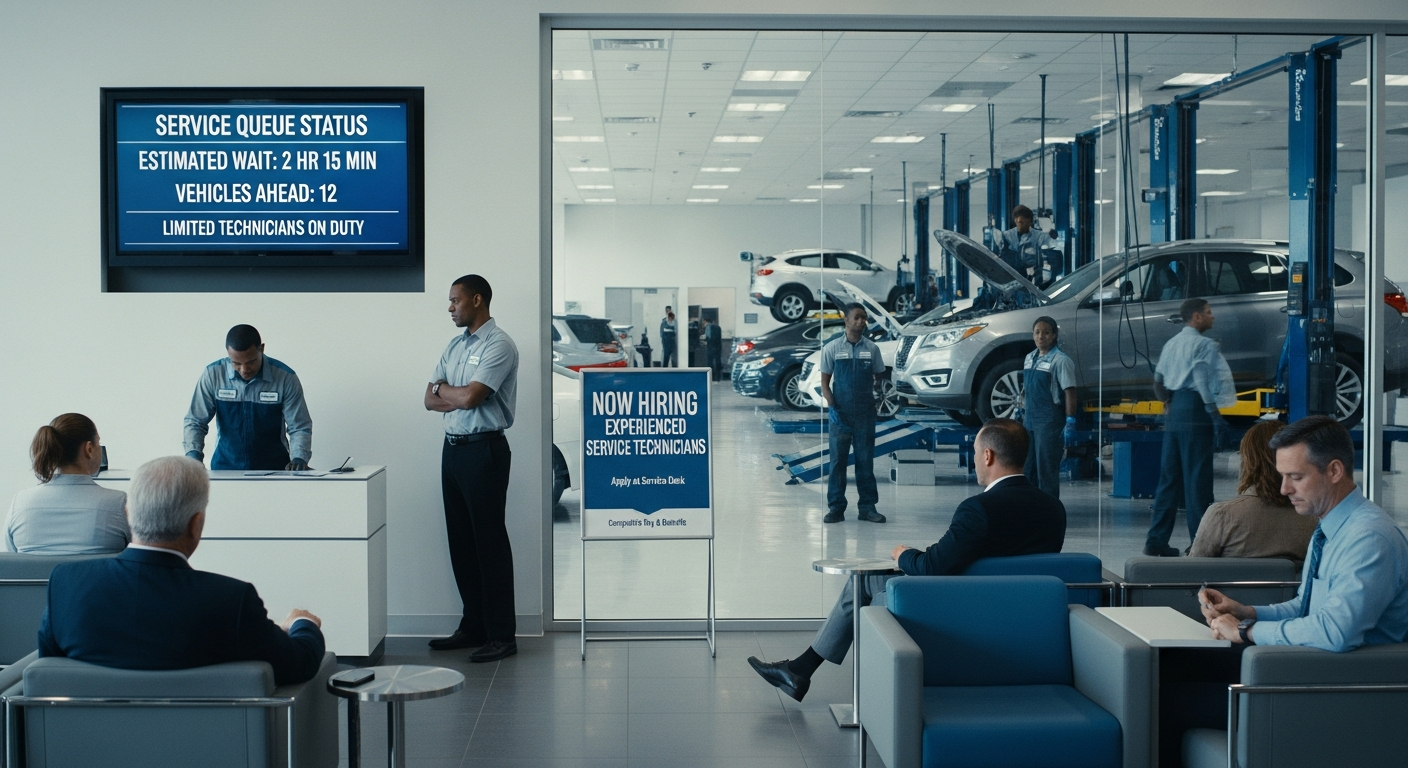
In the high-stakes world of automotive service, inefficiency is more than just a nuisance—it’s a profitability killer. Dealerships across the nation grapple with prolonged customer wait times, technician dissatisfaction, and a cascade of lost opportunities. But what's driving these inefficiencies? At the heart of the issue lies a combination of outdated processes, inadequate staffing, and a failure to harness modern technological advancements. By addressing these underlying problems, dealerships can unlock significant revenue potential and enhance customer satisfaction.
Consider the staggering statistic from TechForce's 2024 update: the automotive industry will need 971,000 technicians by 2028. This technician shortage directly impacts service department throughput, limiting the number of vehicles that can be serviced efficiently. Moreover, as customer expectations shift towards digital engagement, the adoption of video MPIs remains low—only 26% of mass-market customers receive them, despite 64% desiring such transparency. The gap between service offerings and customer expectations can no longer be ignored.
It's also worth noting that the average dealer's share of service visits declined from 33% to 29% in recent years, despite a rise in service and parts revenue. This paradox highlights a critical need for operational efficiency that can reclaim lost market share. Dealers must adapt quickly, implementing strategic changes that address both the technical and experiential aspects of service delivery.
The pressure to achieve higher service absorption rates is mounting. Service absorption—where fixed operations cover all dealership expenses—requires an optimal blend of efficiency, satisfied customers, and productive technicians. Yet, many dealerships struggle to balance these priorities, often due to ineffective scheduling and workflows. The question now is: how can these challenges be transformed into opportunities for growth?
By recognizing these pain points and understanding the forces at play, service departments can begin to craft solutions that not only meet but exceed current demands. The path to efficiency requires a holistic approach that marries technology with human expertise, creating an environment where every stakeholder—technicians, customers, and management—benefits. Let's explore how the industry landscape is evolving and what strategies are paving the way for a more efficient future.
Related Topics
Ready to take your service department to the next level?
Schedule your demo today and experience the power of Auto Pro Solutions.
Schedule Demo