Unlocking Parts Department Potential: A Strategic Playbook for Inventory and Sales Optimization
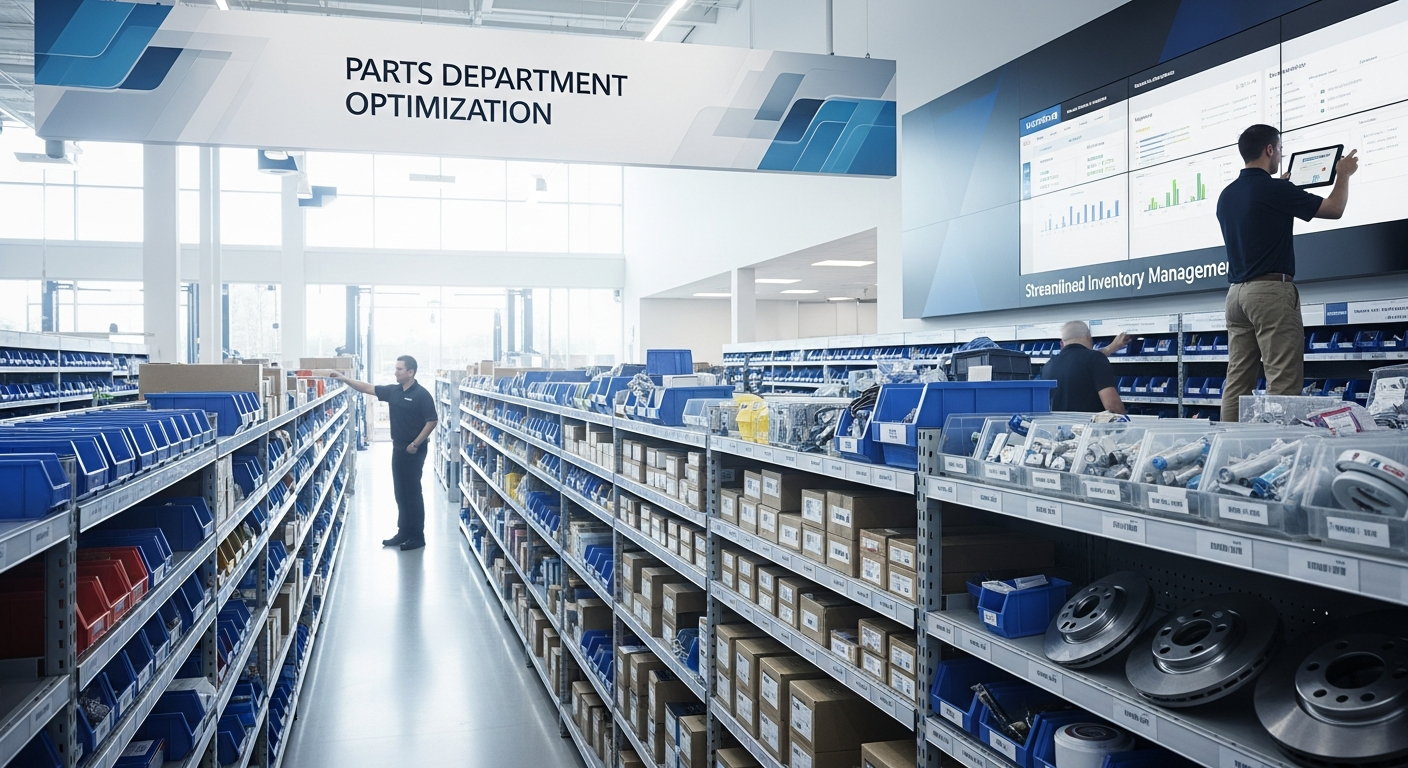
Understanding the Challenge

The complexities of running a parts department can sometimes feel overwhelming. From managing a vast inventory to ensuring timely availability of parts, every aspect demands precision and efficiency.
Inventory management is often one of the biggest hurdles. Many dealerships grapple with maintaining the right balance of parts in stock, which directly impacts their first-time fill rate. This rate, a critical metric, indicates how often a requested part is available immediately.
Moreover, parts departments often miss out on upsell opportunities due to disconnected systems and processes. This gap not only reduces potential revenue but also affects customer satisfaction.
To tackle these challenges, it's essential to understand the root causes, such as inappropriate inventory policies, lack of integration between parts and service departments, and ineffective pricing strategies.
Addressing these issues requires a strategic approach, leveraging technology and data-driven insights to optimize inventory and improve sales performance.
Current Industry Landscape

In recent years, the auto industry has seen a surge in technological advancements aimed at optimizing parts departments. From AI-driven demand forecasting to sophisticated e-commerce platforms, the landscape is evolving rapidly.
A significant trend is the integration of Dealer Management Systems (DMS) with service lane tools. This integration aims to reduce technician wait times and improve cycle times by ensuring that parts are available when needed.
Additionally, the rise of e-commerce in the automotive space is opening new channels for parts sales, both B2C and B2B. Dealerships that capitalize on these opportunities can tap into a broader market and enhance their revenue streams.
There's also a growing emphasis on reducing parts obsolescence through better inventory policies and practices, such as phase-in/phase-out strategies and dealer-to-dealer sourcing.
These developments highlight the need for parts departments to stay ahead of the curve by adopting new technologies and refining their inventory management strategies.
The Solution Framework
A successful parts department relies on a combination of strategic inventory management and effective sales techniques. The goal is to maximize efficiency while minimizing costs and missed opportunities.
First, improving your first-time fill rate should be a top priority. By ensuring parts are available when needed, you can reduce technician idle time and enhance customer satisfaction.
Incorporating AI demand forecasting can help predict future parts needs accurately, allowing you to stock the right items and reduce obsolescence.
Integrating parts and service departments through technology improves synchronization and minimizes errors. This seamless flow of information ensures that parts are picked and staged efficiently for service jobs.
Finally, exploring new sales channels like e-commerce can provide additional revenue streams, helping parts departments offset costs and improve profitability.
Implementation Guide
To implement these strategies, a structured approach is essential. Start by conducting a thorough analysis of your current inventory management practices.
Identify areas where you can improve your first-time fill rate by adjusting your phase-in/out and min/max policies. Implementing cycle counts can also help maintain inventory accuracy.
Next, leverage technology to enhance integration between your parts and service departments. This includes ensuring your DMS and service lane tools communicate effectively.
Adopt AI and data analytics tools for better demand forecasting, and train your team to interpret and act on this data.
Finally, explore e-commerce platforms to expand your sales reach. Implement change-management strategies to ensure smooth adoption across all departments.
Measuring Success
Measuring the success of your parts department optimization efforts is crucial. By tracking specific KPIs, you can gauge the effectiveness of your strategies and make necessary adjustments.
First-time fill rate by repair order type is a primary indicator of success. Aim for a target of 85%+ on stocked requests and monitor this metric daily.
Track obsolescence as a percentage of inventory, aiming to reduce it to single digits. This will help free up cash tied up in non-moving stock.
Cycle times and technician wait times should also be monitored closely to evaluate the impact of improved parts availability and integration.
By consistently tracking these KPIs, you can ensure your parts department is on the path to optimal efficiency and profitability.
Advanced Strategies
Once the foundational strategies are in place, consider advanced tactics to further optimize your parts department.
Implement a robust pricing matrix that adjusts based on repair order type, ensuring you maximize gross profit without compromising customer satisfaction.
Develop a core and returns management strategy that includes deposits, labeling, and follow-ups to maximize credits and minimize losses.
Explore sophisticated e-commerce strategies, such as leveraging data to personalize offerings and improve customer engagement.
Finally, align your staff's pay plans with the department's goals to incentivize performance and ensure accountability across all levels.
Related Topics
Ready to take your service department to the next level?
Schedule your demo today and experience the power of Auto Pro Solutions.
Schedule Demo