Minute Masters: Elevating Service Advisors to Drive Efficiency and Satisfaction
Understanding the Challenge
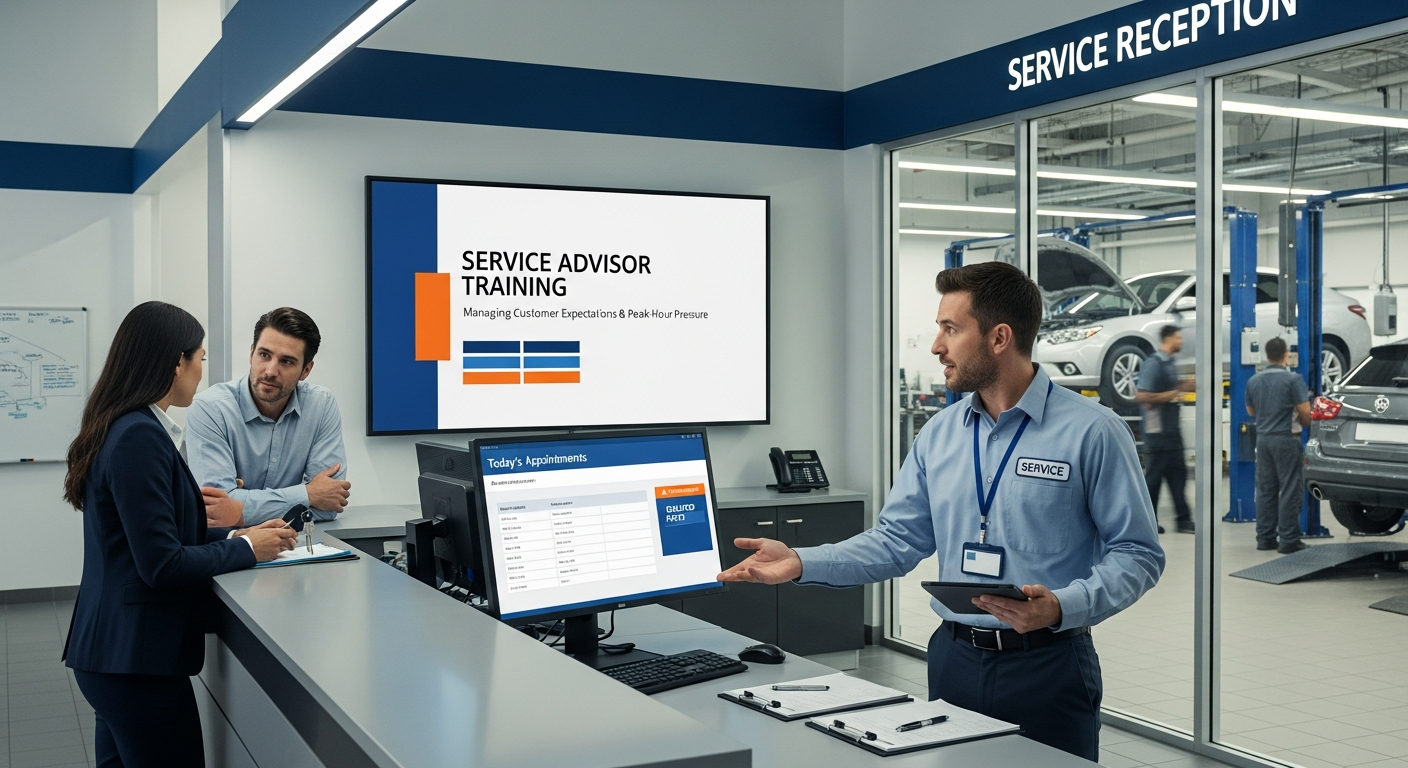
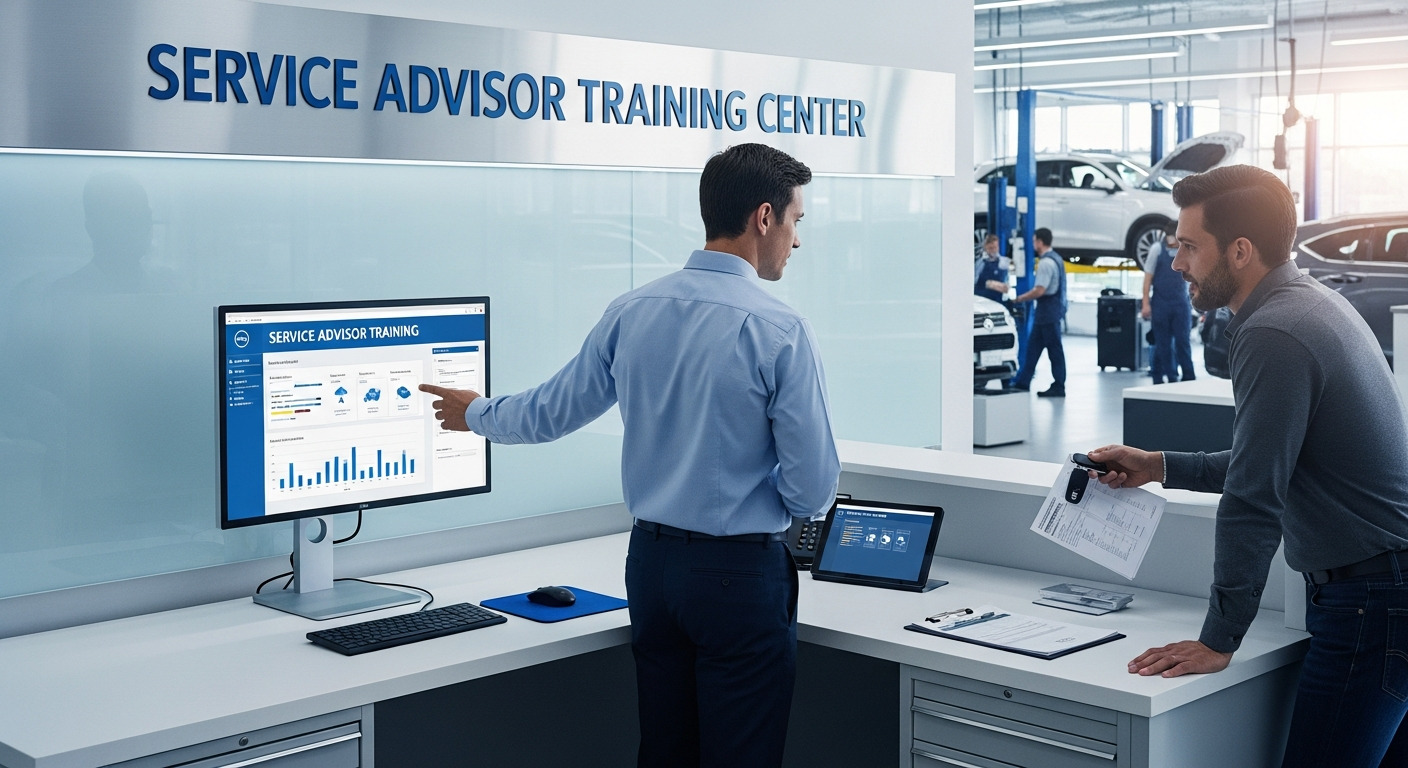
Service advisors are the bridge between customers and the service department. They are the face of your dealership and play a crucial role in customer retention and satisfaction. Yet, many dealerships struggle with high turnover rates and inconsistent performance among their service advisors. This inconsistency not only affects the bottom line but also erodes trust with customers.
The complexities of modern vehicles, coupled with the increasing expectations of customers, mean that service advisors now require a blend of technical knowledge and exemplary customer service skills. A lack of proper training and resources can lead to longer appointment lead times, first-time fix issues, and low upsell rates—all of which can damage the dealership's reputation and profitability.
For instance, a recent study highlighted that 12% of repairs are not completed correctly on the first visit, while appointment wait times continue to exceed those seen in previous years. These issues underline the importance of having competent, well-trained service advisors who can efficiently manage customer interactions and service operations.
To address these challenges, dealerships must focus on enhancing their service advisor training programs. This involves equipping advisors with the necessary tools and knowledge to handle complex customer interactions and service processes effectively.
Current Industry Landscape
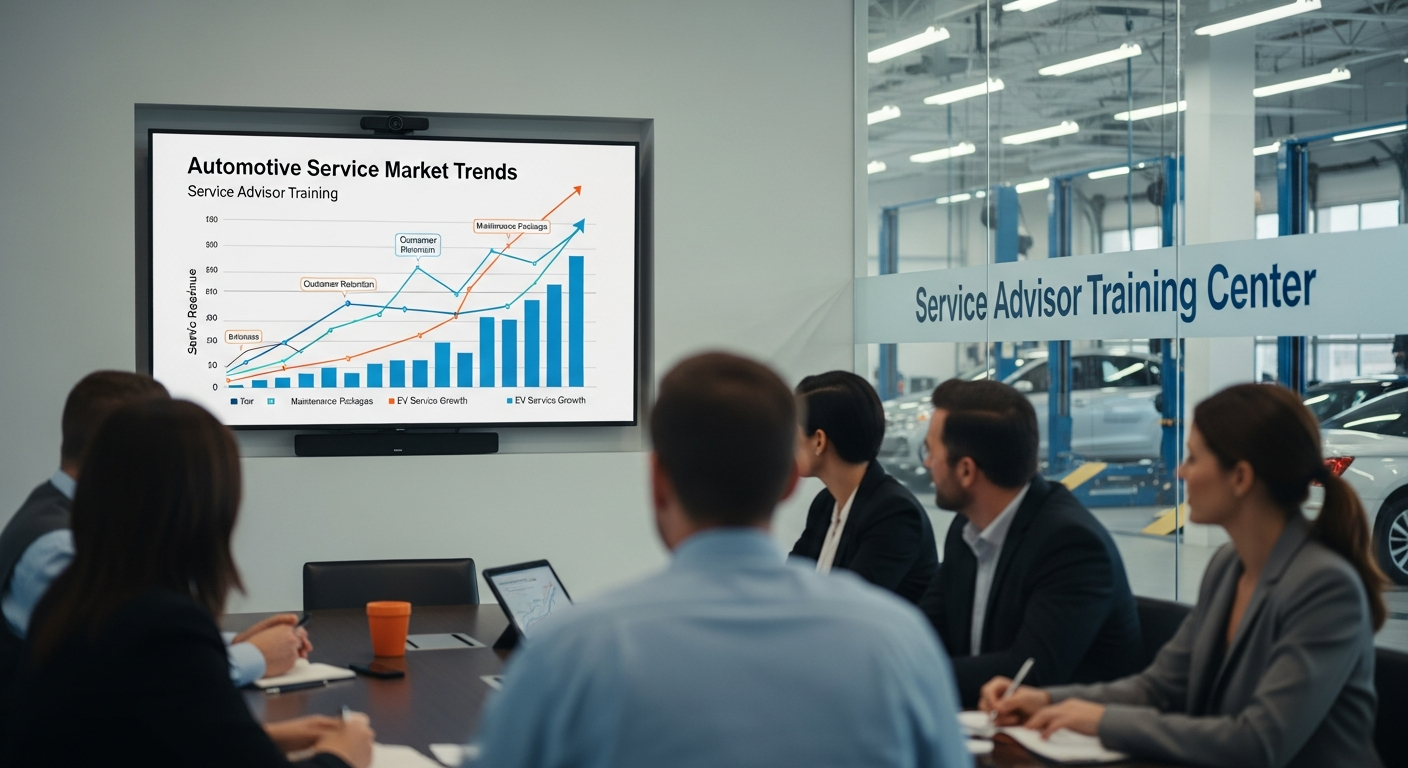
The automotive service industry is undergoing a significant transformation, influenced by technological advancements and changing consumer expectations. As of the first half of 2025, U.S. franchised dealers wrote 137 million repair orders, generating $81 billion in service and parts sales. However, this success is tempered by operational challenges.
For example, a study shows that BEV owner service satisfaction trails behind ICE vehicles by 51-57 points, highlighting the urgent need for improved service processes tailored to new technology. Furthermore, appointment wait times have remained longer than those in previous years, impacting customer satisfaction and retention.
In light of these challenges, innovative solutions are emerging. Technologies like AI call handling and video MPIs are becoming increasingly integral to improving service department efficiency and customer communication. Yet, the adoption of these technologies requires well-trained service advisors who can leverage them effectively.
Dealerships that successfully integrate these technologies into their operations have reported significant improvements in service absorption and customer satisfaction. For instance, dealerships utilizing enhanced multimedia features saw approvals in as fast as seven minutes, proving the potential impact of technology when used effectively.
The Solution Framework
To address high turnover and inconsistent performance, dealerships need a robust service advisor training framework that focuses on essential skills and behaviors. This framework should encompass both technical knowledge and soft skills, ensuring advisors are well-rounded professionals capable of handling diverse customer needs.
Incorporating AI and other advanced technologies into the training program is crucial. Tools like STELLA Automotive AI and Cox Automotive Xtime can enhance appointment scheduling effectiveness and improve communication with customers through multimedia channels.
Training should also focus on specific behaviors and scripts that advisors can practice to raise hours-per-repair-order and gross-per-repair-order. For example, advisors should be trained to present maintenance menus effectively and use BNPL service financing options to increase customer-pay dollars.
Moreover, the training program should include strategies for improving first-time fix rates and closing the knowledge gap on EV services. By doing so, advisors can better meet the needs of modern consumers and enhance the dealership's reputation for quality service.
Implementation Guide
Implementing a successful service advisor training program requires careful planning and execution. The first step is to assess the current skill levels of your advisors and identify areas for improvement. This can be achieved through performance reviews and customer feedback analysis.
Next, develop a comprehensive training plan that includes both classroom instruction and hands-on practice. This plan should be tailored to the specific needs of your dealership and incorporate real-world scenarios that advisors are likely to encounter.
Incorporate role-playing and scripting exercises to help advisors practice key interactions, such as maintenance menu presentations and declined-service callbacks. These exercises should be conducted regularly to reinforce learning and build confidence.
To ensure the success of the training program, establish clear goals and metrics to measure advisor performance. Regular coaching sessions and performance reviews should be conducted to provide feedback and track progress against these goals.
Measuring Success
Once the training program is in place, measuring its effectiveness is crucial to ensure it delivers the desired outcomes. Key performance indicators (KPIs) such as hours-per-repair-order, gross profit per repair order, and first-time fix rates should be monitored closely.
For example, a dealership might set a goal to increase hours-per-repair-order by 0.3 within 60-90 days of training implementation. This can be tracked through regular performance assessments and comparison with baseline data.
Additionally, customer satisfaction scores should be evaluated to determine the impact of training on customer experiences. Positive feedback and repeat business are indicators of successful advisor interactions.
To continuously improve the training program, gather feedback from advisors and customers alike. This feedback can provide valuable insights into areas where the program can be refined and enhanced.
Advanced Strategies
Once your basic training program is established, consider integrating advanced strategies to further elevate advisor performance. This includes leveraging AI-driven solutions to enhance appointment scheduling and customer communication.
For instance, AI call handling can significantly reduce appointment lead times and improve capture rates by efficiently managing inbound calls. Similarly, video MPIs can expedite approval processes and boost customer trust by providing clear, visual information about service recommendations.
Furthermore, explore BNPL service financing options to encourage customers to pursue recommended services without the financial burden of upfront costs. This not only increases customer pay dollars but also enhances customer satisfaction by offering flexible payment solutions.
Finally, as electric vehicles become more prevalent, ensure that your advisors are equipped with comprehensive EV service training. This will position your dealership as a leader in modern vehicle maintenance and attract a new generation of customers.
Related Topics
Ready to take your service department to the next level?
Schedule your demo today and experience the power of Auto Pro Solutions.
Schedule Demo