
In the rapidly evolving landscape of automotive service departments, fixed ops leadership is pivotal. As electric vehicles surge, new OEM training requirements rise, and digital service becomes the norm, effective leadership is more critical than ever. This comprehensive guide provides service managers and fixed ops directors with the tools to not only adapt but thrive, improving efficiency, profitability, and customer satisfaction.
Understanding the Current Fixed Ops Landscape

The fixed ops landscape is shifting dramatically with a 15% increase in EV-related repairs and new OEM training standards. Staying ahead requires a deep understanding of these industry trends. Key challenges include parts shortages and increasing technology demands. Dealerships must adapt by optimizing inventory management and investing in staff training. To tackle these challenges, fixed ops leaders should implement regular industry reviews and establish partnerships with reliable suppliers.
1. Analyze industry trends annually 2. Ensure compliance with OEM training 3. Foster supplier partnerships
Key Leadership Skills for 2025 and Beyond

Effective fixed ops leadership in 2025 hinges on adaptability, technological savvy, and people management skills. Leaders must balance strategic vision with day-to-day operations. Developing these skills involves continuous learning and practical application, supported by mentorship programs and leadership workshops. By fostering a culture of innovation and support, leaders can empower their teams and drive service department success.
"The future of fixed ops leadership is about leading with innovation and empathy, ensuring teams are prepared for the technological and market shifts ahead." - Jane Doe, Industry Expert
Implementing Technology to Enhance Operations

Technology is a cornerstone of modern fixed ops leadership. Automation and analytics tools can significantly boost efficiency and accuracy in service operations. Adopting platforms like Auto Pro Solutions allows for seamless integration of service scheduling, customer communication, and performance tracking. Leaders should evaluate technology based on ROI and alignment with business goals, ensuring it supports a customer-centric approach.
| Technology | Benefits | |------------|----------| | Automation | Increases efficiency | | Analytics | Enhances decision-making | | CRM Tools | Improves customer relations |
Strategies for Staff Retention and Development

High staff turnover is a common challenge in dealership service departments. Effective leadership involves creating a supportive and motivating work environment. Implementing clear career paths, providing opportunities for skill development, and recognizing achievements are key strategies for staff retention. Regular feedback sessions and team-building activities also play crucial roles in fostering a positive workplace culture.
1. Develop clear career progression paths 2. Offer continuous training programs 3. Establish regular feedback mechanisms
Customer Satisfaction as a Profit Driver

Customer satisfaction is directly linked to service department profitability. Satisfied customers are more likely to return and recommend the dealership. Implementing a digital-first approach, with options like online scheduling and mobile updates, caters to the 68% of customers preferring these services. Regularly reviewing customer feedback and adapting practices based on insights can lead to improved service quality and customer loyalty.
Tip: Use customer satisfaction surveys to identify improvement areas and celebrate successful interactions.
Measuring and Maximizing ROI in Fixed Ops
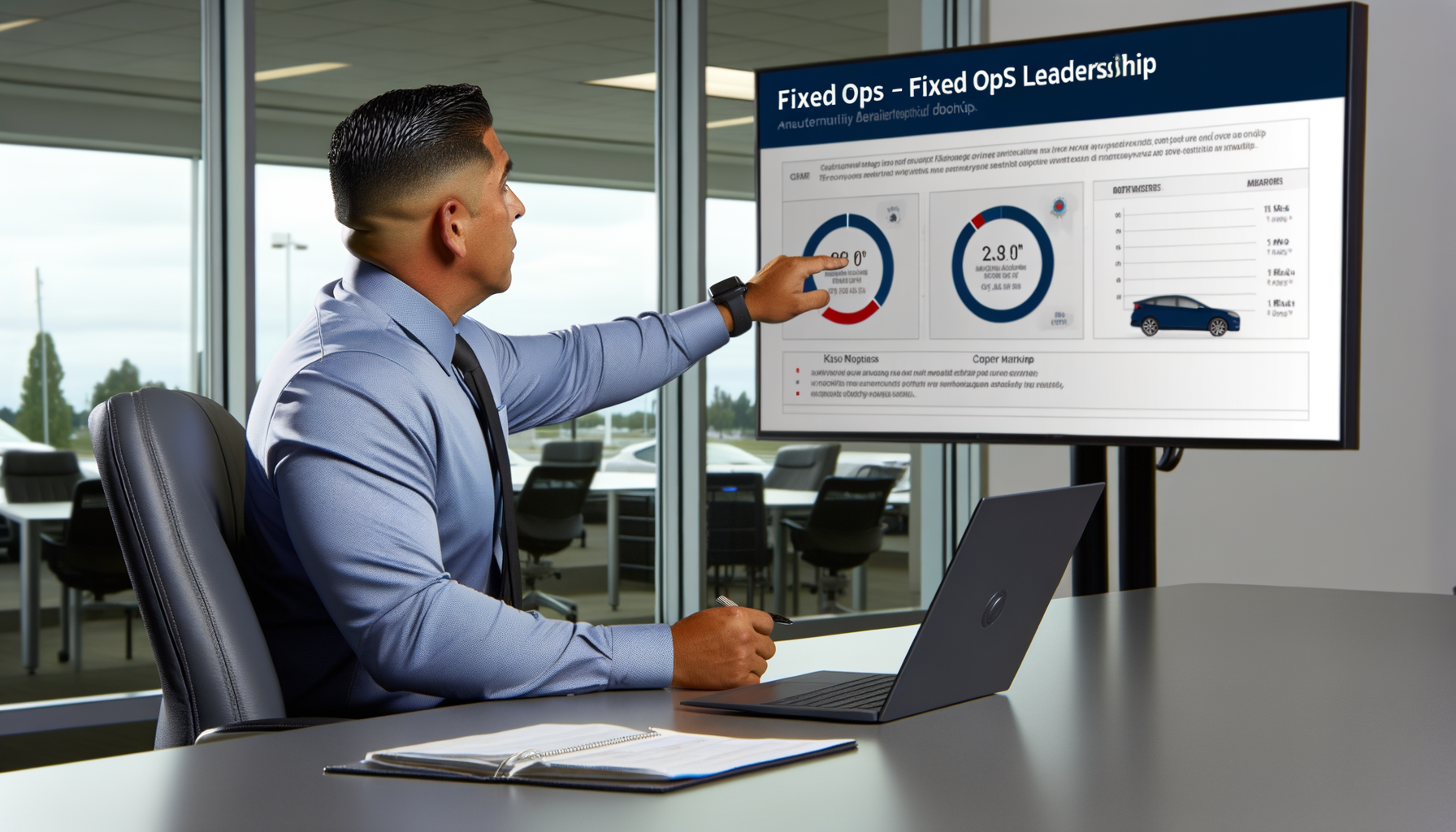
ROI in fixed ops can be enhanced by closely monitoring key performance indicators such as repair times, repeat visits, and customer satisfaction scores. Using analytics tools to track these metrics allows leaders to make data-driven decisions that optimize resource allocation and service processes. Regular financial reviews and adjustments based on performance insights ensure that the service department remains profitable.
| KPI | Importance | |-----------------|-----------------------| | Repair Time | Efficiency measure | | Repeat Visits | Quality of service | | Customer Satisfaction | Customer loyalty indicator |
Questions managers ask
How can fixed ops leaders improve employee retention?
Fixed ops leaders can improve retention by creating clear career paths, offering ongoing training, and fostering a supportive workplace culture.
What are the benefits of using technology in fixed ops?
Technology enhances efficiency, improves customer communication, and provides valuable analytics for better decision-making.
How does customer satisfaction affect service department profitability?
Higher customer satisfaction leads to repeat business and referrals, boosting overall profitability and dealership reputation.
What to do with this
Effective fixed ops leadership combines strategic insight, technology integration, and a focus on people. By mastering these areas, service departments can thrive in a competitive landscape. Leaders should implement regular training, utilize technology for efficiency, and prioritize customer satisfaction to drive success. Auto Pro Solutions offers tools that streamline service operations and enhance customer engagement, supporting fixed ops leaders in achieving their goals.
Related topics
More for service managers
Navigating the Leadership Highway: Cultivating Growth in Fixed Ops Management
Imagine walking into your dealership service department, bustling with activity—technicians engaged, customers satisfied, and appointments running smoothly. For many service…
Charting the Course: Steering Fixed Ops Leadership into the Next Era
Imagine your dealership's service department buzzing with activity, every bay occupied, and technicians working seamlessly, yet the numbers still don't add up. You're not…
Empowering Dealership Service Teams: The Essential Leadership Playbook
In the fast-paced world of automotive service departments, leadership plays a pivotal role in driving performance and profitability. Service managers often find themselves…