Greasing the Gears: How Data-Driven Decisions Propel Service Department Success
Understanding the Challenge
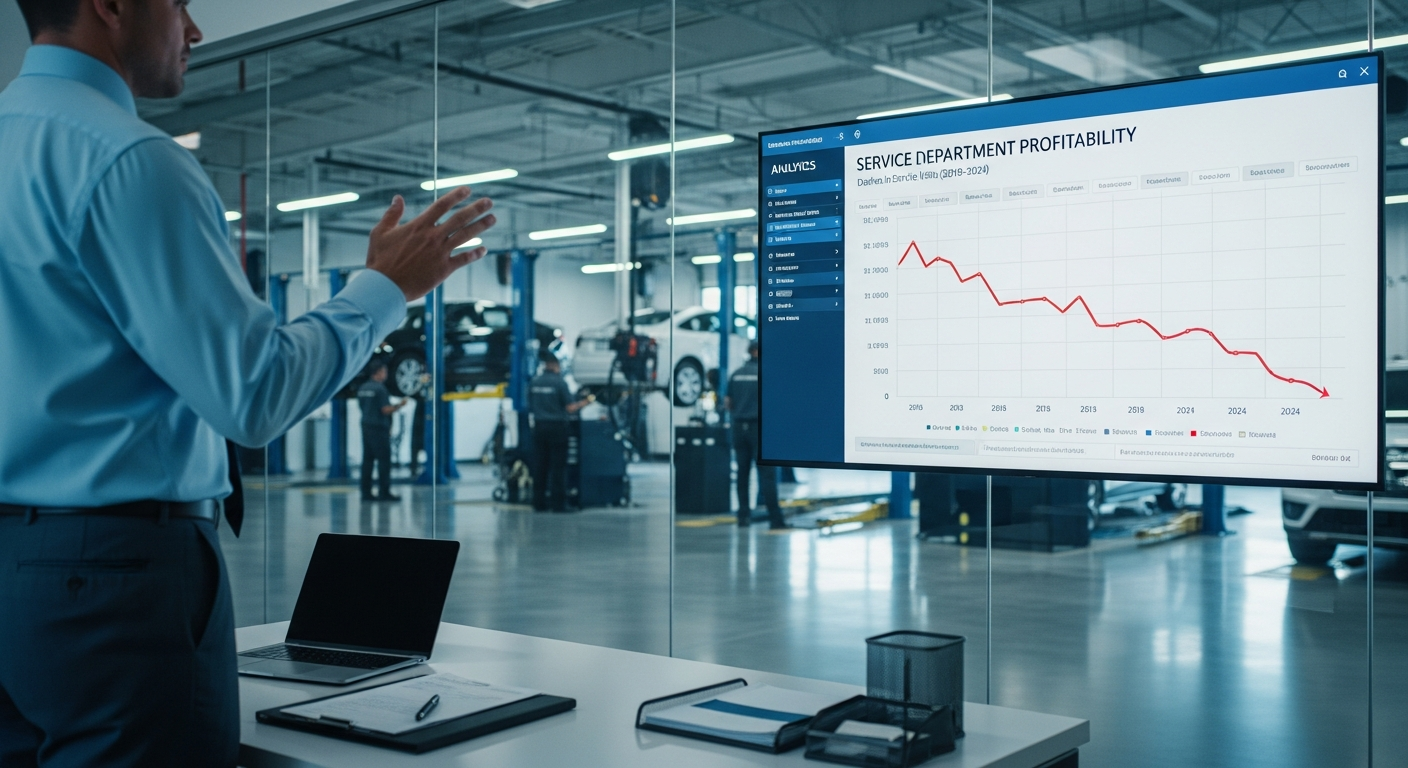
Service departments are facing unprecedented challenges that impact profitability. Rising costs, technician shortages, and increased competition from independent service providers are just the tip of the iceberg. Many dealerships are also dealing with declining service retention rates and the need to adapt to rapidly evolving technology demands. These issues are compounded by capacity constraints, which lead to longer appointment lead times and lower first-time-fix rates.
The effective labor rate (ELR) is a critical component of service profitability, yet increasing it isn't always a viable solution due to customer price sensitivity. Instead, the focus should be on optimizing processes to increase hours per RO and improve service retention. Dealerships are increasingly turning to tools like video MPIs and BNPL financing to enhance customer engagement and approval rates.
Furthermore, service departments must navigate complex warranty reimbursement processes and state regulations to recover retail rates effectively. This requires a deep understanding of both OEM guidelines and local laws.
The challenge is clear: service departments must innovate and adapt to remain profitable. By understanding the root causes of these challenges, dealerships can begin to formulate effective strategies that address them head-on.
Current Industry Landscape
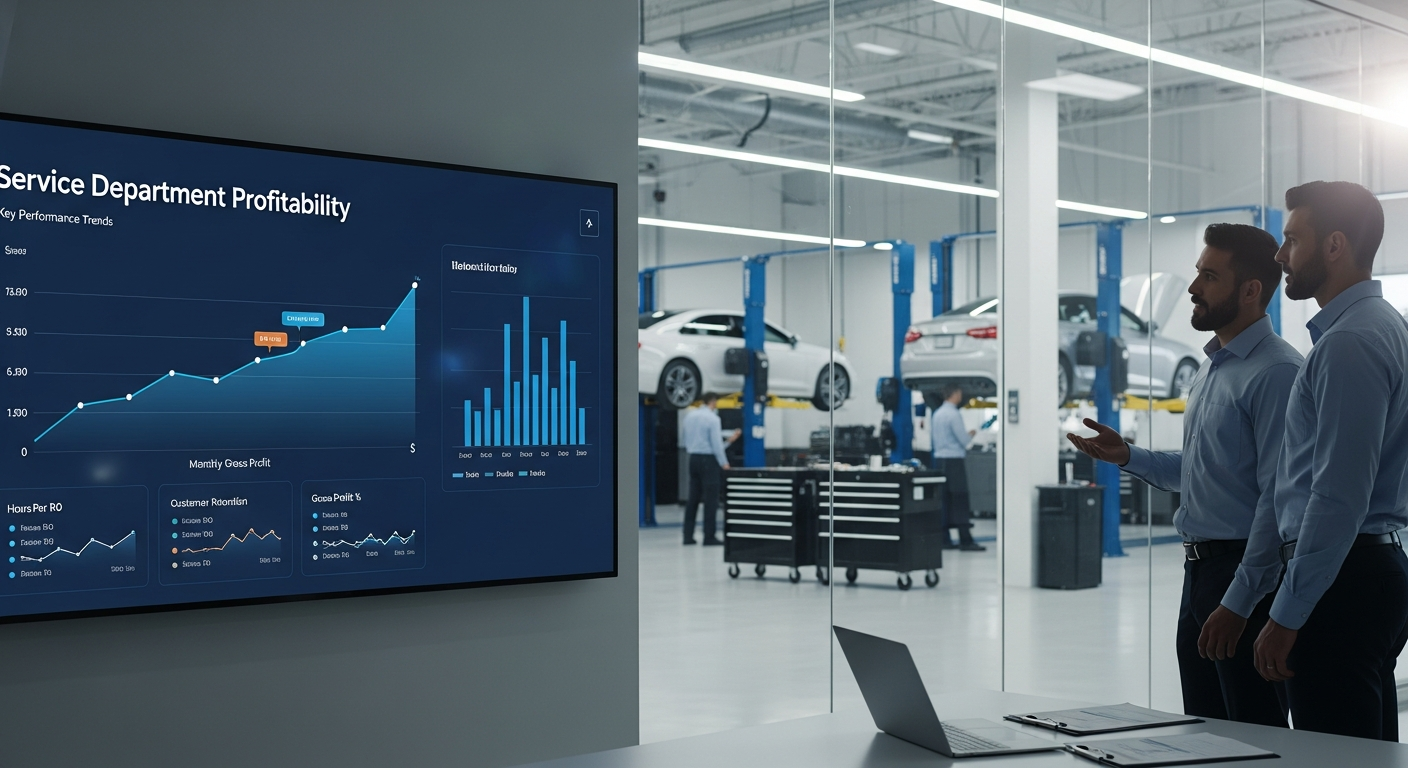
The automotive service industry is in flux, with several key trends shaping the landscape. Dealerships have seen a 12% reduction in service visits to independents since 2018, highlighting the need for enhanced customer engagement and retention strategies. The average fixed absorption rate was 63.9% in August 2025, with a target of 100%+, underscoring the potential for growth in service department profitability.
Technology is a driving force in this transformation, with AI and automation tools offering significant opportunities for service departments. According to CDK surveys, 63% of dealers believe that AI would have the most significant impact on their service operations, with 68% already observing positive effects.
Moreover, new tools like video MPIs have proven to dramatically boost customer approval rates—from 17% without media to 41% with media. This shift underscores the importance of leveraging technology to enhance the customer experience and drive revenue.
Understanding these trends is crucial for dealerships aiming to navigate the current market landscape. By aligning their strategies with industry dynamics, service departments can position themselves for sustained success.
The Solution Framework
To transform service departments into profit centers, dealerships need a robust framework that combines workflow optimization, customer engagement, and financial innovation. This involves a strategic approach to increasing hours per RO without raising the effective labor rate. Dealerships can achieve this by implementing first-hour MPI SLAs, advisor scripting, and parts pre-pick strategies.
Video MPIs play a pivotal role in enhancing approval rates and customer trust. By providing customers with visual evidence of recommended work, dealerships can significantly improve acceptance rates. Coupled with BNPL financing and text-to-pay options, this strategy can drive higher RO approval rates and customer satisfaction.
AI-driven tools also offer immense potential for service departments. From virtual assistants that streamline call capture and online scheduling to automated outreach and scheduling tools, AI can enhance operational efficiency and customer experience.
By integrating these strategies, dealerships can create a service department that not only meets but exceeds customer expectations, driving profitability and retention.
Related Topics
Ready to take your service department to the next level?
Schedule your demo today and experience the power of Auto Pro Solutions.
Schedule Demo