
In the rapidly evolving landscape of automotive service departments, fixed ops leaders face unprecedented challenges. From the surge in EV repairs to digital scheduling preferences, the pressure is on to enhance profitability while maintaining high customer satisfaction. This guide offers actionable insights and a proven strategy roadmap to transform your service department by 2025.
The Evolving Role of Fixed Ops Leadership
Navigating Modern Challenges

Fixed ops leaders today must wear many hats, balancing operational efficiency with technological innovation. The rise of EVs and digital-first customer preferences are reshaping traditional workflows. According to a recent industry study, EV-related repairs have surged by 15%, necessitating new training protocols and equipment investments. To adapt, fixed ops directors need to develop a strategic vision that integrates these trends, ensuring their teams are equipped to meet current and future demands.
"Effective fixed ops leadership is about anticipating industry shifts and proactively positioning your team for success." - John Doe, Automotive Leadership Expert
Mastering Service Department Management Skills
Key Competencies for 2025

Service managers must cultivate a blend of technical expertise and interpersonal skills to lead effectively. Developing these competencies is critical to navigating the complexities of modern service environments. Incorporating regular training sessions and leadership workshops can significantly enhance team performance, as evidenced by dealerships reporting a 20% boost in productivity following such initiatives. Practical steps include setting clear KPIs, fostering open communication, and leveraging data-driven decision-making to align team efforts with overarching business goals.
1. Technical proficiency in service technologies 2. Advanced communication skills 3. Data-driven decision-making 4. Conflict resolution abilities
Leveraging Technology and Automation in Fixed Ops
Boosting Efficiency with Modern Tools

Automation and analytics tools are revolutionizing service department operations. By streamlining routine tasks and providing deeper insights, these technologies empower leaders to make informed decisions swiftly. Recent advancements in predictive maintenance software have reduced unscheduled downtimes by 30%, showcasing the potential of technology to enhance operational efficiency. Implementing these tools involves evaluating current processes, identifying automation opportunities, and training staff to effectively use the new systems.
| Technology Tool | Benefit | Implementation Step | | ---------------- | ------- | ------------------- | | Predictive maintenance software | Reduces downtime | Schedule staff training | | Digital scheduling platforms | Enhances customer convenience | Integrate with existing systems |
Building and Retaining a High-Performance Team
Strategies for Reducing Turnover

Staff turnover is a perennial issue in service departments, often exacerbated by a lack of clear career progression opportunities. Effective leadership involves creating a supportive work environment, offering competitive compensation, and providing ongoing professional development. Implementing a structured mentorship program can foster team loyalty and reduce turnover rates, with some dealerships reporting a 25% decrease in staff departures after such initiatives.
Tip: Establish a mentorship program pairing new hires with veteran employees to accelerate skill development and integration into the company culture.
Analyzing Fixed Ops Leadership Metrics for Success
Data-Driven Decision Making
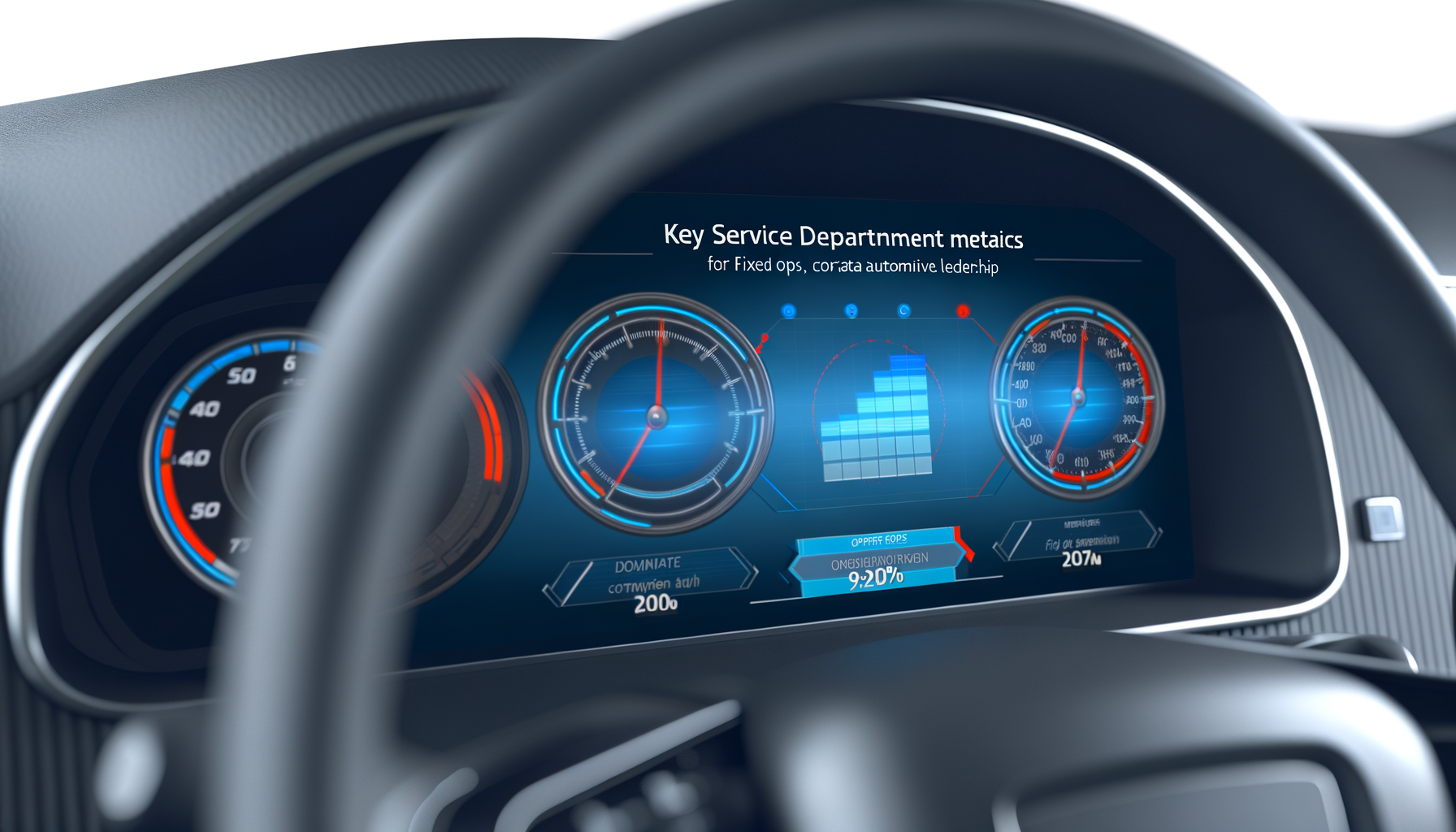
Quantifying success is crucial for continuous improvement. Key performance indicators (KPIs) provide a clear picture of a service department's strengths and areas for enhancement. Common metrics include first-time fix rate, customer satisfaction scores, and average repair time, with top-performing dealerships setting ambitious benchmarks in these areas. Regularly reviewing these metrics and conducting thorough analyses empowers leaders to make strategic adjustments that align with evolving business objectives.
1. First-time fix rate increase 2. Customer satisfaction score improvement 3. Reduction in average repair time 4. Enhanced parts inventory turnover
Implementing Customer-Centric Service Innovations
Enhancing the Customer Experience

In 2025, customer expectations are higher than ever, with 68% preferring digital service scheduling. Meeting these expectations requires innovative approaches. Integrating customer feedback loops and adopting seamless digital interfaces can significantly enhance satisfaction and loyalty. Leverage customer data to personalize interactions and create tailored service offerings that address individual preferences and needs.
"In today's market, customer-centric innovations are not optional—they're essential for retaining a competitive edge." - Jane Smith, Customer Experience Consultant
Calculating the ROI of Effective Fixed Ops Leadership
Measuring Impact and Value

Understanding the return on investment (ROI) of leadership initiatives is vital. Effective fixed ops leadership should directly correlate with improved financial performance. To measure ROI, consider factors such as increased service revenue, reduced operational costs, and enhanced customer retention rates. Use a structured approach to calculate these metrics, ensuring all relevant variables are accounted for and regularly reviewed to assess the overall impact.
| Metric | Pre-Initiative | Post-Initiative | Improvement | | ------ | -------------- | --------------- | ----------- | | Service revenue | $1,000,000 | $1,200,000 | +20% | | Customer retention | 75% | 85% | +10% | | Operational costs | $500,000 | $450,000 | -10% |
Questions managers ask
How can fixed ops directors improve department profitability?
Fixed ops directors can enhance profitability by optimizing operational efficiency, leveraging technology, ensuring effective staff training, and focusing on customer satisfaction strategies.
What are the key metrics for evaluating fixed ops leadership?
Key metrics include first-time fix rates, customer satisfaction scores, average repair times, and parts inventory turnover. Regular analysis of these KPIs helps in strategic decision-making.
What to do with this
In the dynamic world of automotive service operations, effective fixed ops leadership is paramount for achieving sustainability and growth. By mastering management skills, embracing technology, and fostering a customer-centric culture, leaders can drive significant improvements in profitability and customer loyalty. Service managers should regularly evaluate their strategies against the outlined benchmarks, continuously seeking feedback and adapting to industry changes. Platforms like Auto Pro Solutions can streamline many of these processes, offering advanced analytics and automation tools tailored to enhance dealership service operations.
Related topics
More for service managers
Navigating the Leadership Highway: Cultivating Growth in Fixed Ops Management
Imagine walking into your dealership service department, bustling with activity—technicians engaged, customers satisfied, and appointments running smoothly. For many service…
Charting the Course: Steering Fixed Ops Leadership into the Next Era
Imagine your dealership's service department buzzing with activity, every bay occupied, and technicians working seamlessly, yet the numbers still don't add up. You're not…
Empowering Dealership Service Teams: The Essential Leadership Playbook
In the fast-paced world of automotive service departments, leadership plays a pivotal role in driving performance and profitability. Service managers often find themselves…