Empathy Engines: How Emotional Intelligence Drives Service Excellence
Understanding the Challenge
Service departments face unique challenges that stem from high turnover rates and inconsistent advisor performances. These issues don't just lead to operational inefficiencies; they ripple through to customer satisfaction and ultimately, the dealership’s bottom line.
Advisors often lack the training and resources necessary to perform their roles effectively. This gap can manifest in poor customer interactions, inaccurate needs assessments, and inefficient workflow management, all contributing to longer appointment lead times and decreased customer satisfaction.
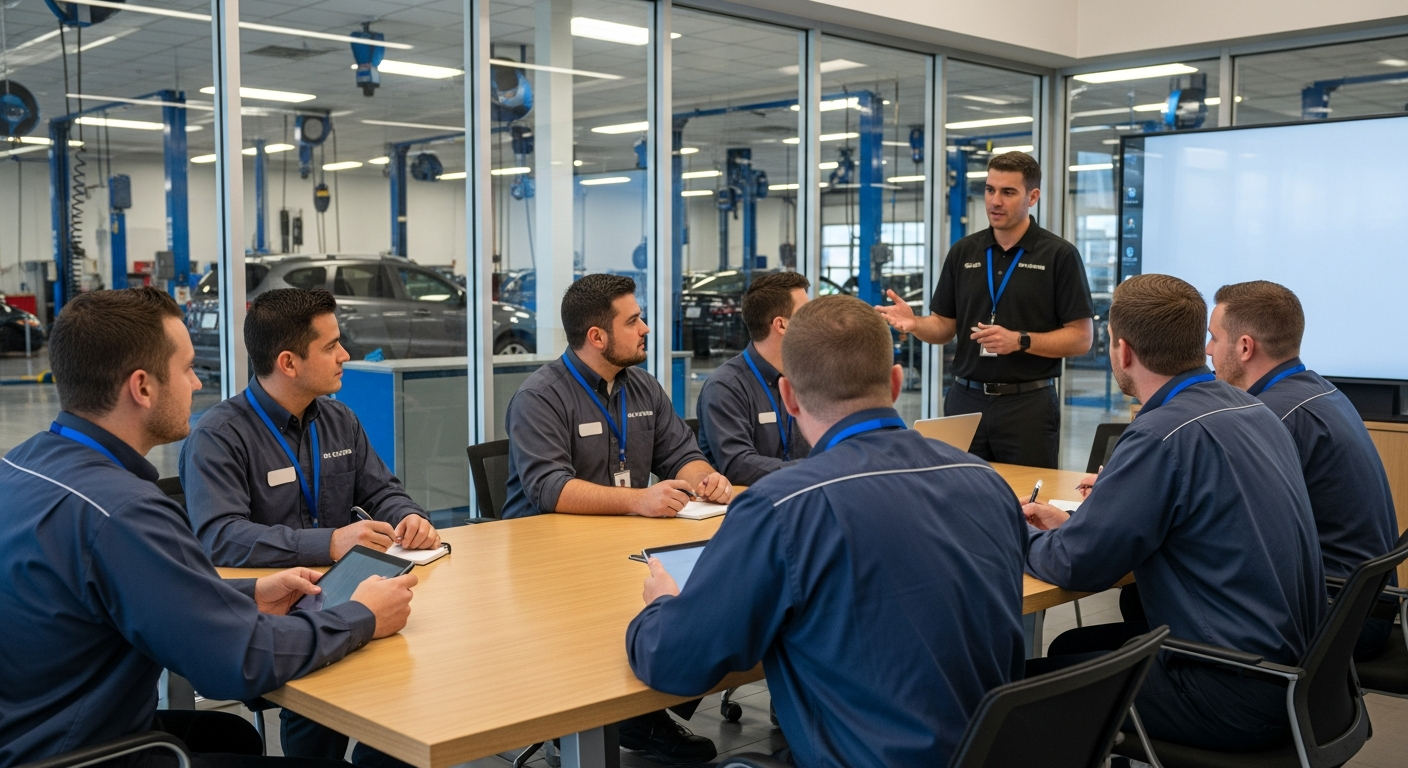
Consider the case of a mid-sized dealership that struggled with advisor turnover and saw a direct impact on customer ratings. A lack of clear onboarding and ongoing training left new advisors ill-prepared to handle customer demands, leading to a 15% drop in satisfaction scores over six months.
The absence of streamlined processes is another hurdle. Without effective scheduling and communication tools, advisors spend excessive time on administrative tasks rather than focusing on customer interactions.
Ultimately, the key to overcoming these challenges lies in a structured approach to training that focuses on critical behaviors known to increase dollars-per-RO and improve service department efficiency.
Current Industry Landscape
In recent years, the automotive service industry has seen a shift towards customer-centric approaches spurred by evolving consumer expectations and technological advancements.
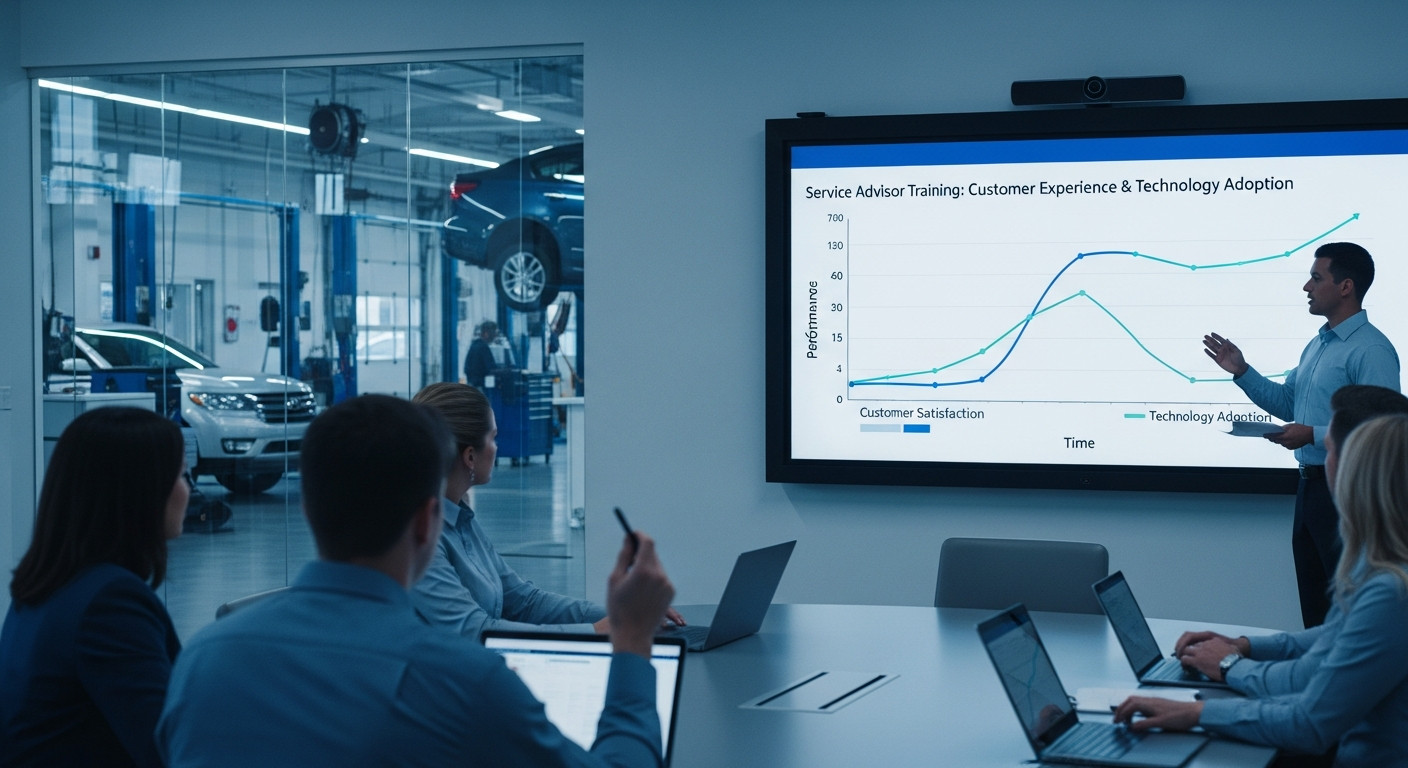
According to the latest J.D. Power study, while overall customer satisfaction with dealership service is on the rise, significant gaps in speed and convenience remain. For service advisors, this translates to an urgent need to enhance their communication skills and embrace technology that facilitates faster service.
Additionally, modern tools like Xtime and UpdatePromise are transforming how service advisors interact with customers, providing real-time updates and ensuring transparency throughout the service process.
Yet, adoption of these technologies is inconsistent, partly due to inadequate training and a lack of integration with existing systems. This results in a fragmented customer experience and missed opportunities for upselling and customer retention.
By understanding these industry trends and leveraging them in training programs, service departments can align their strategies with customer expectations, ultimately driving higher satisfaction and loyalty.
The Solution Framework
Creating a robust training program for service advisors involves understanding and implementing specific behaviors that directly impact financial performance and customer satisfaction.
Key advisor behaviors, such as effective greeting, precise needs discovery, and strategic estimate framing, have been shown to increase dollars-per-RO significantly within 90 days.
Training should also include the use of digital MPIs with photo/video updates, which have been linked to higher approval rates and decreased appointment lead times.
A comprehensive training framework should include modules on customer communication, technology integration, and upselling techniques, all aligned with dealership goals.
Furthermore, regular feedback and coaching, tailored to the 2026 CSI KPIs, ensure continuous improvement and sustained performance enhancements among advisors.
Implementation Guide
Implementing an effective service advisor training program requires careful planning and execution. Begin by assessing current performance and identifying specific areas for improvement.
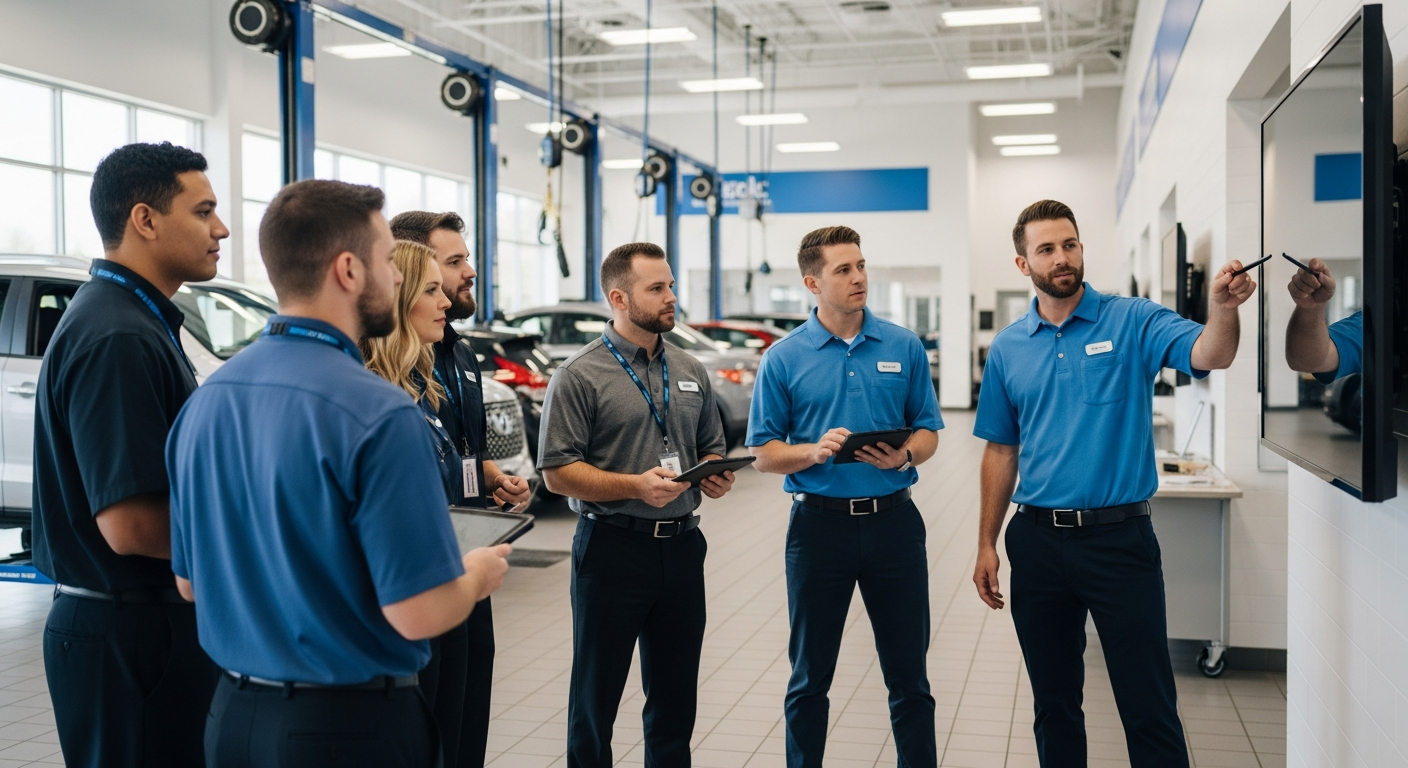
Next, develop a structured training plan that includes both theoretical and practical components. This could involve workshops, role-playing sessions, and real-time simulations using dealership-specific scenarios.
A successful implementation also hinges on technology integration. Ensure that advisors are comfortable using tools like Xtime for scheduling, TruVideo for MPIs, and myKaarma for communication.
Incorporating regular evaluation and feedback mechanisms is crucial. This allows for timely adjustments to training content and delivery methods, ensuring they remain relevant and effective.
Finally, creating a culture of learning within the service department encourages continuous professional development and enhances advisor engagement and retention.
Measuring Success
Success in service advisor training is measured not just by individual skill improvements but by tangible business outcomes such as increased revenue and improved customer satisfaction scores.
Key performance indicators (KPIs) such as dollars-per-RO, effective labor rate, and appointment lead times provide quantitative measures of training impact.
Within 60-90 days of training rollout, dealerships should expect to see a noticeable uplift in these metrics, demonstrating the ROI of their training investment.
Regular monitoring and analysis of these KPIs, along with customer feedback, provide insights into the effectiveness of training programs and highlight areas for further refinement.
To isolate training impact from other variables such as marketing or pricing changes, consider implementing A/B testing or cohort analysis, which offers a more accurate measure of training efficiency.
Advanced Strategies
Once a training program is in place and showing results, the next step is optimization and scaling to ensure long-term success and adaptability to changing market conditions.
Consider leveraging advanced technologies such as AI-driven analytics to personalize training experiences and target specific advisor needs more effectively.
Additionally, expanding training to include cross-role coordination ensures seamless communication and collaboration between advisors, technicians, and parts departments, enhancing overall service efficiency.
Incentive programs that align advisor performance with dealership goals, such as spiffs for achieving CSI KPIs, can further motivate and sustain high performance levels.
Finally, a continuous feedback loop and regular updates to training content keep the program fresh and aligned with the latest industry trends and customer expectations.
Related Topics
Ready to take your service department to the next level?
Schedule your demo today and experience the power of Auto Pro Solutions.
Schedule Demo