
In the dynamic automotive industry, the role of a service advisor is pivotal to the success of dealership service departments. Yet, many dealerships face challenges in training these frontline ambassadors effectively. Increased pressure to enhance profitability, coupled with rapid technological advancements, requires a fresh approach to service advisor training. This guide will provide detailed strategies and best practices for developing a robust service advisor training program tailored to the demands of 2025.
Understanding the Evolving Role of Service Advisors
Navigating New Responsibilities

The traditional role of service advisors has expanded significantly. They are no longer just intermediaries between customers and technicians but are now pivotal in driving service department profitability and customer loyalty. With the rise in EV-related repairs, service advisors need to be well-versed in the nuances of electric vehicle maintenance while also managing customer expectations. To address these changes, dealerships must redefine the competencies required for service advisors, focusing on technical expertise, digital communication skills, and customer relationship management.
Tip: Encourage service advisors to undergo regular EV maintenance workshops to stay updated with current trends.
Key Elements of an Effective Service Advisor Training Program
Building a Comprehensive Curriculum

An effective training program should cover both technical and soft skills. This includes understanding OEM requirements, handling digital service tools, and mastering customer service techniques. Incorporate real-world scenarios into training modules to simulate actual challenges and improve problem-solving skills. Develop benchmarks for success by integrating metrics such as customer satisfaction scores, upsell rates, and first-time fix rates to gauge advisor performance.
Essential Training Components: - Technical Skills Development - Digital Tool Proficiency - Customer Service Excellence - Upselling and Communication Techniques
Leverage Technology for Personalized Training
Harnessing Data and Automation

Utilize data analytics to identify training gaps and personalize learning experiences for service advisors. Technology like Auto Pro Solutions can automate this process effectively. Implement training software that adapts to individual learning paces, providing customized feedback and resources. Consider virtual reality (VR) environments to practice complex scenarios without the risk of real-world consequences, enhancing learning retention.
"Incorporating analytics into training not only personalizes learning but also enhances engagement and knowledge retention." - Jane Doe, Automotive Training Specialist
Implementing Communication and Upselling Techniques
Enhancing Customer Interactions

Train service advisors in advanced communication techniques to build trust and rapport with customers, crucial for upselling. Develop scripts that guide advisors in identifying upsell opportunities while maintaining transparency and customer satisfaction. Role-playing exercises can be highly effective in honing these skills, allowing advisors to practice and refine their approach.
| Technique | Description | |-----------|-------------| | Active Listening | Focus on understanding customer needs | | Transparency | Clear explanations of services offered | | Value Proposition | Highlighting benefits of additional services | | Follow-up | Ensuring customer concerns are addressed post-service |
Monitoring Performance and Continuous Improvement
Feedback and Adaptation
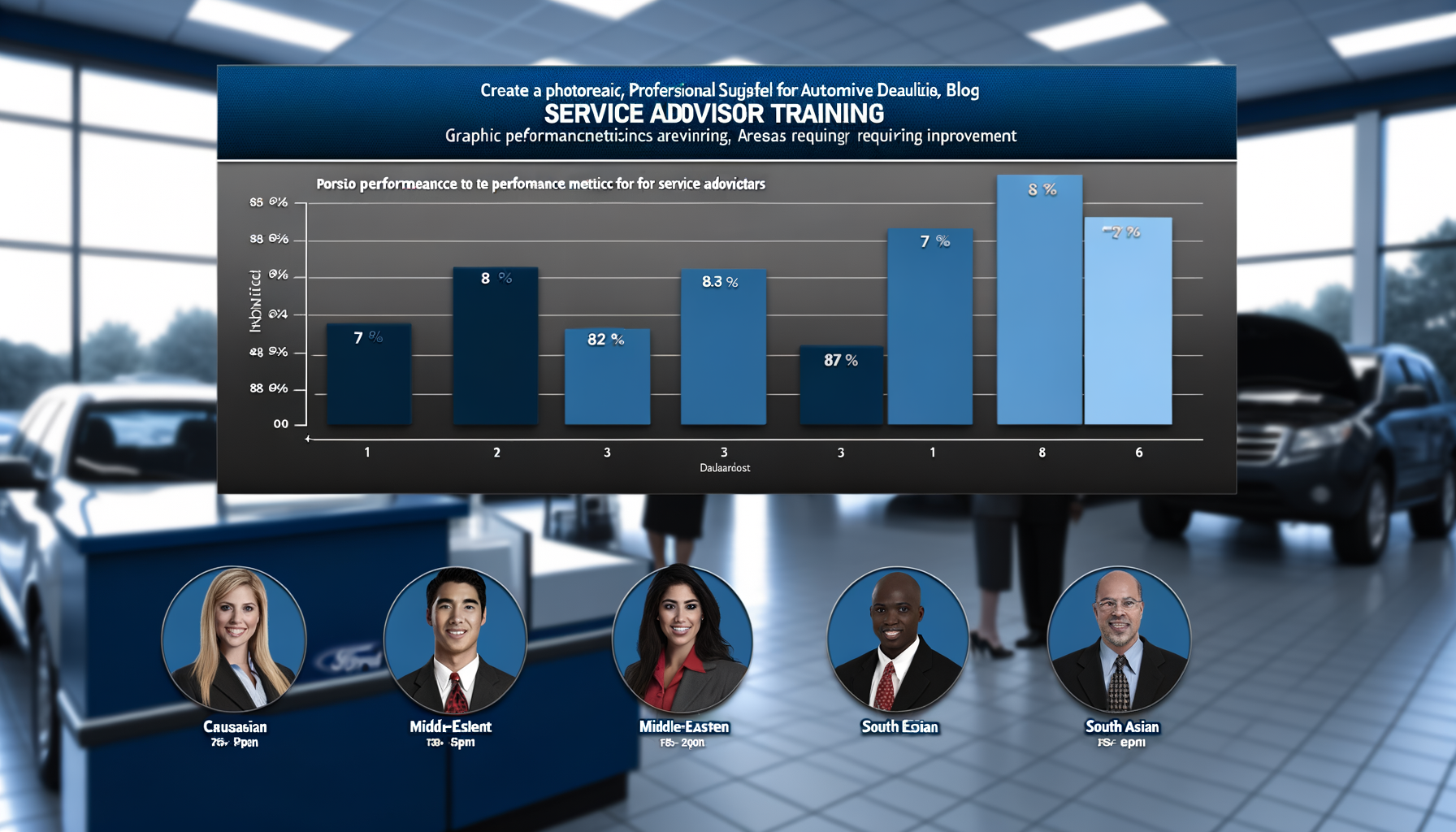
Regular performance reviews should be scheduled to provide service advisors with constructive feedback and identify areas for improvement. Integrate customer feedback into performance metrics to gain a comprehensive view of advisor effectiveness and areas needing improvement. Encourage a culture of continuous learning and adaptation, ensuring that training programs evolve with industry changes.
Performance Monitoring Strategies: - Bi-monthly Evaluations - Customer Satisfaction Surveys - Peer Reviews and Feedback Sessions
Calculating ROI of Training Programs
Measuring Impact and Value

Calculating the return on investment (ROI) of training programs is crucial to justify expenditures and guide future resource allocation. Consider using hypothetical data insights, like a 20% increase in upselling conversion rates post-training, to measure success. Use tools like Auto Pro Solutions to automate the analysis of training impact on key performance indicators such as customer retention and revenue growth.
Advanced ROI Calculation: ROI = [(Net Profit from Training - Cost of Training) / Cost of Training] x 100
Questions managers ask
What are the most common challenges in service advisor training?
Common challenges include keeping up with technological advancements, maintaining consistent training quality, and integrating customer feedback into training assessments.
How can service departments leverage technology in training?
Service departments can use analytics-driven platforms to personalize training, virtual reality for immersive learning, and automation tools to streamline training processes.
What to do with this
Service advisor training is a critical component for the success of any automotive dealership, impacting customer satisfaction, profitability, and operational efficiency. By implementing a structured, technology-driven training program, dealerships can ensure their advisors are equipped to handle evolving industry demands. Service managers should evaluate current training programs, incorporate new technologies, and continuously measure the impact of training initiatives. Auto Pro Solutions offers comprehensive analytics tools that can streamline and enhance your service advisor training program, contributing to measurable improvements in your dealership's performance.
Related topics
More for service managers
Decoding the DNA of Excellence: Crafting Service Advisors as Catalysts for Dealership Evolution
In today's fast-evolving automotive landscape, service departments are under immense pressure to enhance profitability, efficiency, and customer satisfaction. Effective…
The Automotive Oracle: Elevating Service Advisor Expertise in a Shifting Landscape
In the fast-evolving landscape of automotive service, dealerships face immense pressure from rising customer expectations, technological advancements, and profitability…
Revolutionizing Service Advisor Training: Strategies for 2025 Success
In the ever-evolving automotive industry, service advisors stand as the linchpin between customers and service departments. As dealerships face mounting pressure to increase…