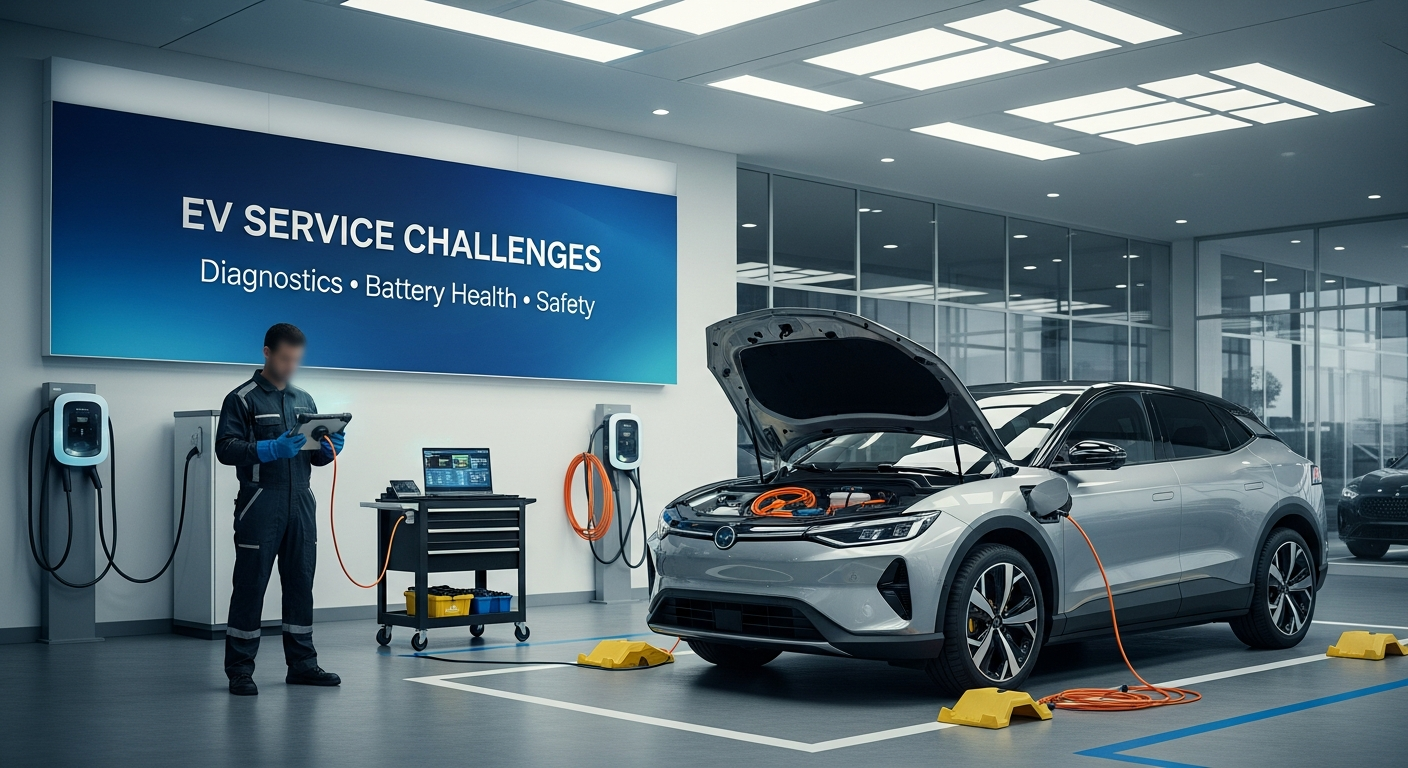
Electric vehicles (EVs) are no longer the distant future—they're here and rapidly reshaping the automotive landscape. As dealerships pivot to meet the demands of this electric era, service departments face a unique set of challenges. From setting labor rates that incorporate high-voltage safety procedures to designing effective intake strategies for damaged EVs, the path to profitability can seem fraught with obstacles. Dealers are also grappling with replacing lost internal combustion engine (ICE) maintenance revenue and adapting to the technological demands of EV service. The stakes are high, with customer satisfaction scores for EV services trailing behind their ICE counterparts by a significant margin. So, how does a dealership navigate this complex terrain? In this comprehensive guide, we'll delve into the specifics of EV service challenges and explore actionable solutions that can transform your service department from struggling to thriving. By understanding the industry landscape and adopting a strategic approach, you'll be equipped to turn these challenges into opportunities, capturing new revenue streams and enhancing customer loyalty.
Understanding the Challenge
Why EV Service is Unlike Any Other
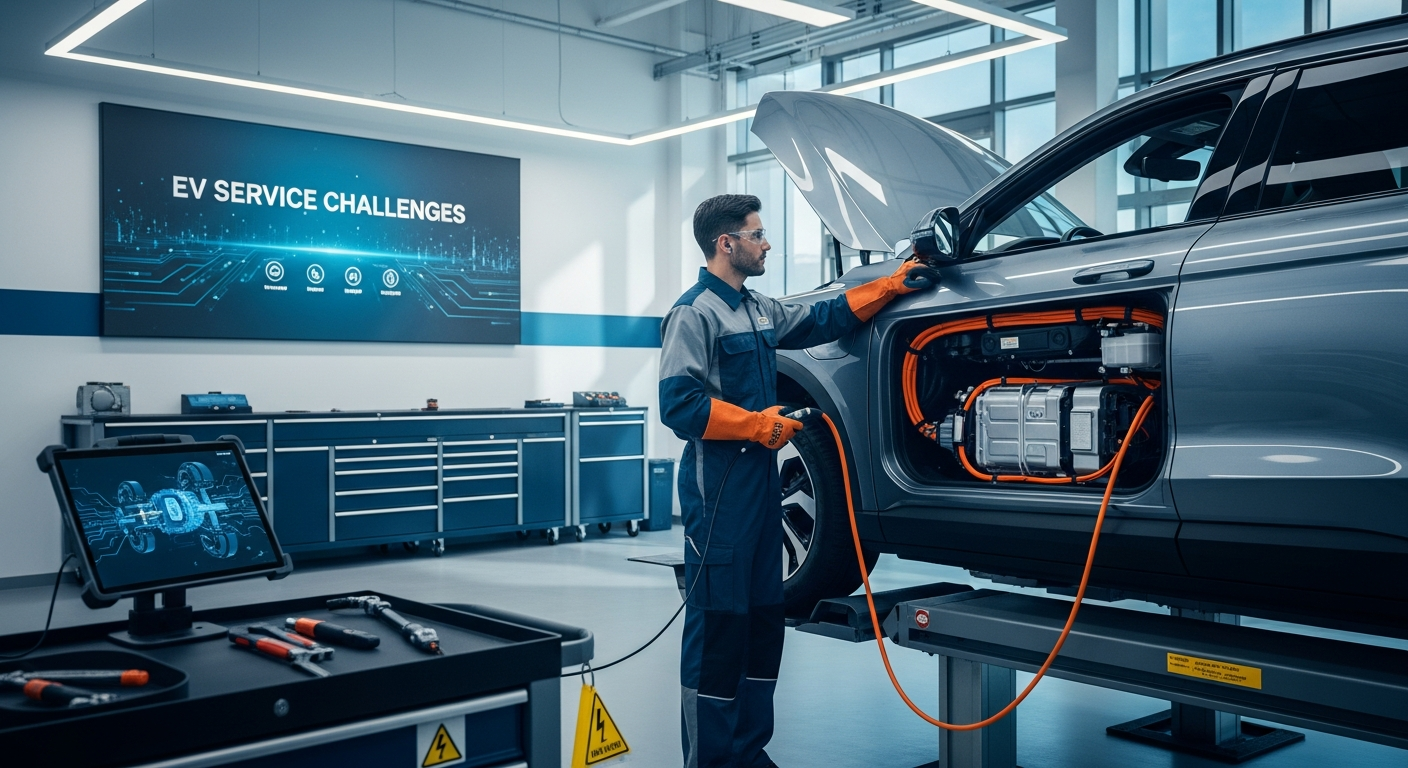
The transition from ICE vehicles to EVs introduces a host of new service department challenges. Unlike traditional vehicles, EVs require specialized equipment and skills, especially concerning their high-voltage systems. It's not just about changing oil or rotating tires; it's about understanding complex battery systems, electric drivetrains, and advanced diagnostic tools. One of the primary concerns is setting appropriate labor rates. High-voltage safety steps, such as verifying and disabling high voltage, add extra time and complexity to routine operations. Dealers must find a way to incorporate these necessary steps without pricing themselves out of the market. Furthermore, the lack of frequent maintenance requirements in EVs compared to ICE vehicles poses another dilemma.
Dealerships must identify new revenue streams, such as tire services, ADAS calibrations, and battery diagnostics, to replace the lost income from traditional maintenance services. Another significant challenge is staffing. With the industry's rapid shift towards EVs, there's an urgent need for technicians who are not only trained but also certified in EV-specific skills. ASE L3 certification and xEV electrical safety certification are becoming the gold standard for service departments aiming to stay competitive. Finally, safety and compliance cannot be overlooked. Proper intake and quarantine procedures for damaged EVs, compliance with local codes, and insurer expectations are critical to running a safe and efficient service operation.
Current Industry Landscape
Navigating the EV Evolution
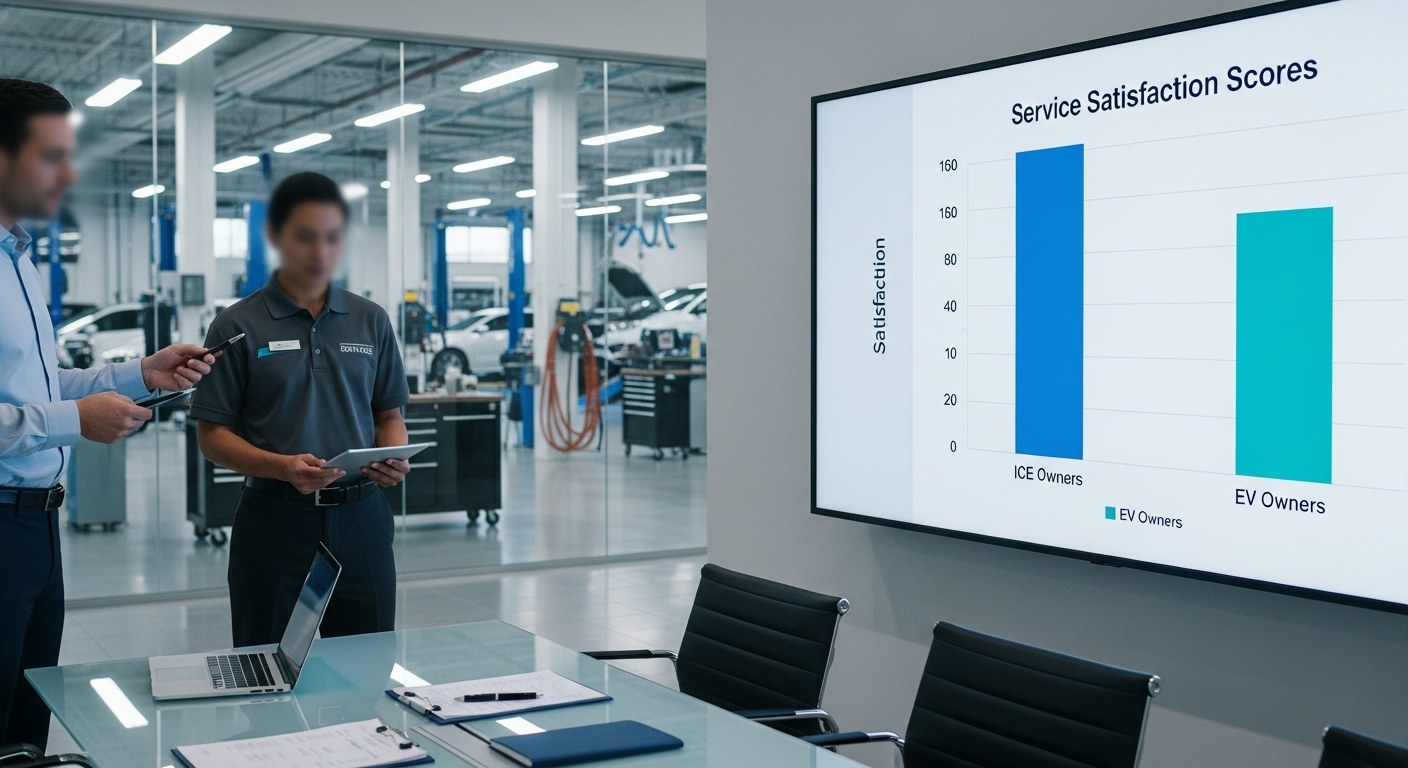
The automotive industry is undergoing a monumental shift towards electrification, with EV sales steadily rising. However, this growth is not without its challenges. The service satisfaction gap between EV and ICE vehicle owners is stark, and dealerships must address this disparity to improve customer loyalty. Recent studies show that mass-market BEV owners rate their service experience 51 points lower than ICE vehicle owners. For premium BEVs, the gap widens to 57 points. This dissatisfaction is often linked to service appointment wait times and a lack of clear communication from service advisors, both of which stem from an industry still adapting to EV demands. Moreover, EV collision repairs are notably more expensive and time-consuming than their ICE counterparts.
The average repair severity for BEVs is approximately $1,000 higher than for ICE vehicles, partly due to the increased labor hours and reliance on OEM parts. These factors contribute to longer cycle times and higher costs, impacting both dealerships and consumers. On the technological front, dealerships are also facing challenges with the integration of digital tools and systems necessary for efficient EV service. From digital multipoint inspections to battery health diagnostics, the right technology can streamline operations and improve repair order approval rates. To navigate this evolving landscape, dealerships must not only embrace new technologies but also rethink their service offerings to meet the needs of the modern EV customer.
Service Satisfaction Scores: ICE Vehicles: 850/1000, Mass-Market BEVs: 799/1000, Premium BEVs: 793/1000
Questions managers ask
How should dealerships calculate EV labor rates?
Dealerships should consider the additional time required for high-voltage safety steps when setting EV labor rates. A separate flat-rate line item for these steps can ensure transparency and help maintain competitive pricing.
What are the key EV-specific services that can replace lost ICE maintenance revenue?
Tire services, ADAS calibrations, and battery diagnostics are high-frequency needs that can generate revenue. Packaging these services with transparent pricing can increase customer acceptance and retention.
What to do with this
Navigating the EV service landscape is a complex but rewarding endeavor. By understanding the unique challenges of EVs and implementing strategic solutions, dealerships can transform their service departments into profitable and customer-centric operations. Develop a comprehensive training program for your technicians, invest in the necessary tools and equipment, and reevaluate your service offerings to better align with EV customer needs. Auto Pro Solutions has helped hundreds of dealerships successfully transition to EV services with tailored solutions and industry expertise.
Related topics
More for service managers
Navigating EV Service: Overcoming Challenges for Sustainable Growth
Imagine your service department, bustling with the typical cadence of internal combustion engine (ICE) vehicles, suddenly confronted with the rapid influx of electric vehicles…
Conquering EV Service Challenges: The Ultimate Dealership Guide
Imagine walking into your service department and seeing a line of sleek electric vehicles (EVs) waiting for their turn in the bay. This scene isn't a distant future; it's…
Unplugged Perspectives: The Real Deal on EV Service Hurdles
The automotive world is shifting gears at a pace that leaves many dealerships in its wake, especially as electric vehicles (EVs) become more mainstream. You might be feeling…