Digital Service Renaissance: Reimagining Dealerships for the Modern Era
Understanding the Challenge
The automotive service industry is at a pivotal crossroads, encountering both unprecedented opportunities and formidable challenges. Despite the robust demand for vehicle maintenance—bolstered by an aging fleet of vehicles averaging 12.8 years—dealerships are losing ground to independent service providers. The reasons are multifaceted but primarily center around outdated service processes and lackluster customer engagement.
Communication gaps and unexpected service costs have left nearly 45% of vehicle owners dissatisfied, with many turning to digital platforms for price comparisons and scheduling. Consequently, dealerships face a stark reality: adapt to the digital age, or risk further erosion of their service-visit share.
The challenge becomes even more pronounced when considering technician shortages and the increasing complexity of vehicle repairs, especially with the rise of electric vehicles (EVs). Dealerships struggle to attract and retain skilled technicians, limiting their capacity to handle the growing number of service appointments efficiently.
Moreover, cybersecurity threats, as highlighted by the CDK outage impact, underscore the necessity for robust digital infrastructure. Dealerships must navigate these challenges while maintaining operational resilience and ensuring customer satisfaction.
Current Industry Landscape

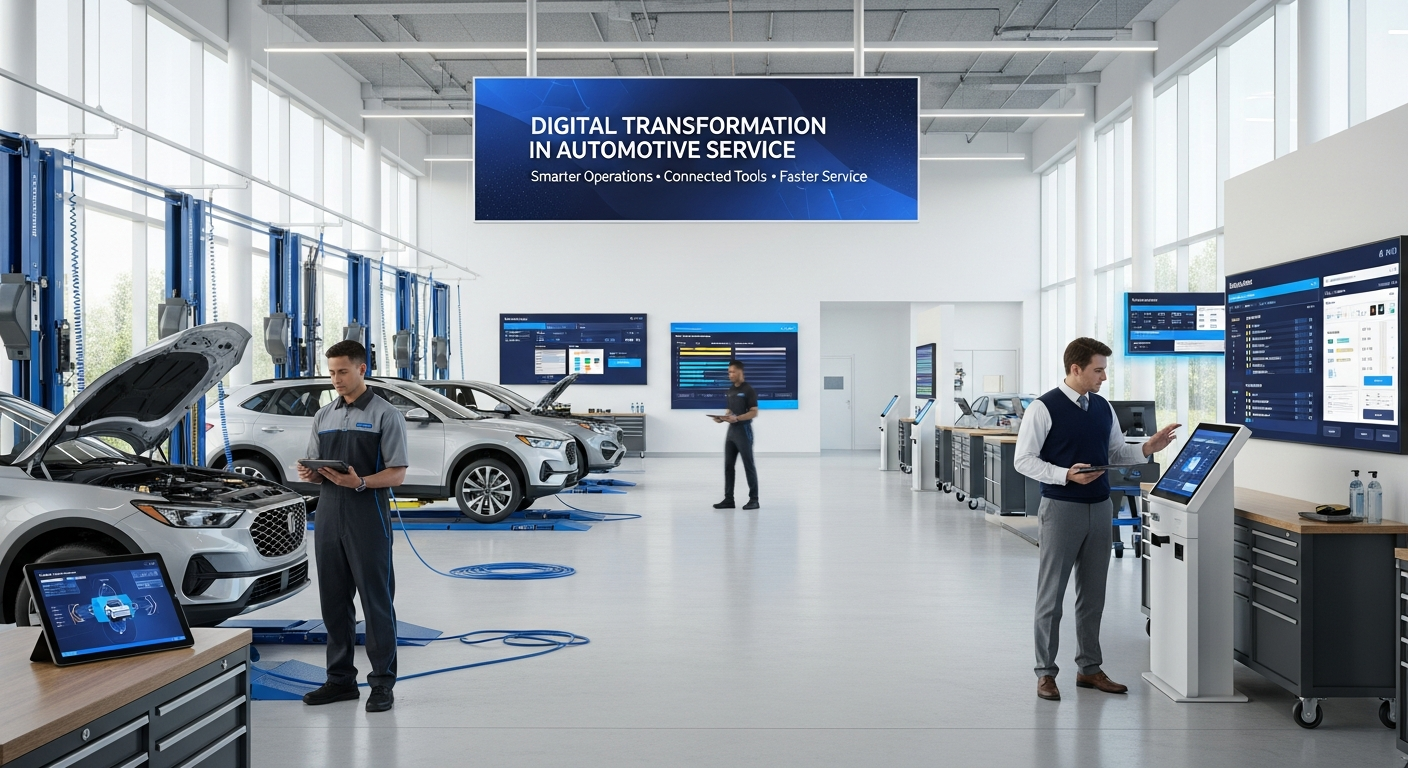
The automotive service landscape is undergoing a digital revolution, with technology playing an increasingly pivotal role in shaping customer experiences. As dealerships grapple with the pressures of maintaining profitability and customer loyalty, the adoption of digital tools is no longer optional but necessary.
Dealerships are witnessing a shift towards digital vehicle inspections (DVIs) with video integration, providing transparency and boosting customer trust. According to JD Power, when multipoint inspections include visuals, 41% of customers approve recommended work, compared to just 17% when visuals are absent.
Furthermore, the integration of AI-driven scheduling and call handling has emerged as a game-changer. AI systems can effectively manage appointment bookings, reducing lead times and no-show rates, freeing up advisors to focus on customer interactions. Despite these advancements, challenges such as failed AI-human handoffs persist, highlighting the importance of seamless transitions.
Innovations in payment solutions, such as text-to-pay and buy now, pay later (BNPL) financing, are transforming how customers interact with service departments. These tools not only enhance convenience but also improve cash flow and service approval rates.
The Solution Framework
To successfully navigate the digital transformation, dealerships must adopt a structured framework that prioritizes customer experience, operational efficiency, and technological integration. This involves a comprehensive approach that addresses both immediate needs and long-term strategic goals.
The first step is to enhance communication through omnichannel platforms, ensuring consistent and timely updates throughout the service journey. Tools like myKaarma facilitate seamless interactions via SMS, email, and web portals, significantly improving customer satisfaction.
Next, focus on optimizing appointment scheduling with AI-powered solutions like Xtime, which not only streamline the booking process but also balance advisor workloads by automating routine tasks.
A crucial component of the framework is implementing digital vehicle inspections with video capabilities. This not only builds trust through transparency but also increases service approval rates, directly impacting profitability.
Lastly, integrate advanced payment options, such as text-to-pay and BNPL, to provide financial flexibility to customers while improving dealership cash flow.
Implementation Guide
Implementing a digital transformation strategy requires careful planning and execution. Begin by assessing your current service operations to identify key areas for improvement and potential technology integrations.
Prioritize technology rollouts based on immediate impact and feasibility. Start with online scheduling and self-check-in solutions, as these can quickly reduce appointment lead times and improve customer satisfaction.
Follow up with the integration of digital vehicle inspections, ensuring your team is trained on the new processes and understands the value of transparency in customer interactions.
Introduce advanced payment solutions, such as text-to-pay and BNPL, to enhance the customer payment experience and drive revenue growth.
Throughout the implementation process, maintain open communication with your team, providing training and support to ensure a smooth transition. Additionally, establish clear metrics to monitor progress and make data-driven adjustments as needed.
Measuring Success
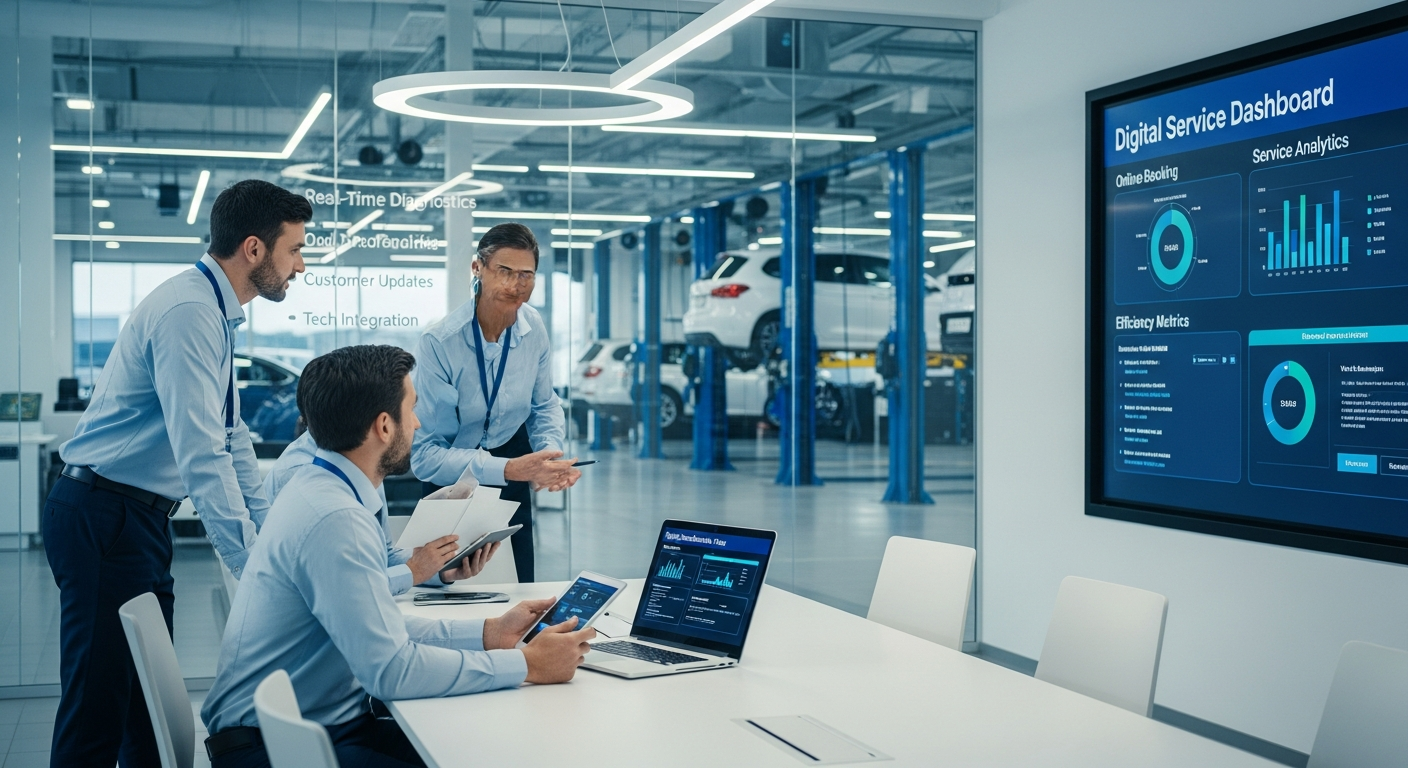
To gauge the effectiveness of your digital transformation efforts, it's crucial to establish and track key performance indicators (KPIs) that align with your dealership's objectives. These metrics provide insights into operational improvements and areas needing further optimization.
One critical KPI is the first-time-fix rate (FTFR), which measures the percentage of repairs completed correctly on the first visit. Achieving a high FTFR not only enhances customer satisfaction but also boosts throughput by minimizing repeat visits.
Another important metric is customer-pay average repair order (ARO), which reflects the average revenue generated per service order. Enhancing communication and transparency through digital tools can directly impact this figure by increasing upsell opportunities.
Show-rate by appointment channel is a valuable metric for assessing the effectiveness of your scheduling systems. A reduction in no-show rates indicates improved customer engagement and satisfaction.
Lastly, monitor text-to-pay adoption rates and BNPL financing utilization to evaluate the success of your payment options in driving revenue and customer convenience.
Advanced Strategies
As your dealership embraces digital transformation, it's essential to continuously refine your strategies to maximize returns. Begin by leveraging data analytics to identify patterns and areas for further improvement.
Implement predictive parts ordering and kitting processes to enhance your first-time-fix rate and reduce service cycle times. By ensuring the right parts are on hand before appointments, you can prevent delays and improve customer satisfaction.
Develop a robust triage system to prioritize service appointments based on complexity and technician expertise. This approach ensures that urgent repairs are addressed promptly while optimizing technician utilization.
For EV services, invest in specialized training and certification programs to ensure your technicians are equipped to handle the unique challenges of electric vehicles. This will not only boost your service capacity but also improve customer confidence in your EV capabilities.
Finally, foster a culture of continuous improvement and innovation within your service department. Encourage feedback from both customers and staff to identify new opportunities for digital enhancements.
Related Topics
Ready to take your service department to the next level?
Schedule your demo today and experience the power of Auto Pro Solutions.
Schedule Demo