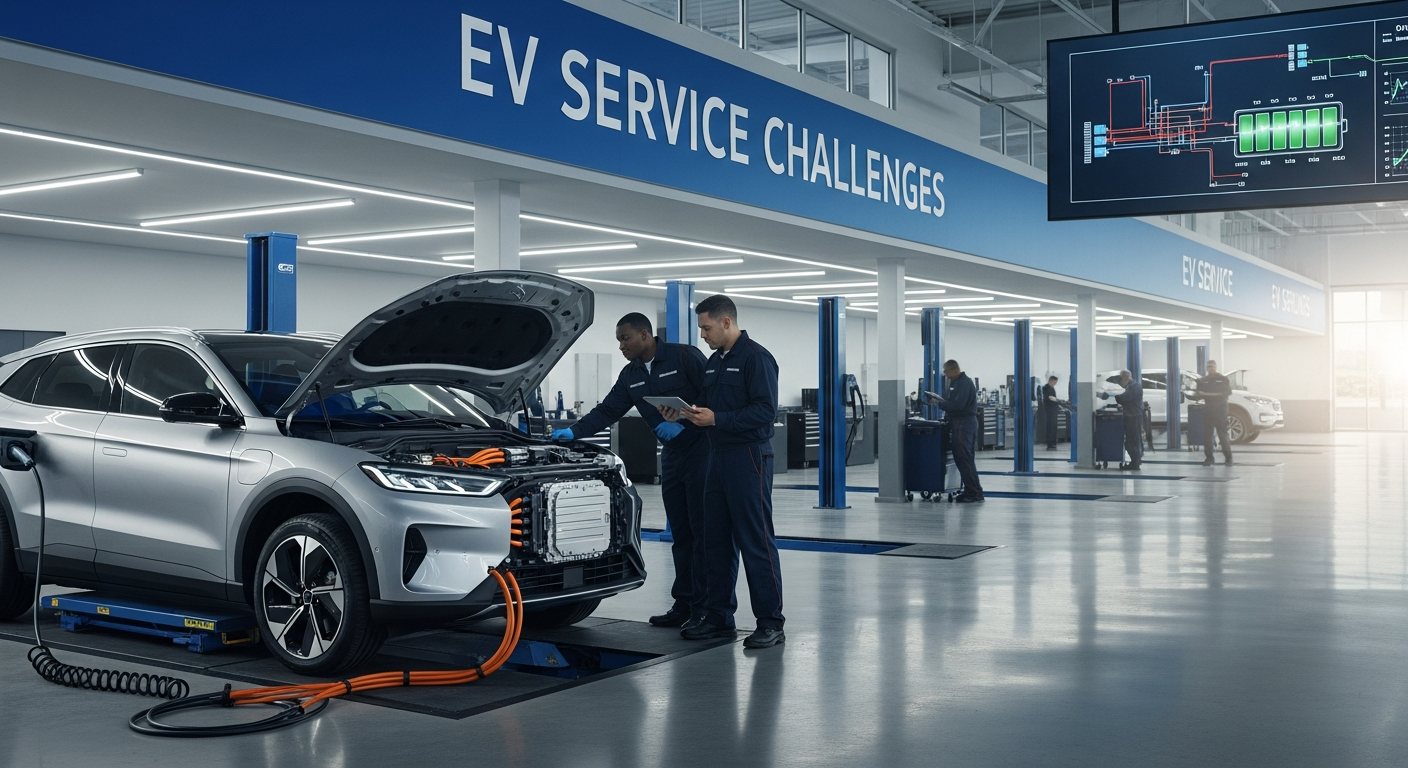
Imagine walking into your service department and seeing a line of sleek electric vehicles (EVs) waiting for their turn in the bay. This scene isn't a distant future; it's rapidly becoming a reality. The shift from internal combustion engine (ICE) vehicles to EVs is not just a trend—it's a tidal wave that's transforming the automotive industry. But here's the catch: many dealerships are still grappling with the unique service requirements these vehicles demand. The challenge is clear—how can you prepare your service department to handle this shift without sacrificing profitability or customer satisfaction? The answer lies in anticipating the specific needs of EV service, from specialized equipment to skilled technicians. This blog post will delve into the core challenges dealerships face in adapting to EV service demands. We'll explore current market trends, outline a strategic framework for transformation, and provide actionable steps to ensure your department not only survives but thrives. By the end, you'll have a clearer vision of how Auto Pro Solutions can help you make informed investments and drive new revenue streams in this electrifying automotive era.
Understanding the Challenge
Why Dealerships Struggle with EV Service
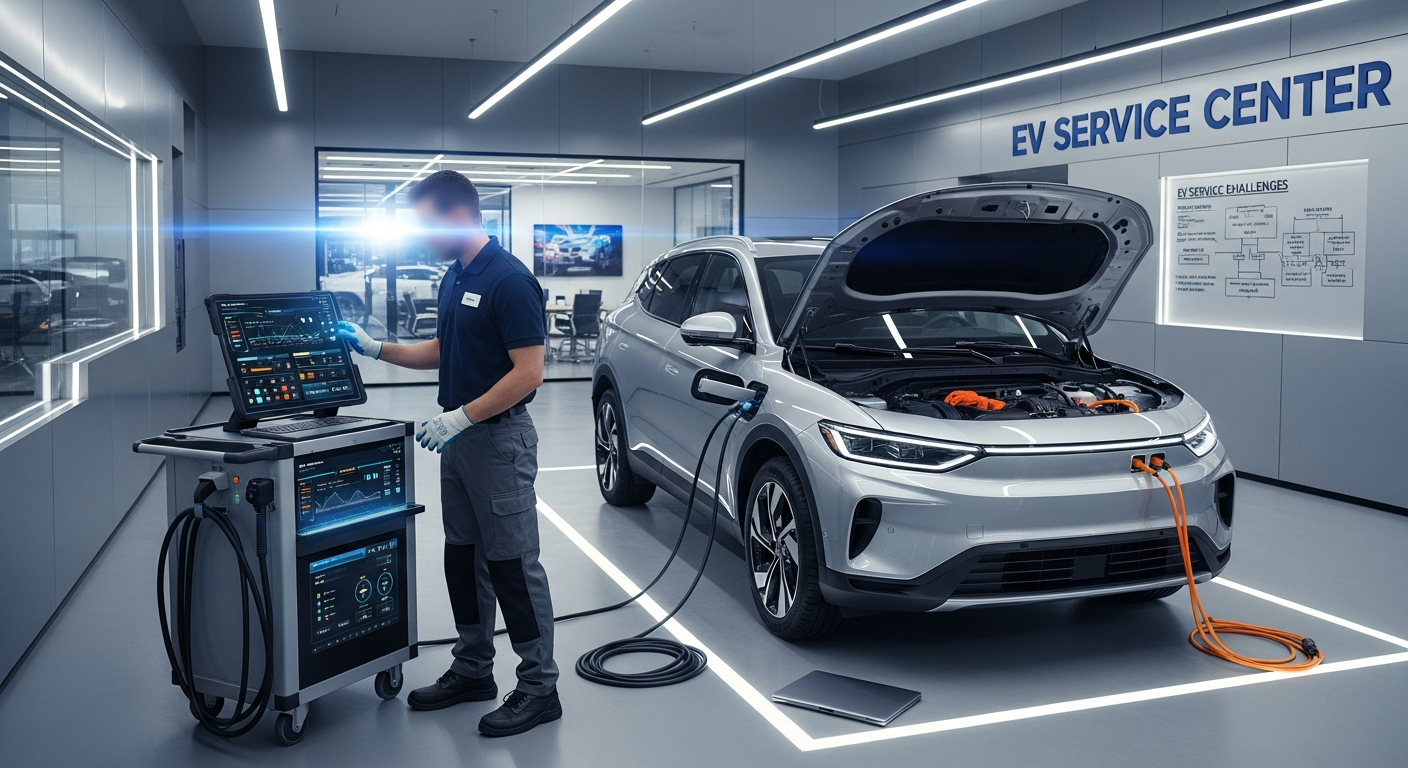
The transition to electric vehicles (EVs) presents a unique set of challenges for dealership service departments. With fewer moving parts and different maintenance needs, EVs require a fundamental shift in how service departments operate. Traditional revenue streams, like oil changes and exhaust repairs, are dwindling as EVs rise. For many dealerships, the lack of experienced technicians poses a significant hurdle. The demand for high-voltage safety (NFPA 70E) trained staff is increasing, yet the supply remains limited. Moreover, the complexity of EV systems necessitates continuous training and certification updates, which can strain both time and financial resources. Another pressing issue is the need for specific tools and infrastructure. For instance, battery state-of-health (SOH) reporting has become crucial for accurate diagnostics and appraisals. However, without the right equipment and processes, service departments may struggle to provide consistent and reliable services.
Current Industry Landscape
Navigating the EV Service Market
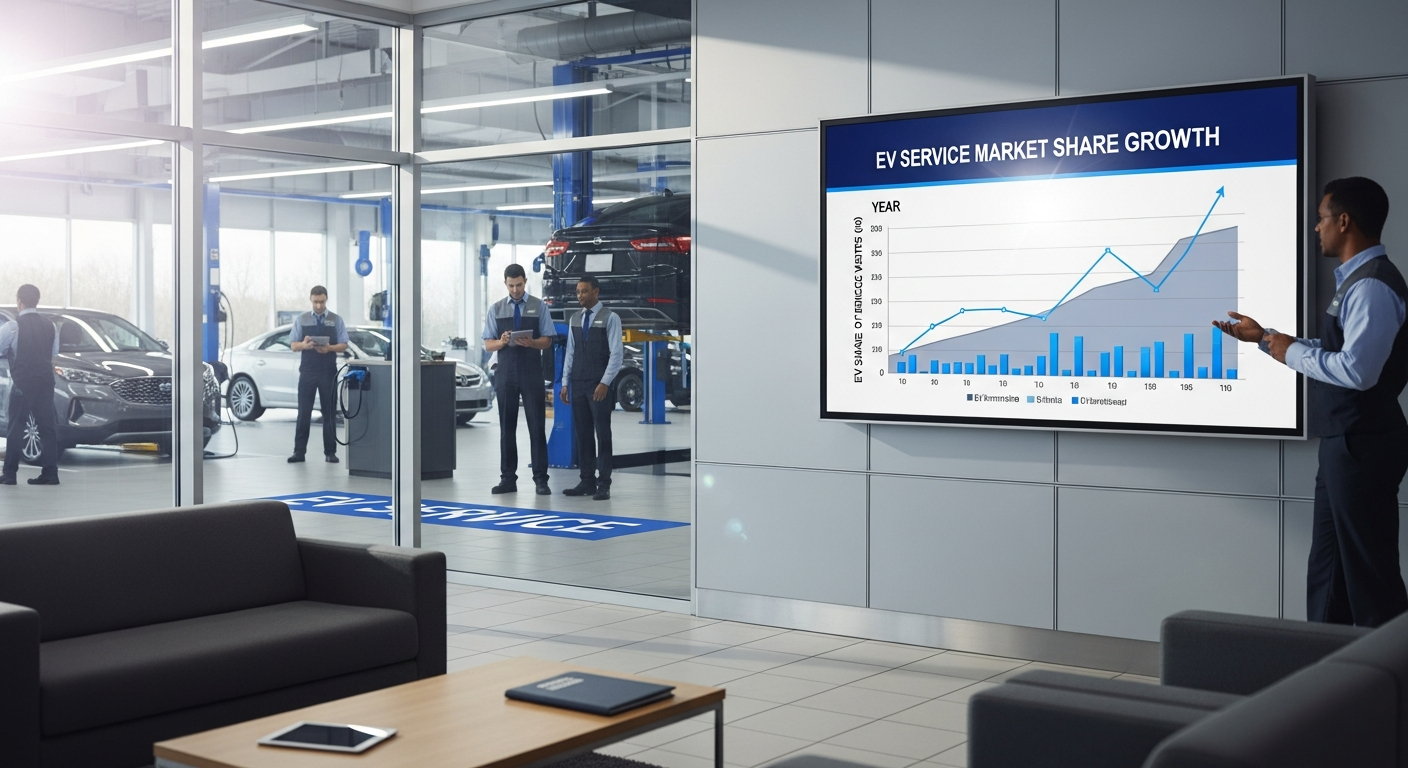
The EV market is growing exponentially, and with it comes a changing service landscape. According to recent statistics, battery electric vehicles (BEVs) have seen a 5% reduction in repairable severity year over year, yet require more frequent calibrations per repair order compared to traditional vehicles. This shift means service departments must adapt to a new mix of revenue sources. While routine maintenance may decrease, opportunities in diagnostics, software updates, and advanced driver-assistance systems (ADAS) calibration revenue begin to emerge. However, to capitalize on these opportunities, dealerships must understand the specific market demands in their primary market area (PMA). Forecasting the expected service mix for 2026–2028, including labor hours and parts-to-labor ratios, is crucial for strategic planning.
BEV vs ICE Calibration Frequency, Repairable Severity Trends, Revenue Mix Projections
The Solution Framework
Strategic Approaches to Overcome Challenges
To turn challenges into opportunities, dealerships must develop a comprehensive framework that addresses the unique needs of EVs. This starts with investing in the right equipment, such as the BendPak Mobi-EVS battery lift table, which ensures safe and efficient handling of EV batteries. Equally important is the development of workforce capabilities. Implementing an EV technician apprenticeship program can build a pipeline of high-voltage certified technicians. This not only addresses immediate staffing gaps but also prepares the department for future demands. Furthermore, standardizing processes such as battery SOH reporting and ADAS calibration can streamline operations, improve customer satisfaction, and enhance valuation accuracy. By leveraging predictive maintenance via connected-car data, dealerships can also offer proactive service solutions that drive customer loyalty.
Implementation Guide
Step-by-Step Transformation for Service Departments
Successfully implementing an EV service strategy requires careful planning and execution. Begin by conducting a thorough needs assessment of your current capabilities against future EV demands. Identify gaps in equipment, training, and infrastructure. Next, prioritize investments that promise the quickest returns. Tools such as the Autel MaxiSys Ultra EV for high-voltage diagnostics and Midtronics GRX-5100 for battery service are essential for efficient EV operations. Aim for investments with a payback period of under 24 months to ensure financial viability. Establish clear staffing plans that include a mix of seasoned and apprentice technicians. Use workforce planning templates to map out skill matrices and certification roadmaps. This ensures balanced coverage across shifts, reducing cycle times and maintaining compliance.
Measuring Success
Key Performance Indicators for EV Service Departments
Measuring the success of your EV service transformation involves tracking specific key performance indicators (KPIs). These metrics help gauge the effectiveness of your strategies and highlight areas for improvement. Focus on metrics such as the EV share of repair orders (ROs), gross profit per EV RO, and high-voltage certified technician coverage. Additionally, monitor average EV RO cycle time to ensure efficient operations from check-in to closure. By regularly analyzing these KPIs, service managers can make informed decisions, adjust strategies as needed, and continue to enhance service department performance. It's essential to set benchmark targets and strive for continuous improvement.
EV Share of RO Count, Gross Profit per EV RO, Technician Coverage, Cycle Time
Advanced Strategies
Optimizing and Scaling Your EV Services
Once the foundational elements are in place, it's time to optimize and scale your EV services. Start by exploring advanced strategies such as utility-upgrade deferral tactics and managed charging solutions that can defer significant capital expenditures. Consider implementing mobile service vans equipped for on-site EV maintenance and diagnostics. This flexibility not only increases convenience for customers but also opens new revenue streams. Finally, partner with auctions and valuators to automate VIN-specific battery health data integration into appraisal tools. This enhances valuation processes, improves customer satisfaction, and bolsters trust in used-EV transactions.
Questions managers ask
What are the immediate steps my dealership should take to prepare for EV service?
Start by assessing your current service capabilities against projected EV demands. Invest in high-impact tools and equipment with quick ROI, such as diagnostic platforms and battery lifts. Concurrently, develop your workforce through targeted training and apprenticeships to ensure high-voltage safety compliance.
How can we ensure consistent battery SOH reporting across different OEMs?
Adopt reliable SOH testing solutions compatible with multiple OEMs, and establish standardized test conditions for repeatable results. Integrate these practices into your DMS/CRM systems for seamless reporting and tracking on repair orders and appraisals.
What KPIs should we focus on for measuring EV service success?
Key KPIs include the EV share of repair orders, gross profit per EV RO, high-voltage certified technician coverage, and average EV RO cycle time. Regularly reviewing these metrics will help you assess performance and make strategic adjustments.
When is it more cost-effective to outsource HV battery repairs?
Outsourcing HV battery repairs can be more cost-effective when the in-house expertise is lacking or the turnaround times are longer due to resource constraints. However, weigh this against potential core returns, hazmat shipping costs, and overall impact on cycle time.
What to do with this
As the automotive landscape continues to evolve with the rise of electric vehicles, adapting your dealership's service department is more critical than ever. By strategically investing in equipment, training, and standardized processes, you can not only meet but exceed the demands of EV service. Conduct a thorough needs assessment and prioritize high-impact investments. Develop a robust training program for technicians and standardize your EV service processes. Monitor key performance indicators regularly to ensure ongoing success. Auto Pro Solutions has helped hundreds of dealerships successfully navigate the transition to EV services, offering customized solutions that drive profitability and customer satisfaction.
Related topics
More for service managers
Navigating EV Service: Overcoming Challenges for Sustainable Growth
Imagine your service department, bustling with the typical cadence of internal combustion engine (ICE) vehicles, suddenly confronted with the rapid influx of electric vehicles…
Unplugged Perspectives: The Real Deal on EV Service Hurdles
The automotive world is shifting gears at a pace that leaves many dealerships in its wake, especially as electric vehicles (EVs) become more mainstream. You might be feeling…
Electric Avenue: Conquering the Roadblocks of EV Servicing
The electric vehicle (EV) revolution is no longer a distant future but a pressing reality. As the share of EVs in the new-vehicle market continues to grow, service departments…