In today's competitive automotive industry, dealership service departments face mounting pressures to increase efficiency and profitability while maintaining high customer satisfaction. Leveraging the latest tools and strategies in 2025, service managers can transform their operations into well-oiled machines that not only meet but exceed these demands. This comprehensive guide offers a deep dive into actionable strategies that streamline workflows, optimize resource allocation, and enhance customer experiences, positioning your dealership at the forefront of service excellence.
Understanding the Current Efficiency Landscape
The State of Service Departments in 2025
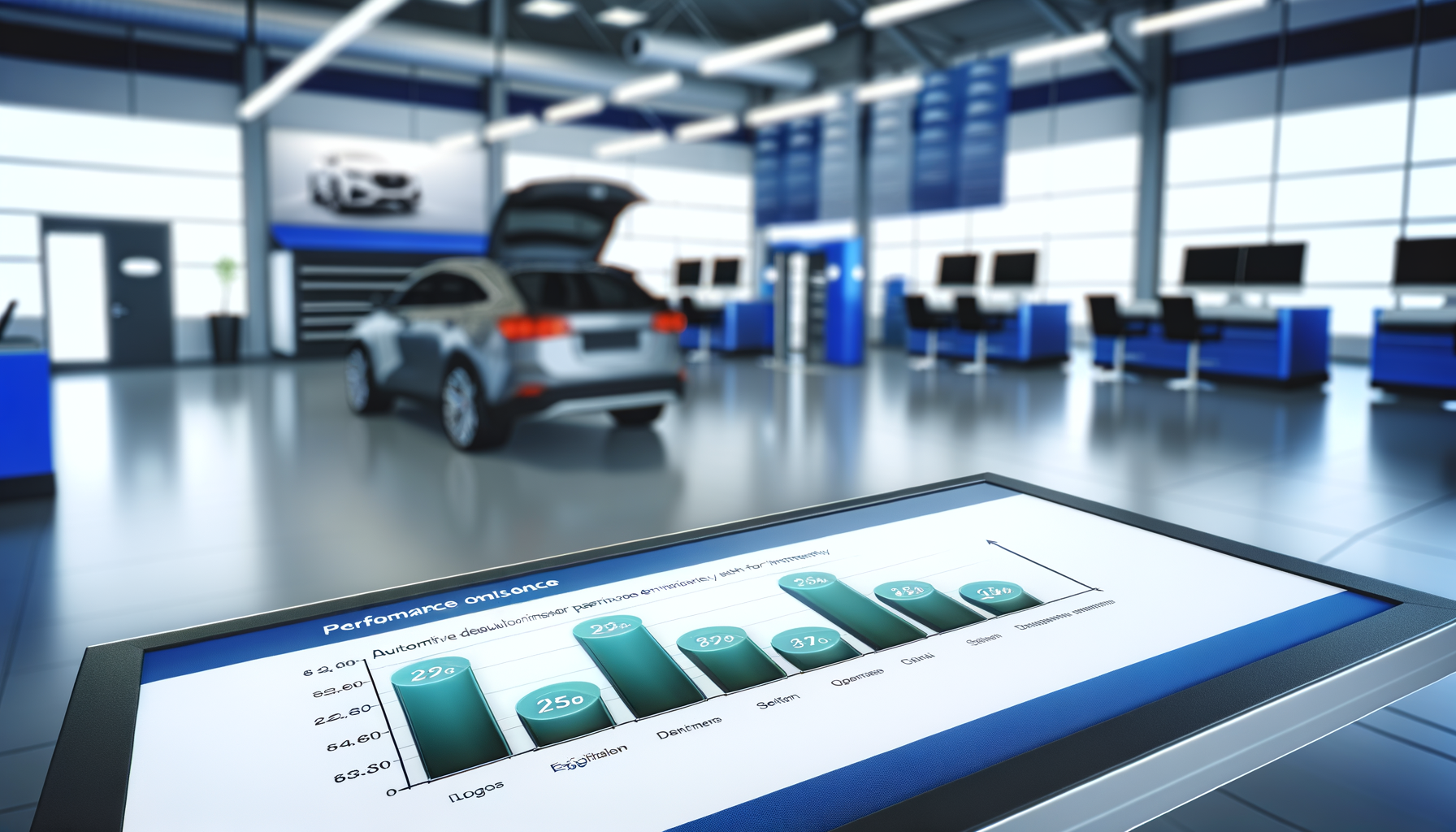
The automotive service industry is experiencing rapid changes propelled by advancements in technology and shifting consumer expectations. According to recent studies, there has been a 15% increase in EV-related repairs, placing new demands on service departments. As OEMs announce new training requirements and parts shortages persist, efficient operations are more crucial than ever. Service managers must adapt quickly to these challenges to maintain profitability and customer satisfaction. To address these issues, dealerships must first benchmark their current efficiency levels. This involves analyzing turnaround times, first-time fix rates, and customer feedback to identify areas for improvement.
Benchmarking Key Metrics: First-time fix rate target: 85%, Average turnaround time: 60 minutes, Customer satisfaction score: 90%
Optimizing Workflow with Process Automation
Automation is transforming service department workflows by reducing manual tasks and improving accuracy. Integrating automated scheduling systems can cut down wait times by up to 30%, ensuring a more seamless customer experience. Implementing digital inspection tools not only speeds up the diagnostic process but also enhances transparency with customers, as they receive real-time updates and visual evidence of vehicle conditions. For practical implementation, start by assessing current manual processes that could benefit from automation. Gradually integrate software solutions like digital inspection platforms and automated scheduling to maximize efficiency.
Steps to Implement Automation: 1. Identify manual tasks, 2. Research suitable automation tools, 3. Train staff on new systems, 4. Monitor and refine processes
Maximizing Service Bay Utilization
Strategic Scheduling and Resource Allocation
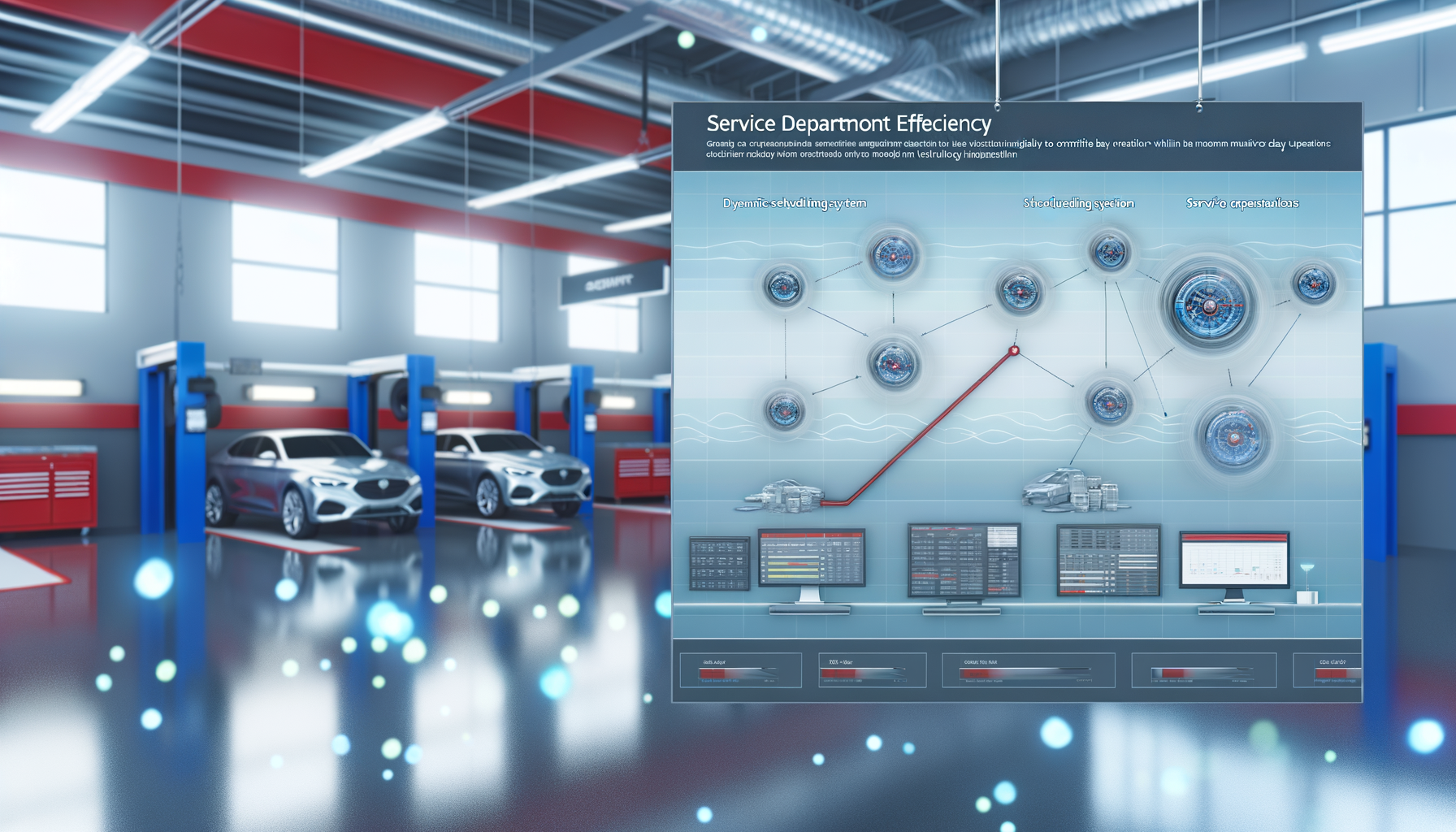
Effective bay management is a cornerstone of service efficiency. By optimizing scheduling and resource allocation, dealerships can increase service throughput and reduce bottlenecks. Using predictive analytics to forecast demand allows service departments to adjust staffing levels in advance, ensuring that bays are always utilized effectively without overburdening technicians. Implement a dynamic scheduling system that prioritizes work based on complexity and technician expertise, ensuring optimal match-ups and reducing idle time.
Bay Utilization Strategies:| Strategy | Benefit | | --- | --- | | Predictive Analytics | Reduces idle time | | Dynamic Scheduling | Matches tasks to expertise | | Resource Allocation | Balances workload |
Leveraging Data Analytics for Continuous Improvement

Data analytics offers powerful insights into service department operations, allowing managers to identify trends, predict maintenance needs, and make data-driven decisions. Tools like Auto Pro Solutions provide comprehensive dashboards that help track key performance indicators (KPIs), enabling service managers to fine-tune operations continuously. To leverage data analytics effectively, establish a baseline of current performance metrics, then use analytics platforms to track improvements and adjust strategies accordingly.
As noted by industry expert Jane Doe, 'Data-driven decision-making is fundamental to achieving optimal efficiency in service departments.'
Overcoming Common Challenges with Innovative Solutions
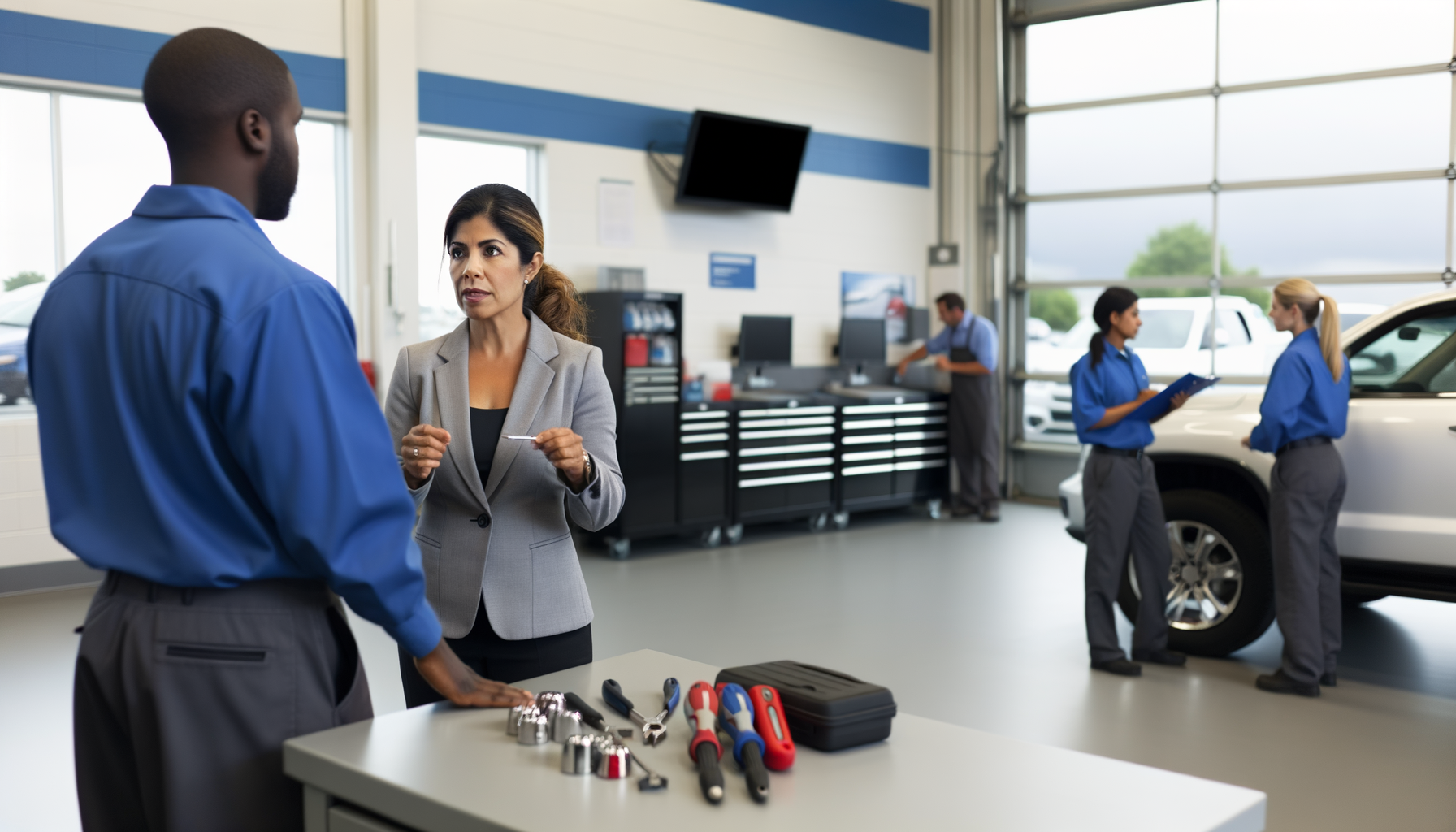
Service departments face several common challenges, including parts shortages and high staff turnover, which can impede efficiency. To mitigate parts shortages, establish strong relationships with multiple suppliers and consider stocking critical parts in advance based on predictive maintenance needs. Combat staff turnover by investing in comprehensive training programs and creating a positive workplace culture that promotes employee retention.
Solutions to Common Challenges: 1. Multi-supplier strategies, 2. Training and development programs, 3. Positive workplace culture
Enhancing Customer Engagement for Loyalty and Retention

In 2025, customer engagement is critical for maintaining loyalty and driving repeat business in service departments. A study shows that 68% of customers prefer digital service scheduling, highlighting the need for user-friendly online appointment systems that enhance convenience. Implement personalized follow-up communications to thank customers for their business and solicit feedback, fostering a sense of connection and trust.
Digital Engagement Tools: Online scheduling systems, Personalized communication platforms, Customer feedback loops
Questions managers ask
What are the key benefits of automating service department processes?
Automating service processes improves efficiency by reducing manual tasks, minimizing errors, and speeding up service delivery, ultimately enhancing customer satisfaction and profitability.
How can data analytics improve service department operations?
Data analytics provides insights into performance metrics, identifies trends, and helps managers make informed decisions to optimize operations and improve service delivery.
What to do with this
This guide has outlined essential strategies for boosting efficiency in dealership service departments through automation, data analytics, and enhanced customer engagement. By implementing these techniques, dealerships can meet the challenges of 2025 head-on, ensuring long-term success. Begin by assessing current workflows and identify areas for automation. Explore data analytics tools to gain actionable insights, and enhance customer interactions with digital engagement solutions. Auto Pro Solutions offers state-of-the-art software that integrates seamlessly with existing systems, providing comprehensive solutions to streamline operations and enhance customer engagement.
Related topics
More for service managers
Turbocharge Your Service Bay: Harnessing Innovative Practices for Maximum Efficiency
In today's fast-evolving automotive landscape, dealership service departments are under immense pressure to boost efficiency while maintaining high standards of customer…
Mastering Service Department Efficiency: Unlock the Secrets to Streamlined Operations in 2025
In an era where customer expectations are soaring and technology is advancing at breakneck speeds, automotive dealerships face mounting pressure to streamline their service…
Wrenching Time: Turbocharging Productivity in Tomorrow's Service Bays
In the high-stakes world of automotive service departments, efficiency isn't just a goal—it's a necessity. As service managers and fixed ops directors confront the pressures…