
In a rapidly evolving automotive landscape, fixed ops leadership stands at the crossroads of innovation and tradition. Service managers and fixed ops directors face unprecedented challenges, from staffing shortages to the integration of new technologies. This guide explores actionable strategies that align leadership practices with modern demands, ensuring profitability, efficiency, and customer satisfaction.
Understanding the Evolving Role of Fixed Ops Leadership
Adapting to Industry Changes

The role of fixed ops leadership has expanded beyond traditional management functions. Leaders must now navigate complex technological environments and workforce dynamics. Recent studies show that service departments experience a 15% increase in EV-related repairs, necessitating updated training and process realignment. To adapt, fixed ops directors should implement structured training programs focused on emerging technologies, integrating OEM guidelines to maintain service quality.
"Fixed ops leaders today must be agile, tech-savvy, and customer-focused to thrive in a competitive market." – Jane Doe, Automotive Industry Analyst
Building a High-Performance Fixed Ops Team
Recruitment and Retention Strategies

Staff turnover remains a significant challenge, with industry reports indicating a 20% higher turnover rate in service departments than in other dealership areas. To counteract this, emphasize transparent communication and career development opportunities during recruitment. Implement mentorship programs and regular feedback sessions to foster a supportive environment that encourages skill enhancement and job satisfaction.
1. Conduct thorough onboarding 2. Promote continuous education 3. Recognize and reward performance
Leveraging Technology for Operational Efficiency
Automation and Analytics

With the advent of big data, fixed ops leaders can no longer ignore the power of analytics in decision-making. Utilize advanced software solutions to automate routine tasks, thereby freeing up time for strategic activities. Platforms like Auto Pro Solutions offer integrated analytics and automation capabilities that streamline workflows and enhance productivity.
| Task | Manual Time (hrs) | Automated Time (hrs) | Efficiency Increase (%) | |------|-------------------|----------------------|------------------------| | Scheduling | 5 | 1 | 80% | | Inventory Management | 4 | 2 | 50% | | Reporting | 3 | 0.5 | 83% |
Enhancing Customer Experience in Service Departments
Creating Loyalty Through Exceptional Service

Customer expectations are at an all-time high, with 68% preferring digital service scheduling. Implement user-friendly online booking systems and ensure seamless digital interactions to meet customer demands. Regular follow-ups post-service can significantly boost customer satisfaction and retention rates, as evidenced by a 20% improvement reported by dealerships adopting this approach.
Tip: Personalize communication using CRM data to make customers feel valued and engaged.
Innovation in Data-Driven Decision Making
Harnessing Insights for Strategic Advantage
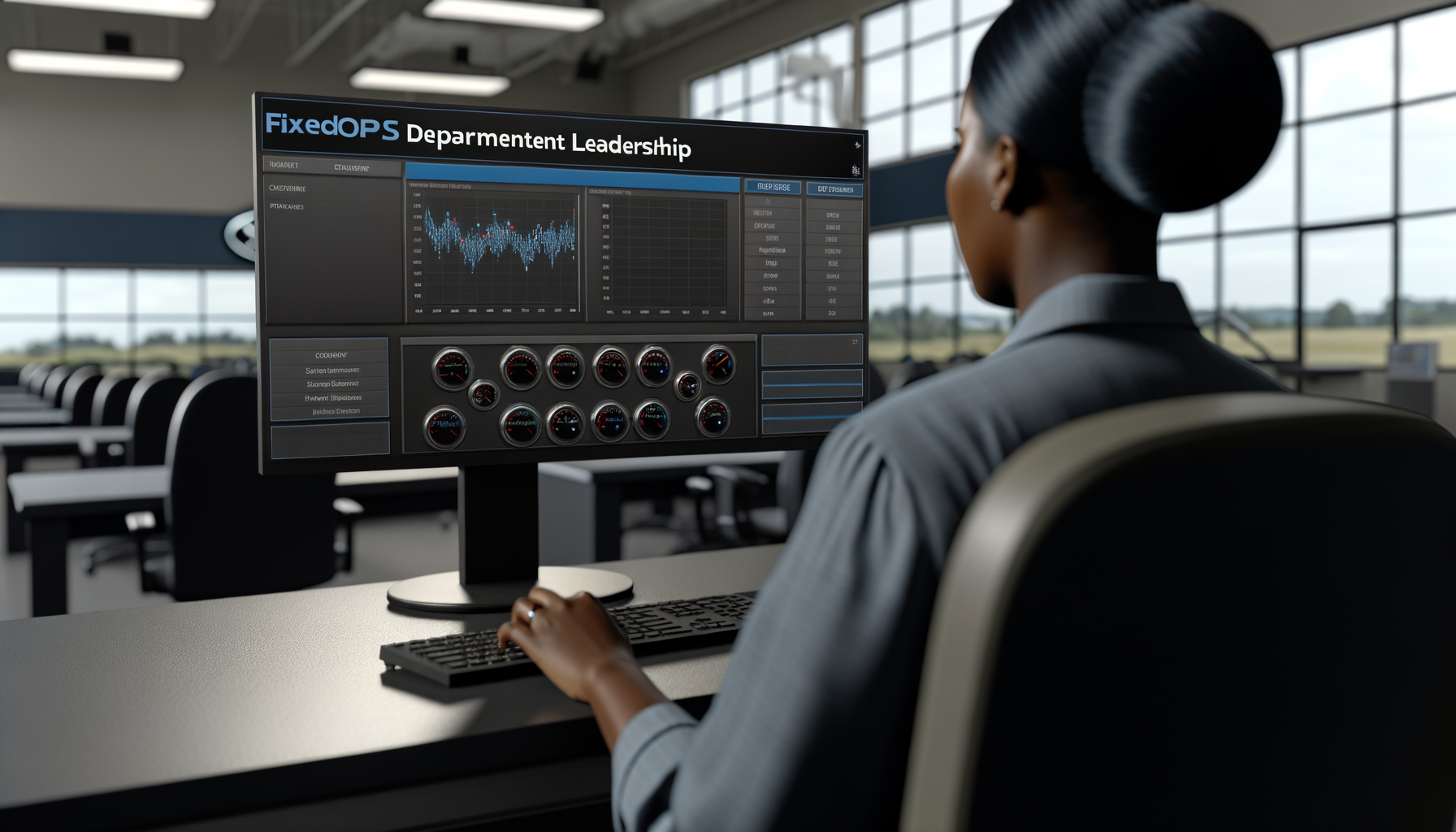
Data-driven decision-making is crucial for optimizing service operations and improving ROI. Analyze customer feedback and service data to identify trends and areas for improvement. By implementing predictive analytics, dealerships can anticipate customer needs and reduce downtime, resulting in a 30% increase in operational efficiency.
"The ability to turn data into actionable insights is what separates successful service departments from the rest." – John Smith, Fixed Ops Consultant
Measuring Success: Key Metrics for Fixed Ops Leadership
Establishing KPIs for Continuous Improvement

Setting and tracking the right KPIs is vital for measuring progress and identifying areas for improvement. Focus on metrics such as customer satisfaction scores, average repair time, and parts inventory turnover. Regularly review these indicators with your team to align on goals and adjust strategies as needed.
1. Customer Satisfaction Score (CSAT) 2. Average Repair Time 3. Parts Inventory Turnover
Questions managers ask
How can fixed ops leaders reduce staff turnover?
Focus on transparent communication, offer career development opportunities, and implement mentorship programs to retain talent.
What role does technology play in fixed ops leadership?
Technology automates routine tasks, provides analytics for decision-making, and enhances customer interactions, increasing overall efficiency.
What to do with this
Fixed ops leadership requires a blend of strategic vision, technological acumen, and people-centric management. By aligning these elements, dealerships can achieve sustainable success. Implement the discussed strategies, track key metrics, and continuously refine processes to adapt to industry changes. Auto Pro Solutions offers cutting-edge tools that empower fixed ops leaders to streamline operations and improve service delivery.
Related topics
More for service managers
Navigating the Leadership Highway: Cultivating Growth in Fixed Ops Management
Imagine walking into your dealership service department, bustling with activity—technicians engaged, customers satisfied, and appointments running smoothly. For many service…
Charting the Course: Steering Fixed Ops Leadership into the Next Era
Imagine your dealership's service department buzzing with activity, every bay occupied, and technicians working seamlessly, yet the numbers still don't add up. You're not…
Empowering Dealership Service Teams: The Essential Leadership Playbook
In the fast-paced world of automotive service departments, leadership plays a pivotal role in driving performance and profitability. Service managers often find themselves…